


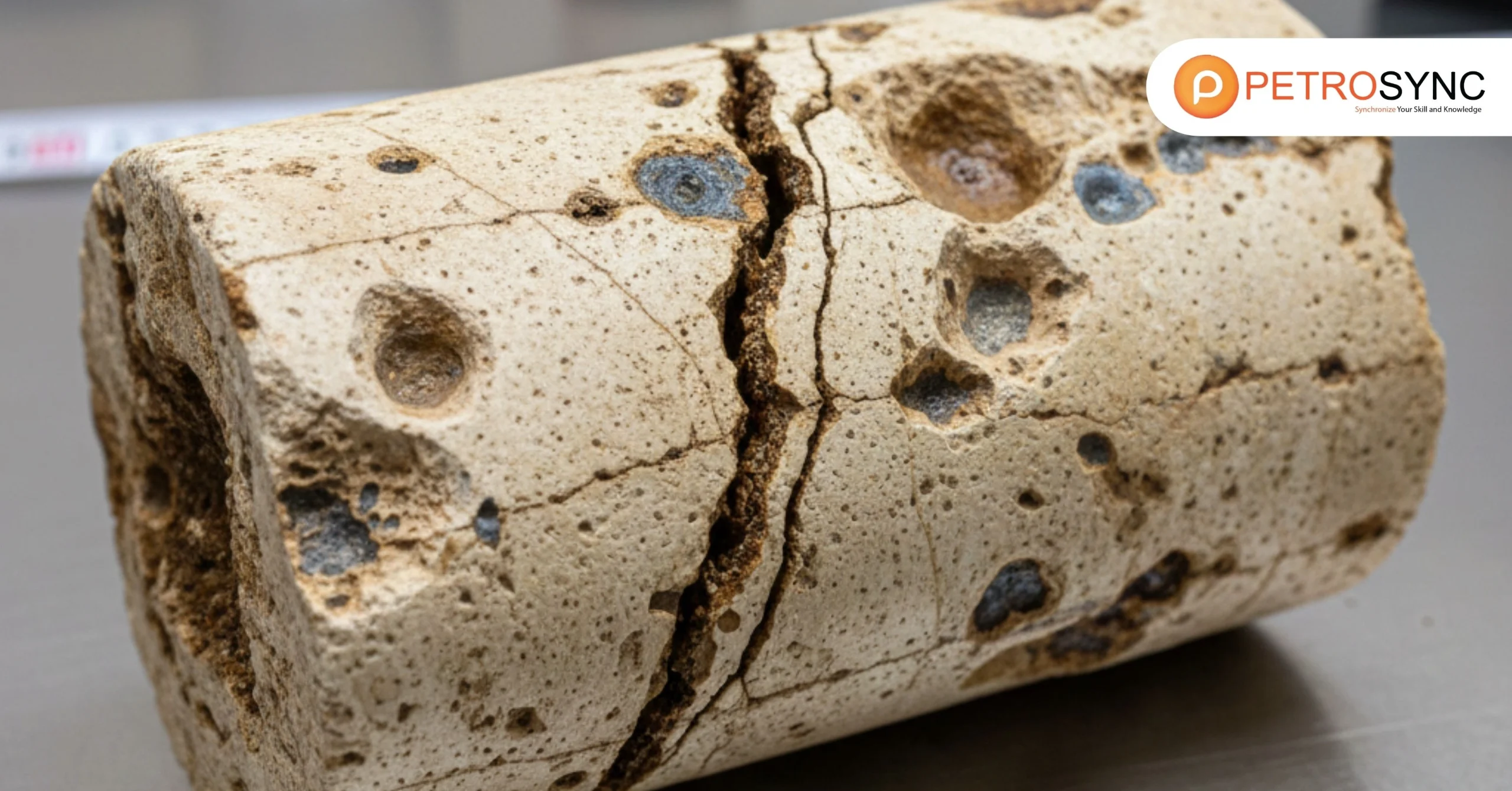
⦁ Carbonate reservoir complexity is driven by biological, chemical, and tectonic processes that create uneven porosity, erratic permeability, and unpredictable flow paths.
⦁ Extreme heterogeneity means nearby wells can perform very differently, with fractures boosting rates in one zone while adjacent areas contribute little.
⦁ Applying clastic workflows often skews forecasts, risks early water breakthrough, and leaves recovery potential untapped in fractured settings.
⦁ High-resolution characterization and fracture–matrix modeling sharpen forecasts, improve well placement, and reduce history-match gaps.
⦁ Targeted EOR, smart geosteering, and multidisciplinary skills turn complexity into value across drilling, completion, and long-term production.
Carbonate and fractured reservoirs represent some of the most complex and commercially significant subsurface systems in the modern energy sector. Their large hydrocarbon resources continue to attract substantial investment, but their unpredictable heterogeneity frequently challenges even seasoned geoscientists and engineers.
Unlike clastic formations, carbonates form through intricate biological, chemical, and tectonic processes. These processes create diverse pore networks, uneven permeability distributions, and complex fracture systems that do not follow simple or predictable patterns.
These unique geological characteristics affect every stage of field development—from reservoir appraisal and static modeling to drilling design and long-term production optimization. Many operators have learned that applying traditional clastic workflows to carbonate developments often leads to misinterpretation, uncertain forecasts, and loss of recovery potential.
This reality reinforces a critical principle: maximizing value in carbonate and fractured reservoirs requires an integrated, high-resolution approach supported by advanced technical competencies. Before discussing the strategies that elevate reservoir performance, it is important to understand why carbonate and fractured environments are uniquely challenging in the first place.
What Makes Carbonate & Fractured Reservoirs Complex to Understand?
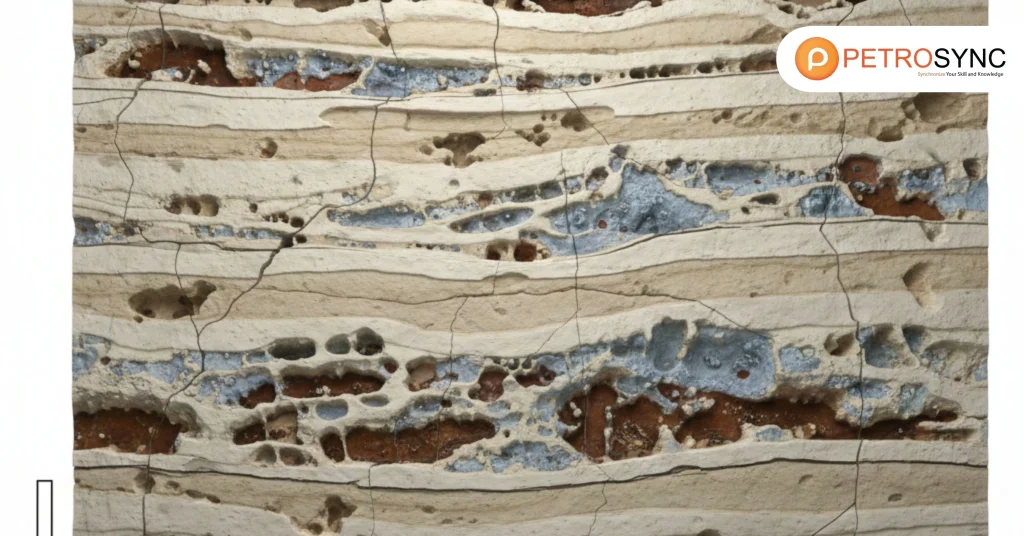
Carbonate reservoirs are shaped by variations in depositional facies, diagenetic overprints, dissolution processes, and fracture development. This combination creates extreme heterogeneity, making them fundamentally different from clastic reservoirs with more predictable patterns.
A key complication arises from the fact that porosity in carbonate rocks is highly variable. Vugs, channels, molds, intercrystalline pores, and microfractures interact in ways that make fluid flow difficult to predict. In many cases, primary porosity represents only a fraction of a reservoir’s storage capacity. Secondary porosity—formed through dissolution or tectonic fracturing—often becomes the main flow conduit.
Several studies in reservoir characterization note that carbonate permeability can vary by multiple orders of magnitude within short distances. This means that two wells located only a few hundred meters apart may behave entirely differently during production.
A paper published by a leading petroleum geology journal highlighted that fracture corridors can increase flow rates by more than 60% in some carbonate fields, while adjacent zones with poor fracture connectivity may contribute almost nothing to production.
This level of complexity explains why carbonates require more detailed characterization, higher-quality data, and more advanced modeling techniques.
How Do Carbonate & Fractured Reservoirs Influence Field Development Success?
1. Flow Uncertainty and Permeability Distribution Issues
Permeability in fractured carbonates is often influenced by fracture intensity, orientation, aperture, and connectivity. While fractures may enhance productivity, they can also cause early water breakthrough, uneven sweep efficiency, and unpredictable decline trends.
A well-documented industry case shows that anisotropic fracture networks can cause water cuts to increase by over 40% within the first year of production when fracture corridors intersect aquifers. This risk highlights why accurate fracture mapping and flow simulation are essential before finalizing development plans.
2. Impact on Reservoir Modeling and Performance Forecasts
Traditional modeling methods rarely capture the full complexity of carbonate systems. Matrix–fracture dual-porosity behavior, vug connectivity, and discrete fracture networks often require specialized modeling approaches.
If the fracture system is oversimplified, recovery estimates may appear overly optimistic. Conversely, if the matrix contribution is underestimated, the field may seem less commercial than it actually is. Several technical papers note that incorporating high-resolution fracture modeling can improve forecast accuracy by more than 30%—a significant improvement for decision-making in multi-billion-dollar assets.
3. Implications for Drilling, Completion, and Production Strategy
Fractured carbonates frequently present operational risks:
- Drilling hazards: sudden losses due to open fractures.
- Completion challenges: uncertainty about whether fractures will enhance or hinder flow.
- Production issues: high water cut, coning, or uncontrollable early breakthrough.
These challenges demonstrate why carbonate developments require tailored drilling practices, real-time geosteering, and completion designs that account for fracture behavior.

What Advanced Strategies Improve Carbonate & Fractured Reservoir Performance?
1. High-Resolution Reservoir Characterization Workflows
Modern carbonate workflows integrate core analysis, advanced logging, borehole imaging, seismic inversion, and machine learning–based facies classification. By combining these data sources, engineers can distinguish between productive fracture corridors and non-contributing matrix zones more accurately.
A recent industry study reported that integrating multi-scale data improved carbonate facies prediction by nearly 50%, resulting in better well placement and reduced uncertainty in dynamic modeling.
2. Fracture–Matrix Interaction Modeling and Simulation
Understanding the interaction between fractures and matrix storage is essential. Advanced dual-permeability simulators allow teams to capture:
- fracture conductivity
- storage capacity
- diffusion mechanisms
- capillary interaction
By modeling discrete fracture networks or hybrid DFN–continuum systems, operators can forecast production performance more accurately. Research shows that using DFN-based simulation reduces mismatch between history data and forecasts by up to 35% compared with traditional dual-porosity models.
3. Carbonate-Specific EOR and Wettability Alteration
Enhanced oil recovery in carbonate reservoirs relies heavily on wettability alteration, as most carbonate surfaces tend to be oil-wet or mixed-wet. Techniques commonly applied include:
- low-salinity waterflooding
- surfactant flooding
- CO₂ injection
- nanoparticle-assisted EOR
One well-known Middle Eastern carbonate study demonstrated that low-salinity water injection increased recovery by up to 12% beyond conventional waterflooding, largely due to shifts in wettability toward more water-wet conditions.
4. Smart Drilling, Geosteering, and Well Placement Optimization
Advanced geosteering tools and real-time drilling analytics help teams remain in high-quality zones, avoid problematic fractures, and optimize well trajectories. With machine learning–driven interpretation, drilling teams can predict fracture density and pore structure along the wellbore before penetration.
Operators who adopted real-time carbonate geosteering techniques reported:
- 20–40% improvement in reservoir contact length
- Significant reduction in non-productive drilling time
- Better positioning within fracture-enhanced zones
These outcomes illustrate the strong link between digital drilling technologies and successful carbonate development.
Why Professionals Need Advanced Competencies in Carbonate & Fractured Reservoirs
1. Rising Complexity in Modern Carbonate Developments
Many of today’s new developments are in mature, technically challenging, or highly heterogeneous carbonate settings. These fields demand expertise that spans geology, geophysics, petrophysics, reservoir engineering, and drilling operations.
2. Gaps in Subsurface Integration and Reservoir Interpretation
Carbonate interpretation often exposes gaps in traditional workflows. Teams may have strong expertise in clastics but limited exposure to carbonate behavior. This knowledge gap can lead to:
- poor characterization
- inaccurate models
- suboptimal recovery strategies
3. Increasing Demand for Multidisciplinary Technical Capability
Senior professionals and managers today must make high-consequence decisions. Understanding the interplay between fractures, matrix properties, and dynamic flow mechanisms allows leaders to guide development plans more confidently and reduce risk.
Enhance Your Carbonate & Fractured Reservoir Expertise Through PetroSync Training
As carbonate and fractured reservoir developments grow more complex, the need for advanced, integrated technical competency becomes essential—not optional. This is where specialized training becomes a strategic investment for senior engineers, managers, and decision-makers.
PetroSync provides structured, high-quality programs delivered by global experts with direct field experience in carbonate development, fracture characterization, reservoir modeling, and integrated field management. Participants gain not only theoretical knowledge but also practical tools and real-case workflows that can be applied immediately to ongoing projects.
Whether your goal is to optimize an existing carbonate asset, improve well placement decisions, or strengthen multidisciplinary collaboration, PetroSync’s training equips you with the advanced insight needed to lead effectively in today’s competitive energy sector.
Frequently Asked Questions (FAQ)
Carbonate and fractured reservoirs are more complex because they form through biological, chemical, and tectonic processes that create highly heterogeneous pore systems, uneven permeability, and unpredictable fracture networks. Unlike clastic reservoirs, fluid flow in carbonates is often dominated by secondary porosity and fractures, making reservoir behavior difficult to predict.
Fractures can significantly enhance productivity by providing high-permeability flow paths, but they can also cause early water breakthrough, uneven sweep efficiency, and rapid water cut increases. The impact depends on fracture intensity, orientation, connectivity, and interaction with aquifers and the matrix.
Traditional clastic-based modeling approaches often fail because they do not fully capture dual-porosity behavior, fracture–matrix interactions, vug connectivity, and discrete fracture networks. Without high-resolution fracture representation, forecasts can be overly optimistic or overly conservative, leading to poor development decisions.
Advanced technologies include high-resolution core analysis, borehole imaging, seismic inversion, machine learning–based facies classification, discrete fracture network modeling, and real-time geosteering. Integrating multi-scale data helps identify productive zones, optimize well placement, and reduce uncertainty in reservoir performance forecasts.
Specialized training is essential because carbonate developments demand multidisciplinary expertise across geology, petrophysics, reservoir engineering, and drilling. Advanced training helps professionals close knowledge gaps, improve subsurface integration, make better high-risk decisions, and maximize recovery from complex carbonate and fractured assets.

Results-oriented and thorough SEO specialist with extensive experience in conducting keyword research, developing and implementing digital website promotion strategies and plans, managing campaigns to develop company websites in the digital world, excellent knowledge of marketing techniques and principles, and attentive strong attention to detail.