


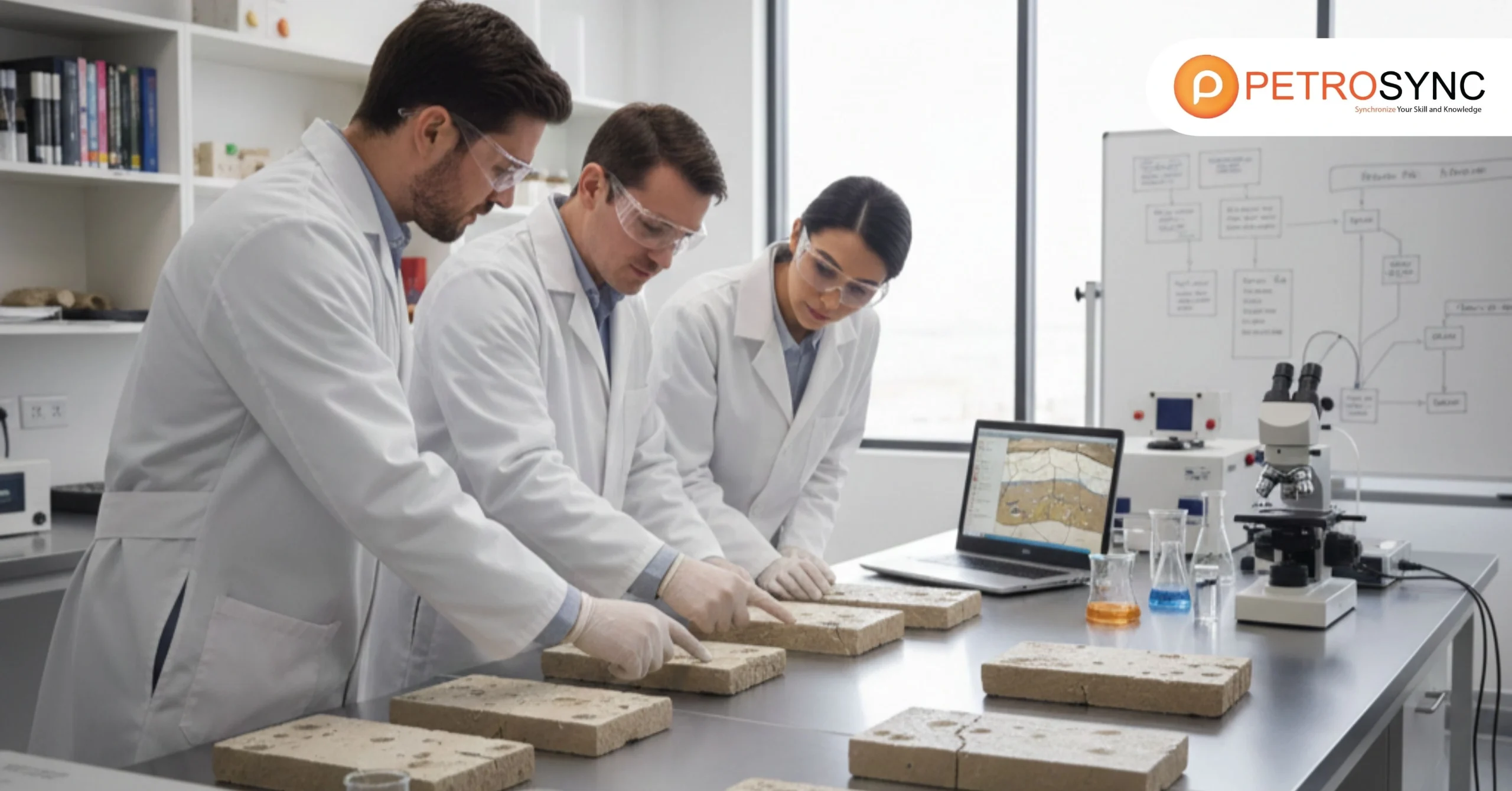
⦁ Carbonate reservoir training is essential for navigating heterogeneity, fractures, and fluid complexity in high-value fields with tighter operational demands.
⦁ Specialized learning sharpens interpretation, reduces uncertainty, and strengthens development planning across geology, petrophysics, and reservoir engineering.
⦁ Teams with carbonate expertise can lift recovery efficiency by 15–30%, delivering measurable gains in mature and complex assets.
⦁ Advanced workflows improve modeling, simulation, and EOR outcomes by aligning pore systems, fractures, and wettability behavior.
⦁ Upskilled professionals make faster, more confident decisions that boost capital efficiency, reduce risk, and protect long-term asset value.
Carbonate reservoir training continues to play a vital role in shaping the capabilities of modern energy professionals. As the global energy landscape evolves, carbonate settings—including some of the world’s largest and most productive fields—demand sharper judgment, faster interpretation, and deeper subsurface understanding.
Despite their high economic value, carbonate formations often demonstrate unpredictable behavior, making them both complex and strategically significant. In many organizations, senior engineers and decision-makers now realize that traditional approaches are no longer enough.
The growing challenges associated with carbonate plays—combined with operational expectations that tighten year after year—necessitate structured, advanced, and up-to-date learning. Before diving into how specialized training elevates performance, it helps to understand what makes carbonate reservoirs so unique.
What Are Carbonate Reservoirs?
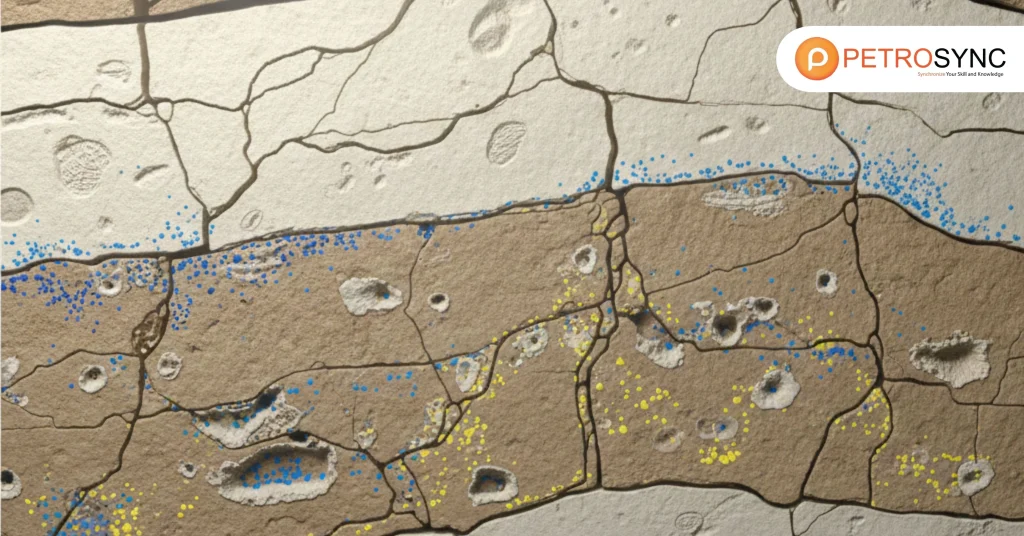
Carbonate reservoirs are subsurface formations composed primarily of limestone and dolomite. Unlike sandstone reservoirs—which often behave more predictably—carbonates are shaped by biological activity, diagenesis, and geological processes that create complex pore structures. Their heterogeneity often results in:
- Irregular porosity distribution
- Highly variable permeability
- Complex fracture networks
- Rapid changes in fluid flow pathways
Studies in reservoir geology suggest that approximately 60% of global conventional hydrocarbon reserves lie within carbonate settings. Because of this, carbonates remain a cornerstone of long-term global energy supply. But the very nature that makes them highly productive also makes them challenging to characterize, model, and develop efficiently.
Why Carbonate Reservoirs Training Matters
Carbonate reservoir training equips professionals with the advanced tools and reasoning needed to operate confidently in these dynamic geological environments. For senior engineers, managers, and technical leaders, decisions made in carbonate fields directly affect production performance, cost efficiency, and long-term asset value.
A well-structured training program helps participants:
- Improve interpretation accuracy
- Reduce uncertainty in reservoir characterization
- Enhance recovery strategies
- Strengthen team integration
- Optimize development planning
According to several industry analyses, teams with specialized carbonate expertise can achieve up to 15–30% improvement in recovery efficiency when integrating modern characterization and modeling methods. The long-term financial impact of this uplift—especially in mature fields—can be substantial.

What Challenges Do Engineers Face in Carbonate Reservoirs and How Carbonate Reservoirs Training Helps?
Carbonate reservoirs differ significantly from clastics, and the challenges they pose often impact performance if not addressed with the right technical foundation:
1. Complex Pore Systems
Carbonates contain interparticle pores, vugs, moldic voids, fractures, and micro-porosity—all interacting differently under reservoir conditions. Training helps engineers identify and classify these systems accurately.
2. Heterogeneity Across Multiple Scales
Sudden shifts in facies and rock types make prediction difficult. Advanced training enhances the ability to recognize geological patterns and integrate multidisciplinary datasets.
3. Difficult Reservoir Modeling and Simulation
Due to irregular flow pathways, standard models may not capture true reservoir behavior. Training provides exposure to specialized carbonate modeling workflows.
4. Uncertain EOR Application
Enhanced oil recovery techniques may yield inconsistent results if the reservoir is poorly understood. Training allows participants to understand how wettability, fractures, and pore geometry impact EOR success. These challenges highlight why carbonate-focused capability development is no longer optional—it is essential for maximizing recovery.
How Carbonate Reservoirs Training Enhances Technical Competence
1. Advanced Reservoir Characterization Techniques
Modern training provides hands-on learning in seismic interpretation, outcrop analog integration, and high-resolution geological modeling. Engineers gain the skill to evaluate multi-scale heterogeneity and reduce uncertainty in subsurface assessments.
2. Petrophysical Integration and Rock Typing
Participants learn how to combine core data, well logs, and thin-section analyses to produce accurate rock typing frameworks. This competency improves flow-unit characterization and supports more accurate development planning.
3. Reservoir Modeling, Simulation, and History Matching
Carbonate reservoirs require specialized modeling approaches. Training helps engineers:
- Build more realistic facies models
- Integrate fracture networks
- Improve dynamic simulation reliability
- Conduct refined history matching
These skills lead to better predictions of reservoir performance, ultimately supporting more confident decision-making.
4. EOR Strategies and Production Optimization
Carbonate-specific training covers the impact of wettability, pore geometry, and fracture characteristics on EOR performance. Various studies indicate that well-planned carbonate EOR programs can deliver 10–25% incremental recovery, depending on reservoir maturity and fluid properties. Engineers trained in field-specific EOR techniques can capture this potential more effectively.
Real-World Applications of Carbonate Reservoirs Training for Engineering Teams
1. Well Placement and Geosteering in Heterogeneous Reservoirs
Carbonate reservoirs require precise well paths to avoid low-quality zones. Training enhances geosteering interpretation skills and supports more accurate real-time decision-making.
2. Minimizing Drilling and Completion Risks
Understanding fracture networks, pore structures, and stress regimes reduces drilling surprises and helps prevent issues like lost circulation. Competent teams can cut non-productive time and improve operational efficiency.
3. Integrating Multidisciplinary Workflows for Optimal Recovery
Carbonate development thrives on collaboration. Training ensures geologists, reservoir engineers, petrophysicists, and production teams work within a unified interpretation framework. This integration has been shown to improve recovery factors significantly in mature fields.
Why Upskilling Through Carbonate Reservoirs Training Is Essential for Field Performance
As global energy operations become more competitive, organizations depend heavily on field performance and operational reliability. Upskilling through carbonate reservoirs training enables leaders and senior technical professionals to:
- Align decision-making with modern subsurface insights
- Enhance team collaboration
- Improve capital efficiency
- Increase recovery factors from complex reservoirs
- Strengthen long-term asset value
In an era where the margin between profit and loss narrows, having a workforce equipped with specialized carbonate expertise is a major strategic advantage.
Advance Your Expertise with Carbonate Reservoirs Training by PetroSync
For senior engineers, managers, and decision-makers aiming to elevate their subsurface capabilities, PetroSync offers an advanced Carbonate Reservoirs Training program designed to meet real industry needs. The course blends technical rigor with practical workflows—ensuring participants can apply new skills directly to field operations.
With expert-led sessions, case studies from international carbonate fields, and a curriculum tailored for high-level professionals, PetroSync helps you make confident decisions, optimize development strategies, and drive measurable improvements in reservoir performance.
If your goal is to strengthen your reservoir understanding, improve team competence, and enhance field productivity, this training provides the structured and impactful learning experience you need.
Frequently Asked Questions (FAQ)
Carbonate reservoirs are formed through biological activity and diagenetic processes, resulting in highly heterogeneous pore systems such as vugs, fractures, and micro-porosity. This complexity leads to irregular porosity distribution, variable permeability, and unpredictable fluid flow behavior, making them more challenging to characterize and develop than sandstone reservoirs.
Carbonate reservoirs training equips senior engineers and decision-makers with advanced interpretation, modeling, and decision-making skills needed to manage uncertainty in complex carbonate systems. These capabilities directly impact recovery efficiency, development planning, cost control, and long-term asset value.
Engineers working in carbonate reservoirs face challenges such as complex pore systems, strong heterogeneity across multiple scales, difficulties in reservoir modeling and simulation, and uncertainty in applying enhanced oil recovery techniques. Without proper training, these challenges can significantly affect reservoir performance.
Carbonate reservoirs training improves recovery and field performance by enhancing reservoir characterization accuracy, improving rock typing and petrophysical integration, enabling more realistic modeling and simulation, and supporting effective EOR strategies. Industry studies show that specialized carbonate expertise can increase recovery efficiency by 15–30%.
Advanced carbonate reservoirs training is ideal for senior reservoir engineers, geologists, petrophysicists, technical managers, and decision-makers who are responsible for development planning, production optimization, and long-term asset performance in carbonate fields.

Results-oriented and thorough SEO specialist with extensive experience in conducting keyword research, developing and implementing digital website promotion strategies and plans, managing campaigns to develop company websites in the digital world, excellent knowledge of marketing techniques and principles, and attentive strong attention to detail.