


⦁ Stuck Pipe Prevention Courses are a proven way to cut NPT by up to 35% by improving early risk detection and disciplined drilling practices.
⦁ Training builds stronger situational awareness so teams act early on warning signs, not after pipe sticking escalates into costly downtime.
⦁ Structured courses align drilling decisions with safety, cost control, and schedule certainty, especially in complex or high-angle wells.
⦁ Participants gain practical skills in hole cleaning, wellbore stability, jar placement, and first-response actions at the wellsite.
⦁ PetroSync’s program turns field experience and case studies into repeatable strategies that support zero-downhole risk goals.
Stuck Pipe Prevention Courses have become a strategic priority for drilling leaders who aim to reduce operational uncertainty and eliminate avoidable downhole disruptions. Across the global drilling industry, stuck pipe remains one of the leading contributors to non-productive time (NPT), responsible for millions of dollars in unplanned expenditure every year.
Even with major advancements in real-time monitoring technology, automated drilling systems, and formation modeling, stuck pipe incidents continue to surface—often due to subtle operational gaps, misinterpreted warning signs, or delayed intervention.
Understanding these patterns is a critical step toward building a preventive drilling culture.
This is why structured Stuck Pipe Prevention Training has gained recognition as one of the most effective ways to strengthen drilling performance, enhance team awareness, and support zero-downhole risk objectives. With the right skills, teams are better equipped to anticipate risks, interpret downhole symptoms early, and execute mitigation measures before the situation escalates into a full pipe-sticking event.
Below is a comprehensive exploration of WHY this training is essential, WHAT it covers, and HOW it empowers senior professionals and decision-makers to elevate operational reliability.
What Are Stuck Pipe Courses and Why Do They Happen?
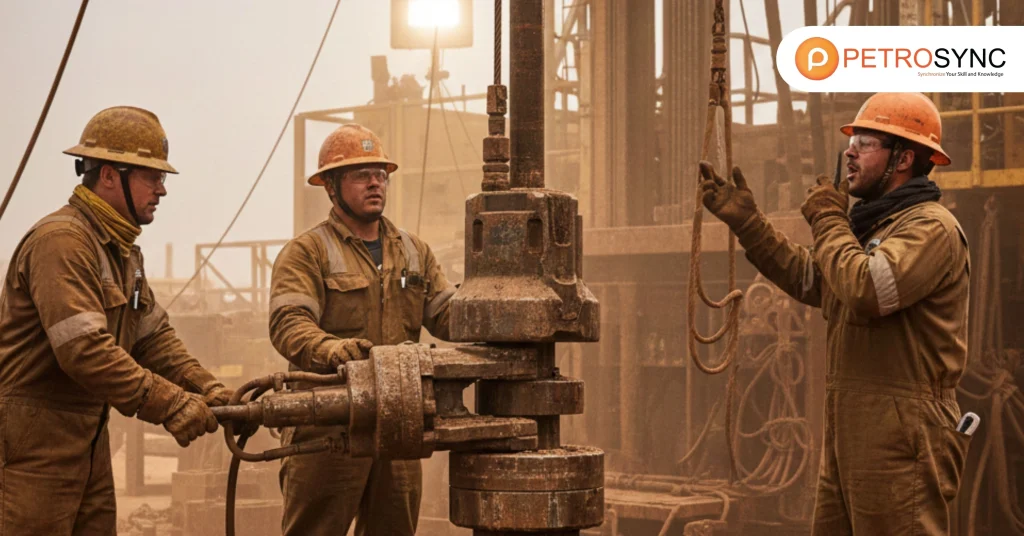
Stuck Pipe Courses are specialized training programs designed to help drilling teams understand the mechanisms, early indicators, and preventive actions associated with pipe-sticking events. Stuck pipe typically occurs when the drill string becomes immobilized due to mechanical obstruction, differential sticking, or formation-related issues.
While these mechanisms are well-known in theory, the challenge lies in recognizing them at the right moment under real operational conditions. Research from several industry publications—including drilling engineering journals—consistently shows that over 70% of stuck pipe incidents could be avoided through improved detection of early warning signs and better operational discipline.
Industry case studies also report that organizations implementing structured stuck pipe training achieve a 20–35% reduction in stuck pipe-related NPT within the first operational year after training initiatives.
In complex wells, stuck pipe can arise from:
- Reactive shales causing swelling and tight spots\
- Poor hole cleaning leading to cuttings buildup
- Over-pull and excessive drag conditions
- Differential sticking in permeable zones
- Key seating due to trajectory or geometry constraints
- Inadequate monitoring of drilling parameters
Without proper training, these symptoms are often noticed too late. Stuck Pipe Courses bridge that gap by creating awareness, sharpening decision-making skills, and turning field experience into practical, preventive strategies.
Why Stuck Pipe Prevention Courses Are Critical in Drilling Operations
For senior leaders, drilling managers, and well engineering executives, stuck pipe is not merely an operational inconvenience—it is a direct financial, safety, and schedule risk. One stuck pipe event can cost anywhere from tens of thousands to several million dollars depending on the depth, location, and complexity of the well.
Industry analyses indicate that stuck pipe contributes up to 25% of overall drilling NPT in high-angle and extended-reach wells. This makes it one of the most expensive and disruptive issues in drilling operations. For companies operating in offshore deepwater environments, corrective action can lead to rig spread rates exceeding several hundred thousand dollars per day.
This is exactly why prevention-centered training is critical:
- It reduces NPT and unexpected downtime
- It strengthens HSE performance by minimizing risky interventions
- It promotes consistent drilling execution across teams\
- It sharpens real-time interpretation skills
- It supports more accurate operational planning and risk mapping
When teams have a strong understanding of how pipe sticking develops, they perform with greater confidence. Decisions become faster, more accurate, and aligned with best practices that protect both equipment and personnel.

What Is the Objective of Stuck Pipe Prevention Courses?
The objectives for the course are;
- Learn the preventative actions to avoid stuck pipe Incidents.
- Know the first actions for freeing pipe
- Learn the parameters which affects Hole Cleaning
- Have a better understanding of Wellbore stability
- Have a better understanding of how a drilling jars works
- Review back-off operation and main Fishing operations
- Review main considerations when setting a cementing plug
- Exchange your experience with colleagues regarding Stuck Pipe
- Minimize the occurrence/frequency and cost impact of Stuck Pipe Incidents
What Are Stuck Pipe Prevention Course Outlines?
The course starts with defining the term stuck pipe. It provides the participants with the three major mechanisms and the three minor mechanisms of stuck pipe prevention. The participants are then presented with the issues related to hole stability, wellbore geometry, hole cleaning and wellbore pressure management to understand the major causes of stuck pipe.
On day three we look at the wellsite management issues, the roles and responsibilities and how to recognize and interpret the signs of stuck pipe. First responses are presented together with the placement of the jars. The last day of the course addressed free point determination, fishing tools and challenges and the course is wrapped up with information on sidetracking of the well.
DAY 1
- Welcome and Introductions
- References
- Definition of stuck pipe
- Stuck pipe statistics
- Major Stuck pipe mechanisms
– Pathway Causes
– Mechanical Causes
– Geological Causes - Prevention and Monitoring
– Stuck pipe warning signs
– Solids and Hole cleaning
– Torque and Drag
– Wellbore stability - Stuck pipe steel mechanics
Day 1: Exercises/Case Studies
DAY 2
- Drilling parameters
- Tension and torque limitation
- Recommended practices
- Well Engineering analysis
- Rig Sizing
- Connection practices
- Tripping and Back reaming
- Differential Sticking
- Jar Placement
Day 2: Exercises/Case Studies
DAY 3
- Roles and Responsibilities
- First Responses
- Free point and Back-off
- Fishing Tools
- Fishing Techniques and Economics
- Cement Plugs and Sidetracking
Day 3: Exercises/Case Studies
Who Should Attend Stuck Pipe Prevention Courses?
This course is intended for the disciplines listed below, as well as anyone with a specific interest in the topic:
- Wellsite Drilling staff
- Wellsite Service Provider staff such as directional drillers and MWD staff
- Drilling Engineer and Completion Engineers
- Drilling Contractor supervisory personnel
- Other relevant technical and operational staff
Join Stuck Pipe Prevention Courses by PetroSync for Zero-Downhole Risk
If your objective is to minimize NPT, strengthen technical competency, and enhance drilling reliability, joining PetroSync’s Stuck Pipe Prevention Course is one of the most strategic investments you can make for your team.
PetroSync integrates industry best practices, expert-led instruction, and real operational case studies to ensure every participant gains actionable knowledge—not just theory. The training is designed specifically for high-level professionals such as senior engineers, team leaders, and decision-makers who are responsible for the success of well operations.
With PetroSync, your team will learn practical strategies that support zero-downhole risk and long-term performance improvement across your drilling portfolio.
If you aim to elevate operational excellence and safeguard your well delivery performance, PetroSync’s program is ready to support your goals.
Frequently Asked Questions (FAQ)
A Stuck Pipe Prevention Course is a specialized drilling training program that focuses on understanding the mechanisms, early warning signs, and preventive actions related to stuck pipe incidents. The course equips drilling professionals with practical skills to anticipate risks, interpret downhole symptoms, and apply mitigation strategies before pipe sticking occurs.
Stuck pipe is one of the leading causes of non-productive time (NPT) and can result in significant financial losses, safety risks, and schedule delays. Prevention training helps reduce NPT, improve HSE performance, strengthen decision-making, and enhance operational consistency, particularly in complex or high-angle wells.
Common causes of stuck pipe include reactive shales, poor hole cleaning, excessive drag and over-pull, differential sticking in permeable zones, key seating due to wellbore geometry, and inadequate monitoring of drilling parameters. Many of these issues can be detected early with proper training and operational discipline.
The course covers stuck pipe mechanisms, hole cleaning, wellbore stability, drilling parameters, torque and drag, differential sticking, jar placement, first response actions, fishing operations, cementing plugs, and sidetracking. It also includes case studies, exercises, and real-world operational scenarios.
This course is suitable for wellsite drilling staff, directional drillers, MWD personnel, drilling and completion engineers, drilling contractor supervisors, and other technical or operational professionals involved in well planning and execution.

Results-oriented and thorough SEO specialist with extensive experience in conducting keyword research, developing and implementing digital website promotion strategies and plans, managing campaigns to develop company websites in the digital world, excellent knowledge of marketing techniques and principles, and attentive strong attention to detail.