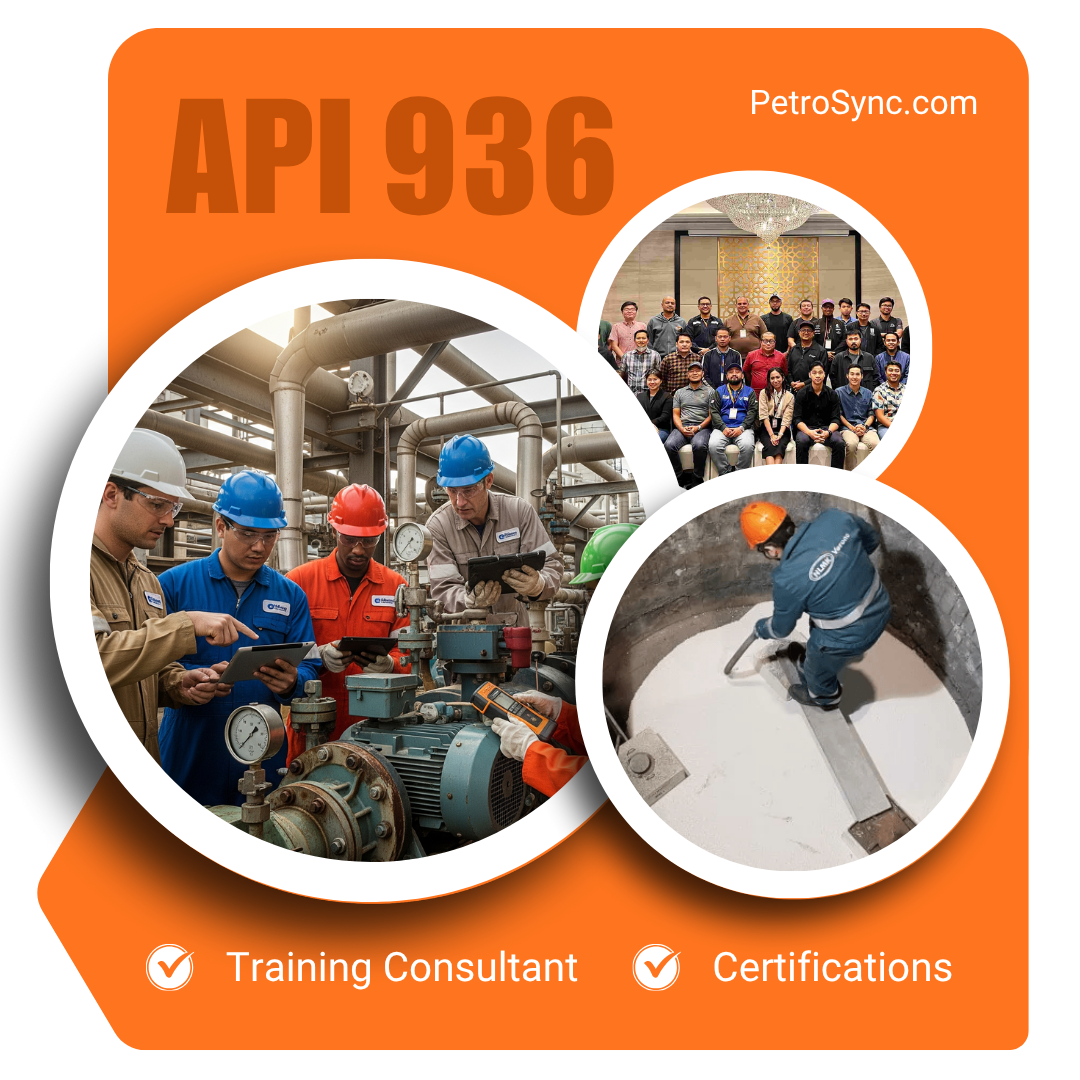



- Meaning: API 936 Training improves refractory inspection competency. It supports safer refinery and petrochemical operations.
- Benefit: Proper refractory inspection reduces operational failures. It also improves equipment reliability and maintenance efficiency.
- Solution: PetroSync provides practical API 936 training programs. Participants learn inspection techniques and industry standards.
- Advantage: The training includes real industrial case studies. Experienced practitioners deliver practical operational insights.
Piping failures and refractory damage often create costly downtime across modern refinery operations worldwide. Many facilities struggle maintaining furnace integrity under extreme industrial thermal operating conditions.
API 936 training improves refractory inspection competency using internationally recognized refinery industry inspection practices. The certification strengthens operational reliability, safety compliance, and long-term refractory equipment performance.
What is API 936 Training?
API 936 Training prepares professionals inspecting refractory materials within refinery and petrochemical operating environments. The program covers installation practices, quality control, testing methods, and refractory failure prevention strategies.
Participants learn practical inspection techniques supporting safer refinery operations and improved equipment thermal performance. The training also supports API 936 certification preparation for global industrial inspection professionals.
Key Benefits of Mastering API 936 Training for the Oil & Gas Industry
Modern industrial facilities require stronger refractory inspection competency for safer operational performance. The following benefits explain why API 936 training supports industrial inspection excellence:
1. Improved Safety & Operational Reliability
API 936 training helps reduce refractory-related operational incidents by nearly 35% across refinery environments. Participants improve inspection accuracy while supporting safer furnace operations and higher equipment reliability performance.
2. Compliance with Industry Standards, Codes & Regulations
The training improves compliance accuracy by nearly 50% using internationally recognized refractory inspection standards. Participants better understand API requirements supporting audits, maintenance documentation, and operational safety programs.
3. Reduced Asset Failure & Field Incident Risks
Proper refractory inspection techniques reduce unexpected equipment failures and emergency shutdown risks significantly. Many facilities improve refractory lifespan while reducing operational incident frequency by nearly 30% annually.
4. Optimized Equipment Performance, Lifespan & Integrity
Effective refractory installation and inspection improve thermal efficiency across heaters, boilers, and refinery furnaces. Participants help extend refractory service lifespan while improving operational stability and equipment integrity performance.
5. Cost Efficiency in Operations, Maintenance & Downtime
API 936 competency reduces unnecessary maintenance expenses and unplanned operational downtime significantly. Many organizations achieve nearly 25% maintenance savings through improved refractory inspection and quality control.
“Strong refractory inspection competency directly improves refinery safety, reliability, and long-term operational efficiency.”
Industrial facilities increasingly prioritize refractory integrity within modern inspection management programs globally. API 936 training supports stronger inspection competency across demanding refinery operational environments.

Why API 936 Training Is Important for Industrial Inspection Professionals
Industrial refractory failures often create operational disruptions, safety incidents, and expensive maintenance consequences. API 936 training helps professionals improve inspection competency while supporting safer industrial operations.
|
Industrial Areas |
Without API 936 Training |
With API 936 Training |
|
Refractory Inspection Knowledge |
❌ Limited understanding |
✅ Strong technical competency |
|
Safety & Risk Management |
❌ Higher operational risks |
✅ Improved operational safety |
|
Standards Compliance |
❌ Inconsistent compliance practices |
✅ Better API standards implementation |
|
Maintenance Effectiveness |
❌ Reactive maintenance approaches |
✅ Preventive inspection improvements |
|
Equipment Reliability |
❌ Frequent refractory failures |
✅ Improved equipment reliability |
|
Career Development |
❌ Limited certification opportunities |
✅ Stronger professional credibility |
API 936 competency supports safer operations while improving long-term refinery equipment reliability performance. The certification also strengthens professional credibility within global industrial inspection industries.
Best API 936 Training Program by PetroSync
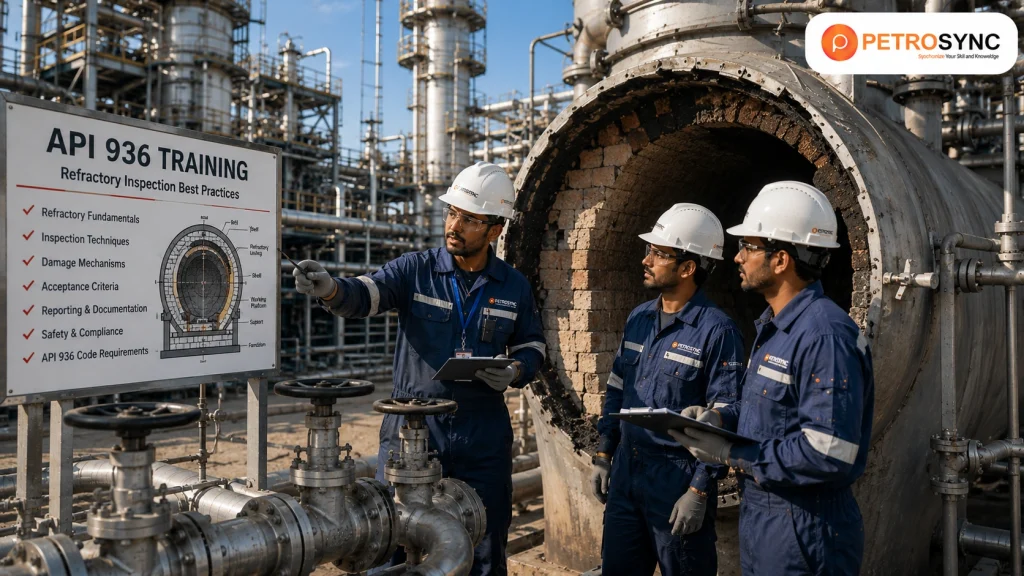
PetroSync provides professional API 936 training designed for refinery and petrochemical inspection professionals globally. The program combines international standards, practical discussions, and real industrial refractory inspection case studies.
Participants gain practical understanding supporting operational safety, inspection accuracy, and certification preparation readiness. The training also helps professionals improve refractory inspection confidence within demanding industrial operating environments.
What Are the Learning Objectives of API 936 Training by PetroSync?
Industrial inspection professionals require practical refractory inspection knowledge for reliable refinery operations globally. The following objectives explain important participant outcomes after completing PetroSync API 936 training:
1. Improve API 936 Certification Preparation
Participants improve certification readiness nearly 2x faster through structured refractory inspection learning discussions. The training strengthens technical confidence supporting successful API 936 examination preparation and competency development.
2. Master ASME Codes for Accurate Inspection
Participants improve inspection documentation accuracy by nearly 40% using ASME refractory inspection requirements effectively. The program strengthens understanding supporting safer industrial inspections and consistent compliance implementation practices.
3. Perform API 936 Calculations with Accuracy
The training improves calculation accuracy supporting reliable refractory inspection evaluations across industrial applications. Participants strengthen analytical competency while reducing reporting inconsistencies during inspection activities significantly.
4. Apply API 936 Standards in Industrial Operations
Participants improve operational compliance implementation across refinery inspection and maintenance management activities effectively. The program strengthens understanding supporting safer refractory operations and improved equipment thermal performance.
5. Understand Welding Standards and Qualification Requirements
Participants improve welding inspection understanding supporting refractory installation quality control and compliance accuracy. The training strengthens competency while reducing installation errors and long-term operational integrity risks.
The training outline explains practical refractory inspection topics supporting operational competency development effectively. Participants also explore industrial case studies improving inspection analysis and troubleshooting capabilities.
What Is the API 936 Training Outline by PetroSync?
|
Day |
Main Topics |
Key Learning Outcomes |
|
Day 1 |
Introduction to Refractories, Testing, Quality Control, Failure Analysis |
Understand refractory classifications, testing procedures, inspection records, and quality control practices |
|
Day 2 |
Monolithic Refractories, Installation Methods, Thermal Properties |
Learn refractory compositions, anchorage systems, firing impacts, and installation best practices |
|
Day 3 |
Installation Techniques, Repairs, Failure Analysis |
Improve understanding of refractory repair methods, thermal failures, and structural damage analysis |
|
Day 4 |
Furnace Linings, Refractory Selection, Thermal Curing |
Understand refractory selection criteria, furnace lining designs, and aggressive operational atmospheres |
|
Day 5 |
Refinery Applications, FCCU, Reformers, Sulfur Plants |
Apply refractory inspection knowledge across refinery operations and industrial process equipment |
Who Should Attend API 936 Training by PetroSync?
API 936 training supports professionals responsible for refractory inspection, maintenance, and operational reliability management. The program benefits inspectors, engineers, maintenance supervisors, quality personnel, and refinery operation specialists.
Professionals preparing for API 936 certification also gain structured preparation supporting stronger examination readiness. The training additionally supports organizations improving refractory reliability across refinery and petrochemical operational facilities.
Why Join API 936 Training at PetroSync?
Industrial professionals require practical training supporting modern refinery refractory inspection operational challenges globally. The following advantages explain why PetroSync remains trusted across international industrial training programs:
1. Training Based on Current API 936 Certification Standards
PetroSync aligns training materials with current API 936 certification and inspection industry requirements globally. Participants improve standards understanding while strengthening certification readiness and workplace inspection competency significantly.
2. Real Case Studies from Oil & Gas Industry Operations
The program includes real refinery refractory failure cases supporting practical industrial troubleshooting competency development. Participants improve problem-solving accuracy while understanding operational inspection challenges across refinery facilities.
3. Sessions Delivered by Experienced Industry Practitioners
Experienced industrial practitioners deliver practical insights supporting stronger technical understanding and operational awareness improvements. Participants gain realistic inspection knowledge directly applicable within refinery and petrochemical operating environments.
4. Comprehensive Materials Based on International Standards
Training materials combine API standards, ASME references, and practical refractory inspection implementation discussions comprehensively. Participants improve technical competency while supporting better compliance consistency across industrial inspection activities.
5. Interactive Learning with Practical Inspection Discussions
Interactive discussions improve technical retention while strengthening refractory inspection decision-making capabilities significantly. Participants develop stronger inspection confidence through collaborative industrial troubleshooting and practical operational scenarios.
6. Trusted Training Provider for Global Energy Companies
PetroSync supports professionals from leading energy organizations across refinery and petrochemical operational industries globally. The training improves inspection competency while strengthening organizational operational reliability and maintenance performance.
“Practical refractory inspection competency creates safer operations and stronger long-term refinery reliability performance.”
Professional refractory inspection competency remains increasingly valuable within modern industrial maintenance operations globally. PetroSync training supports stronger certification preparation and practical industrial inspection development effectively.

How Much Does API 936 Training Cost at PetroSync?
PetroSync provides flexible API 936 training schedules across major industrial training locations regionally. Participants receive practical materials supporting certification preparation and refractory inspection competency development.
|
Code |
Start Date |
End Date |
Location |
Cost |
Instructor |
|
PST0438-202602 |
10 Aug, 2026 |
14 Aug, 2026 |
Yogyakarta, Indonesia |
USD 3485 |
M. El-Sayed Mahmoud Shama |
|
PST0438-202603 |
28 Sep, 2026 |
02 Oct, 2026 |
Bandung, Indonesia |
USD 3485 |
M. El-Sayed Mahmoud Shama |
|
PST0438-202604 |
23 Nov, 2026 |
27 Nov, 2026 |
Kuala Lumpur, Malaysia |
USD 3486 |
M. El-Sayed Mahmoud Shama |
|
PST0438-202605 |
30 Nov, 2026 |
04 Dec, 2026 |
Bali, Indonesia |
USD 3685 |
M. El-Sayed Mahmoud Shama |
The program includes technical materials, practical discussions, and comprehensive certification preparation guidance. Participants also learn directly from experienced practitioners handling refinery refractory inspection operations globally.
Register for API 936 Training by PetroSync Today
API 936 competency strengthens professional credibility across refinery inspection and industrial maintenance industries globally. The certification also improves operational reliability while supporting safer refractory inspection implementation practices.
Join PetroSync API 936 Training to improve refractory inspection competency and certification preparation readiness effectively. Strengthen industrial career advancement opportunities while supporting safer refinery operational performance worldwide.
Frequently Asked Questions (FAQ)
API 936 Training prepares professionals to inspect refractory materials used in refinery and petrochemical facilities. The training covers refractory installation, testing, quality control, failure analysis, and API 936 certification preparation.
API 936 Training helps improve refractory inspection accuracy, operational safety, and equipment reliability within refinery environments. The training also supports compliance with international inspection standards and reduces refractory failure risks.
API 936 Training is suitable for inspectors, engineers, maintenance supervisors, quality control personnel, and refinery operation specialists responsible for refractory inspection and reliability management. The program also benefits professionals preparing for API 936 certification.
The training covers refractory testing, installation methods, quality control, thermal properties, failure analysis, furnace linings, repair techniques, and refinery applications such as FCCU, reformers, and sulfur plants.
PetroSync API 936 Training provides practical industrial case studies, experienced instructors, interactive learning sessions, and comprehensive materials based on API and ASME standards. The program helps participants improve certification readiness and refractory inspection competency.

Results-oriented and thorough SEO specialist with extensive experience in conducting keyword research, developing and implementing digital website promotion strategies and plans, managing campaigns to develop company websites in the digital world, excellent knowledge of marketing techniques and principles, and attentive strong attention to detail.

Business Development Manager at PetroSync with 12+ years of experience in professional training and business development across the energy and industrial sectors.