

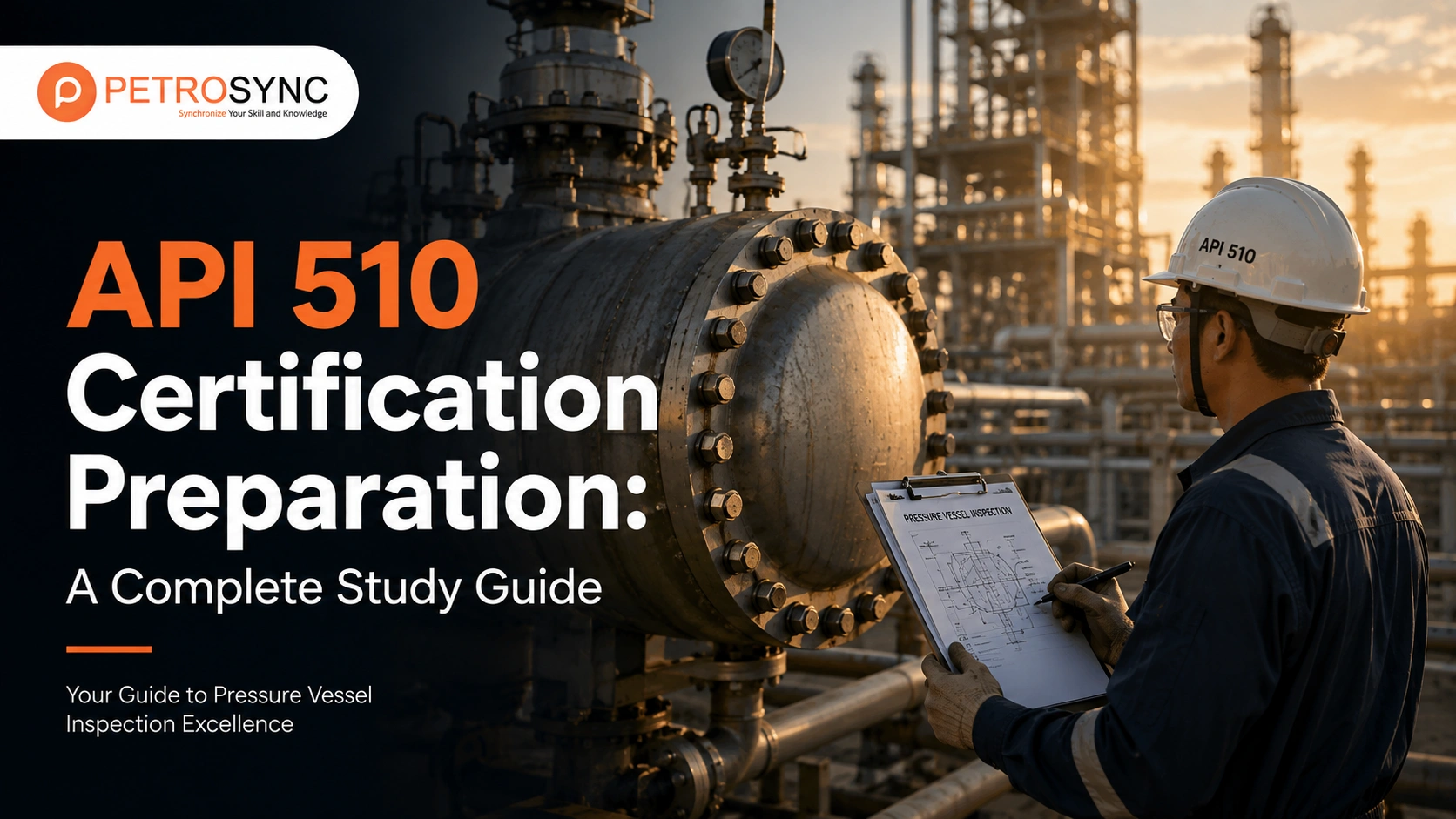
Preparing for API 510 Certification involves more than simply studying technical references before the exam. Candidates should confirm eligibility, review the Body of Knowledge, plan resources and budget, and develop a structured strategy early.
Whether pursuing API 510 certification for career growth or professional development, a clear roadmap makes preparation more manageable and effective.
What Should You Prepare Before Pursuing API 510 Certification?
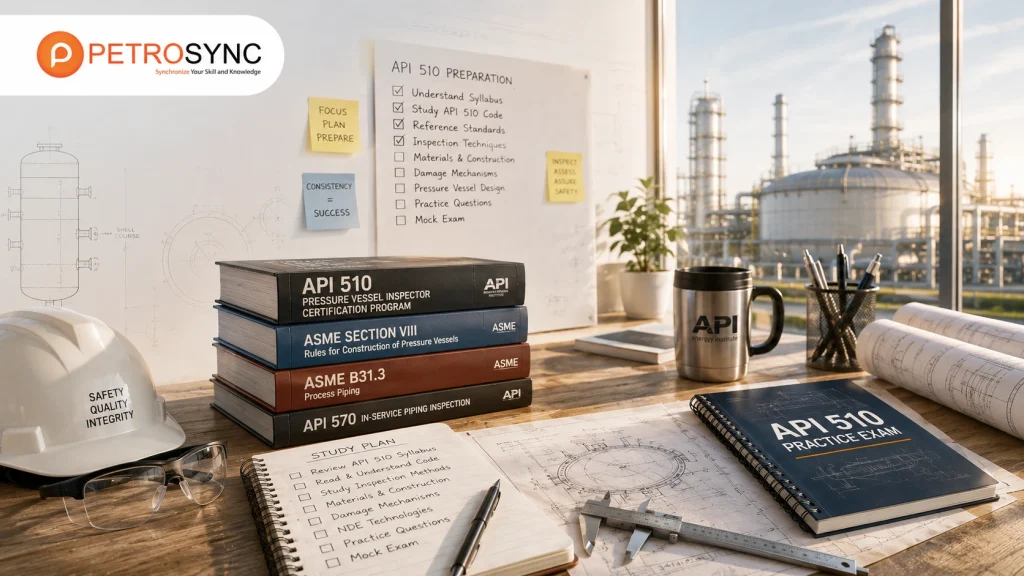
Successful API 510 certification starts before submitting your exam application. Verify eligibility, review references, estimate costs, and follow a structured preparation plan.
1. Meet the API 510 Certification Requirements
First, confirm API 510 eligibility and prepare supporting documents to verify your education and inspection experience, preventing potential application delays.
What Are the API 510 Certification Requirements?
API evaluates each candidate based on a combination of education, industry experience, and relevant inspection activities. Although the exact eligibility criteria are periodically updated through the API Individual Certification Programs (ICP), candidates generally need to prepare the following:
Education requirements
- Academic qualifications recognized by the API ICP program.
Industry experience requirements
- Relevant experience in pressure vessel inspection, maintenance, repair, or related engineering activities. The required years of experience vary depending on your educational background.
Supporting documents
- Employment records, experience verification, educational certificates, and other documents requested during the application process.
Eligibility criteria based on the latest API ICP requirements
- Candidates should always verify the most recent eligibility requirements published by the API before submitting their application.
Before continuing with your preparation, review the complete API 510 Certification Requirements to ensure you meet the latest eligibility criteria and understand the required documentation.
2. Learn About API 510
Once you have confirmed your eligibility, the next step is understanding what the certification actually covers. Many candidates begin studying without knowing the scope of the examination, which often results in spending too much time on less relevant topics while overlooking the most important concepts.
API 510 certification evaluates your ability to apply pressure vessel inspection principles, inspection planning, maintenance practices, repair requirements, and applicable industry codes. Rather than relying on memorization alone, you should understand how these standards are applied in real industrial situations.
Developing a study plan based on the official references will help you build knowledge progressively and prepare more effectively for both the examination and practical inspection work.
Where Can You Learn More About API 510?
The API 510 examination is primarily based on official industry publications. Candidates should become familiar with these references before taking the examination.
Recommended learning resources include:
Module API 510
- Learn the inspection, repair, alteration, rerating, and remaining life assessment requirements for pressure vessels operating in the refining and petrochemical industries.
Module API 571
- Study common damage mechanisms that affect pressure vessels, piping systems, and fixed equipment. Understanding these mechanisms helps inspectors identify degradation and recommend appropriate inspection intervals.
Module ASME Section VIII Division 1
- Review the design and construction requirements for pressure vessels. Although API 510 focuses on in-service inspection, understanding the original design code helps inspectors evaluate equipment integrity throughout its service life.
Official API resources and study materials
- Use the latest API Body of Knowledge, publications, practice references, and official certification resources to ensure your study materials align with the current examination scope.
Independent study is essential, but structured training can clarify complex concepts, discuss inspection cases, and help organize your study plan efficiently.
3. Prepare a Budget for the Examination
Preparing for API 510 Certification also requires careful financial planning. Besides the examination fee, candidates should consider several additional expenses that may arise throughout the certification process. Planning these costs early helps prevent unexpected financial challenges and allows you to focus on your studies without unnecessary distractions.
The total budget may vary depending on your location, training preferences, and whether you need to travel to attend a training course or examination. Creating a simple budget plan before starting your preparation can help you estimate the overall investment more accurately.
When planning your certification budget, consider the following expenses:
- Examination fee Allocate funds for the official API 510 certification examination. Since certification fees may change over time, always refer to the latest information published by the American Petroleum Institute (API).
- Training fee While self-study is possible, many professionals choose instructor-led training to better understand technical concepts, clarify difficult topics, and prepare more efficiently for the examination.
- Travel expenses If your selected training provider or examination location is outside your city or country, include transportation costs such as flights, trains, or local travel.
- Accommodation Candidates attending multi-day training programs or examinations away from home should also budget for hotel or other lodging expenses.
- Study materials Depending on your learning approach, you may need to purchase official publications, reference books, or supplementary study materials to support your preparation.
A realistic budget allows you to plan your certification journey with greater confidence and reduces the likelihood of postponing your exam due to financial constraints.
According to PetroSync’s API 510 course page, the listed 2026 training price was USD 3,450 for both the Bandung and Kuala Lumpur batches. This provides a practical reference for estimating the training portion of an API 510 certification budget, although current pricing should be reconfirmed before registration.
4. Request Training Support from Management
Many organizations recognize API 510 Certification as a valuable investment in workforce competency and asset integrity. If your role involves pressure vessel inspection, maintenance, or reliability, discussing your certification plan with your manager can help you gain both financial and operational support throughout the preparation process.
Before submitting your certification application, consider having an early conversation with your supervisor or training department. Explain how the certification aligns with your responsibilities, contributes to regulatory compliance, and supports safer, more reliable equipment operations. A well-prepared proposal often increases the likelihood of receiving organizational support.
Potential forms of support may include:
- Study Leave or Time Off Request dedicated time for self-study, attending instructor-led training, or sitting for the certification examination. Having uninterrupted study time can improve concentration and help you prepare more effectively.
- Company Sponsorship for Training and Certification Some employers provide financial assistance by covering training fees, examination costs, travel expenses, or accommodation as part of employee development programs. This support can significantly reduce the overall cost of certification while helping organizations build stronger in-house inspection capabilities.
Seeking management support benefits both the employee and the organization. While you gain valuable professional credentials and technical knowledge, your company benefits from enhanced inspection competence, improved asset reliability, and a stronger commitment to industry best practices.
5. Register for the API 510 Certification Examination
After confirming your eligibility, completing your study plan, preparing the necessary budget, and arranging any required support, the final preparation step is registering for the API 510 Certification examination. Registering only after these preparations are complete helps ensure you have sufficient time to study and meet the examination schedule with confidence.
Before submitting your application, verify that all required documents are complete and that you understand the current certification policies, examination windows, and eligibility requirements published by the API Individual Certification Programs (ICP). Taking a few extra moments to review your application can help avoid unnecessary delays or administrative issues.
If you are unsure about the application process, required documentation, or examination schedule, read our complete How to Get API 510 Certification guide for a detailed explanation of each registration step before applying.
What are the Most Common Mistakes in API 510 Certification Preparation?
Many candidates invest significant time preparing for API 510 Certification, yet not all preparation methods lead to positive results. In many cases, unsuccessful attempts are not caused by a lack of effort but by ineffective study strategies, poor planning, or an incomplete understanding of the certification scope. Recognizing these common mistakes early can help you prepare more efficiently and increase your confidence before the examination.
Underestimating the Exam Scope
One of the most common mistakes is assuming that API 510 only covers pressure vessel inspection procedures. In reality, the certification evaluates your understanding of multiple technical references, engineering principles, inspection practices, and industry standards.
Candidates who begin studying without reviewing the API 510 Body of Knowledge often overlook important topics and spend too much time on areas that carry less weight in the examination. Reviewing the exam scope first allows you to prioritize your study plan and allocate sufficient time to each subject.
Starting Preparation Too Late
API 510 Certification requires more than a few weeks of intensive study. Many professionals underestimate the amount of time needed to understand technical standards, review code requirements, and practice applying inspection concepts.
Starting your preparation several months before the examination provides enough time to build knowledge gradually, revisit difficult topics, and strengthen your understanding without unnecessary pressure. Early preparation also gives you flexibility to adjust your study schedule if work responsibilities or personal commitments arise.
Memorizing Instead of Understanding
Another common mistake is focusing solely on memorizing code clauses or definitions. The examination evaluates your ability to interpret standards and apply them to practical inspection scenarios, not simply memorize requirements.
Focus on understanding inspection requirements, damage mechanisms, and how different codes work together in real industrial applications.This approach improves both exam performance and long-term professional competence.
Ignoring Official API Publications
Some candidates rely only on unofficial summaries, online notes, or practice questions without studying the original API publications. Although supplementary materials can support learning, they should never replace the official references.
Using the latest API 510, API 571, ASME Section VIII Division 1, and other listed references keeps your preparation aligned with current certification requirements.
Lack of Calculation Practice
Technical calculations form part of the knowledge expected from API 510 professionals. Candidates who only read theory without practicing calculations may struggle when interpreting inspection data or solving engineering problems during the examination.
Regular practice helps improve accuracy, strengthens problem-solving skills, and increases confidence when working through calculation-based questions.
Studying Without a Structured Plan
Many professionals study without clear objectives or a consistent schedule. This can lead to incomplete topics and inefficient study time.
A structured study plan helps organize materials, track progress, and allocate more time to challenging subjects. Even a weekly schedule can improve preparation and maintain focus until exam day.
What is the Right Way to Prepare for API 510 Certification?
The most effective API 510 Certification preparation combines careful planning, consistent study habits, and access to reliable learning resources. Successful candidates typically follow a structured approach, building knowledge step by step while gaining confidence instead of relying on last-minute revision.
A practical preparation strategy begins with understanding the certification requirements and reviewing the API Body of Knowledge. Candidates can create a realistic study schedule, focus on technical references, practice inspection concepts, and assess their progress regularly. This approach improves exam readiness and strengthens practical inspection knowledge.
Although independent study remains an important part of the preparation process, many professionals choose instructor-led training to complement their learning. Structured training provides a guided learning path, expert discussions, and practical examples that can be difficult to gain through self-study alone.
What Are the Benefits of Taking API 510 Training Before the Certification Exam?
Training is not a substitute for independent study, but it can make the preparation process more structured and efficient. A well-designed training program connects relevant standards, reinforces inspection principles, and provides practical insights for certification exams and real-world responsibilities.
Some of the key benefits of taking API 510 training before the certification exam include:
- Curriculum aligned with the API 510 Body of Knowledge A structured curriculum helps ensure that your study focuses on the topics covered in the certification examination, reducing the risk of overlooking important subject areas.
- Coverage of API 510, API 571, and ASME Section VIII fundamentals Instructor-led training brings together the primary technical references into a logical learning sequence, making it easier to understand how these standards complement one another during pressure vessel inspection.
- Practical case studies and technical discussions Learning through real industrial scenarios allows candidates to connect theoretical requirements with practical inspection challenges, strengthening both technical understanding and decision-making skills.
- Experienced industry instructors Guidance from professionals with field experience provides valuable perspectives on inspection practices, code interpretation, and common challenges encountered in industrial facilities.
- Flexible delivery options Many training providers offer classroom, virtual, or onsite learning formats, allowing candidates to select an option that best fits their schedule and organizational requirements.
- Certificate of completion Completing a professional training program demonstrates your commitment to continuous learning and provides documented evidence of your participation in structured technical development.
Choosing the right training program should complement—not replace—your own study efforts. Combining self-study with structured training creates a balanced approach, helping candidates face the API 510 Certification exam with greater confidence and understanding.
Join PetroSync Training for Solid Preparation and Success in API 510 Certification
Preparing for API 510 Certification requires more than reading technical standards independently. Self-study builds foundational knowledge, while structured training offers expert guidance and practical discussions to strengthen understanding and organize certification preparation.
PetroSync offers API 510 Training for certification preparation and pressure vessel inspection knowledge. The course combines technical learning with practical industry discussions.
When joining PetroSync API 510 Training, participants can expect:
- Training sessions at a 4–5 star hotel
- Refreshments throughout the training
- Two coffee breaks per day
- Lunch buffet
- High-quality training materials
- Certificate of Attendance
In addition to these facilities, participants can interact with industry professionals, discuss inspection challenges, and ask questions directly to experienced instructors. This collaborative environment strengthens technical understanding and provides practical insights for certification preparation and daily inspection responsibilities.
Whether preparing for your first API 510 Certification or refreshing technical knowledge, structured training can strengthen your overall exam preparation.
Are You Ready to Start Your API 510 Certification Journey with PetroSync?
Preparing for API 510 Certification requires understanding requirements, studying technical references, planning your budget, and following a structured learning plan. Combining independent study with professional training can deepen your understanding of inspection principles, industry standards, and practical applications.
A structured learning environment also provides opportunities to clarify complex topics and stay focused throughout your preparation journey.
Frequently Asked Questions (FAQ)
Start by checking whether you meet the latest API ICP eligibility requirements. Then prepare your supporting documents, review the API 510 Body of Knowledge, plan your study resources and budget, and create a realistic preparation schedule.
You need to understand more than API 510 alone. Your preparation should cover API 510, API 571, ASME Section VIII Division 1, and other references included in the latest API 510 Body of Knowledge.
Starting several months before the exam is recommended. This gives you enough time to understand technical standards, practice calculations, review difficult topics, and avoid last-minute preparation.
Yes, self-study is an essential part of preparation. However, structured training can help you understand complex technical topics, connect different standards, discuss practical inspection cases, and follow a more organized study path.
You should consider more than the examination fee. Your budget may also need to cover training, study materials, travel, and accommodation, depending on your preparation approach and training location.

Results-oriented and thorough SEO specialist with extensive experience in conducting keyword research, developing and implementing digital website promotion strategies and plans, managing campaigns to develop company websites in the digital world, excellent knowledge of marketing techniques and principles, and attentive strong attention to detail.

Business Development Manager at PetroSync with 12+ years of experience in professional training and business development across the energy and industrial sectors.