

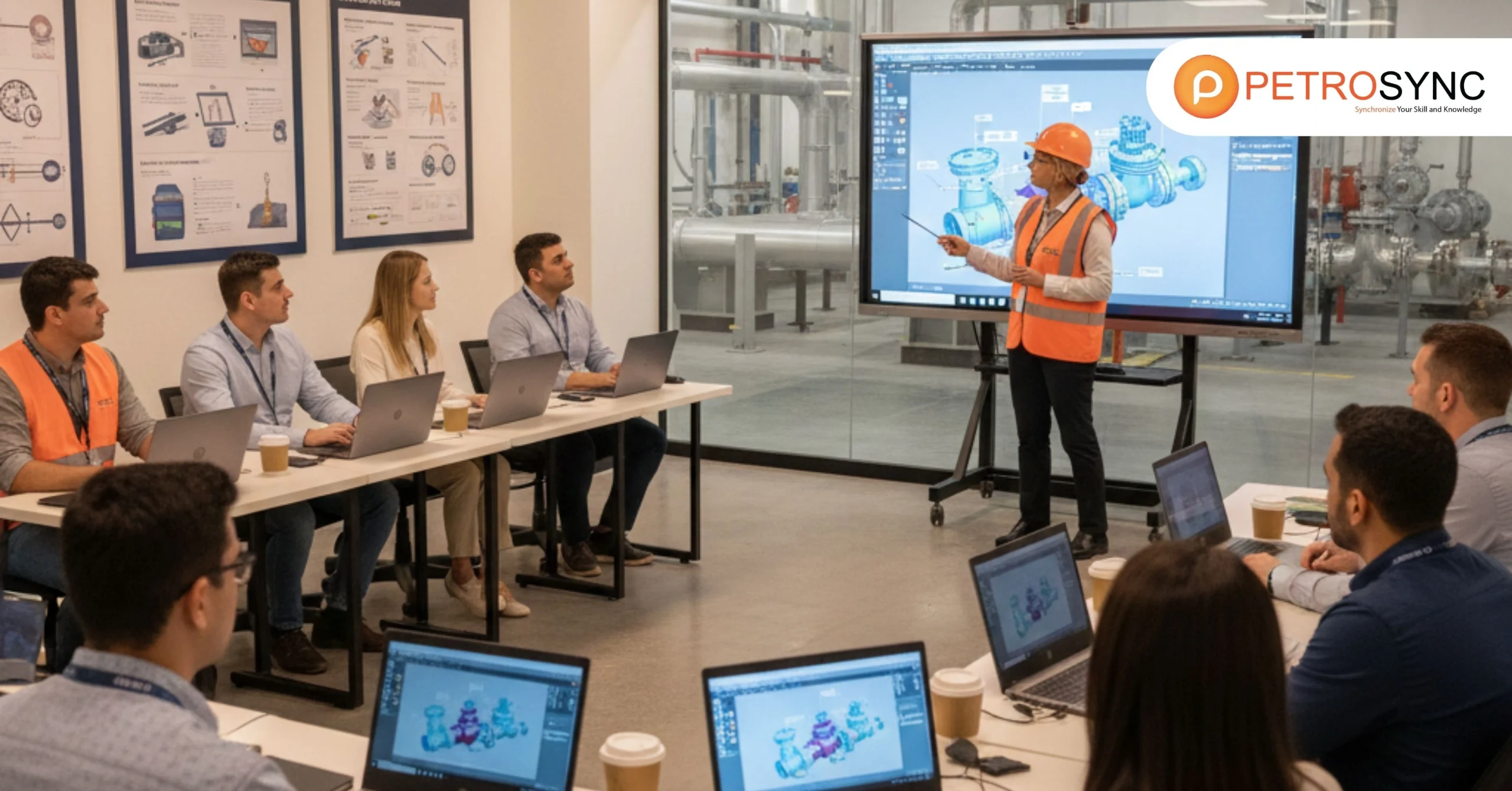
Mechanical design courses are essential for engineers and senior managers seeking to tackle today’s complex engineering challenges. In industries like EPC, oil and gas, and heavy industry, professionals face growing pressure to deliver projects faster, safer, and more cost-effectively.
For engineering directors and CEOs, staying competitive isn’t just about adopting the latest tools — it’s about equipping teams with advanced mechanical design expertise that drives tangible business results.
These courses bridge traditional engineering approaches with the demands of modern industry. They don’t simply teach software; they develop critical thinking, problem-solving, and analytical skills needed to optimize designs, assess operational risks, and ensure long-term reliability.
By investing in mechanical design training, organizations reduce costly errors, enhance safety, accelerate project timelines, and strengthen both team performance and overall organizational growth.
Why Mechanical Design Courses Are Essential in Today’s Engineering Challenges
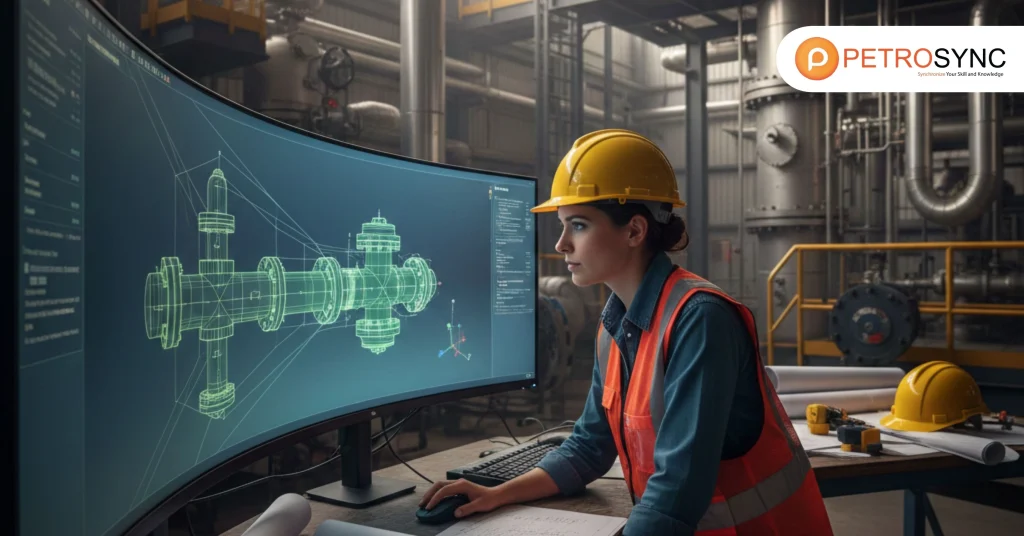
Mechanical design courses are vital because modern engineering requires comprehensive knowledge of structural integrity, fatigue, material behavior, pressure systems, and compliance with global standards like ASME and API. Without these skills, professionals risk costly mistakes, project delays, and compromised safety.
Organizations that adopt advanced mechanical design principles — including CAD, CAE, and reliability-based engineering — achieve lower error rates and higher efficiency. Companies implementing sophisticated CAD workflows and simulation-driven designs report fewer design iterations, reduced rework, and accelerated project delivery.
In sectors like oil and gas, where equipment failures can lead to major safety incidents, these competencies are indispensable.
What You Will Gain from Mechanical Design Courses to Strengthen Engineering Capability
Mechanical design courses provide engineers with practical skills that translate directly into improved project outcomes. Key benefits include:
1. Advanced CAD / 3D Mechanical Design & Optimization
Engineers learn parametric CAD modeling and 3D design, enabling rapid iterations and efficient solutions. Optimization techniques allow teams to identify the most effective geometry for both function and manufacturability, improving efficiency and reducing material waste.
2. Failure Analysis, Material Behavior & Fatigue Assessment
Training in fatigue assessment, material characterization, and failure modes enables engineers to predict weaknesses and implement improvements. Organizations using these methods reduce downtime and extend equipment life.
3. Pressure Vessel, Piping & Rotating Equipment Design
Courses teach design of pressure systems, piping networks, and rotating machinery according to global standards. Mastery of these skills ensures operational safety and compliance.
4. Stress Analysis & FEA for Structural Integrity
Finite Element Analysis allows engineers to simulate stresses, deformations, and loads before fabrication, minimizing prototype costs while ensuring designs meet performance requirements.
5. Reliability and Lifecycle-Based Engineering Decision Making
Engineers learn to make decisions balancing cost, risk, and performance, creating designs that are safer, more durable, and aligned with long-term operational goals.

Mechanical Design Courses that Deliver Real Performance Results
Mechanical design courses deliver measurable outcomes in real-world engineering:
1. Reduce design errors & prevent costly modifications
Advanced CAD and simulation help catch design issues early, reducing rework and on-site corrections.
2. Improve equipment safety and operational reliability
Engineers trained in failure analysis and fatigue assessment produce designs that minimize breakdowns and maximize uptime.
3. Increase engineering precision and shorten project timelines
Automated CAD workflows and parametric libraries streamline tasks, improving precision and speeding project delivery.
4. Ensure compliance with ASME, API & global mechanical standards
Engineers gain the knowledge to produce compliant designs, facilitating inspections, approvals, and client confidence.
Choosing Mechanical Design Courses that Accelerate Professional Growth
Mechanical design courses accelerate professional growth when they:
1. Are taught by experienced industry experts
Instructors with real-world project experience provide insights that purely academic training cannot replicate.
2. Include real case studies & hands-on application
Applying theory to actual engineering challenges ensures knowledge is immediately transferable.
3. Follow international standards & best practices
Training aligned with ASME, API, ISO, and other standards ensures globally recognized methods.
4. Offer certifications recognized by EPCs and industry leaders
Certification strengthens both personal credentials and organizational credibility.
Transform Your Capability with PetroSync Mechanical Design Courses — Engineer Tomorrow with Confidence
Mechanical design courses from PetroSync provide senior managers, directors, and executives with a strategic advantage. Participants gain:
- Instruction from seasoned mechanical engineers with extensive field experience.
- Hands-on exercises reflecting real-world challenges, including pressure vessel design and structural stress analysis.
- Curriculum aligned with ASME, API, and global mechanical standards.
- Certification recognized by EPCs, oil & gas operators, and leading industrial companies.
Organizations investing in these courses experience tangible results: engineering teams reduce design iteration time by up to 30%, cut costly rework, and improve compliance with global standards. PetroSync’s training not only enhances skills but also builds confidence, operational reliability, and sustainable business performance.
By equipping your engineers with PetroSync’s advanced mechanical design training, you prepare your team to tackle tomorrow’s challenges today — delivering precise, reliable, and innovative solutions that drive lasting growth.

Results-oriented and thorough SEO specialist with extensive experience in conducting keyword research, developing and implementing digital website promotion strategies and plans, managing campaigns to develop company websites in the digital world, excellent knowledge of marketing techniques and principles, and attentive strong attention to detail.