

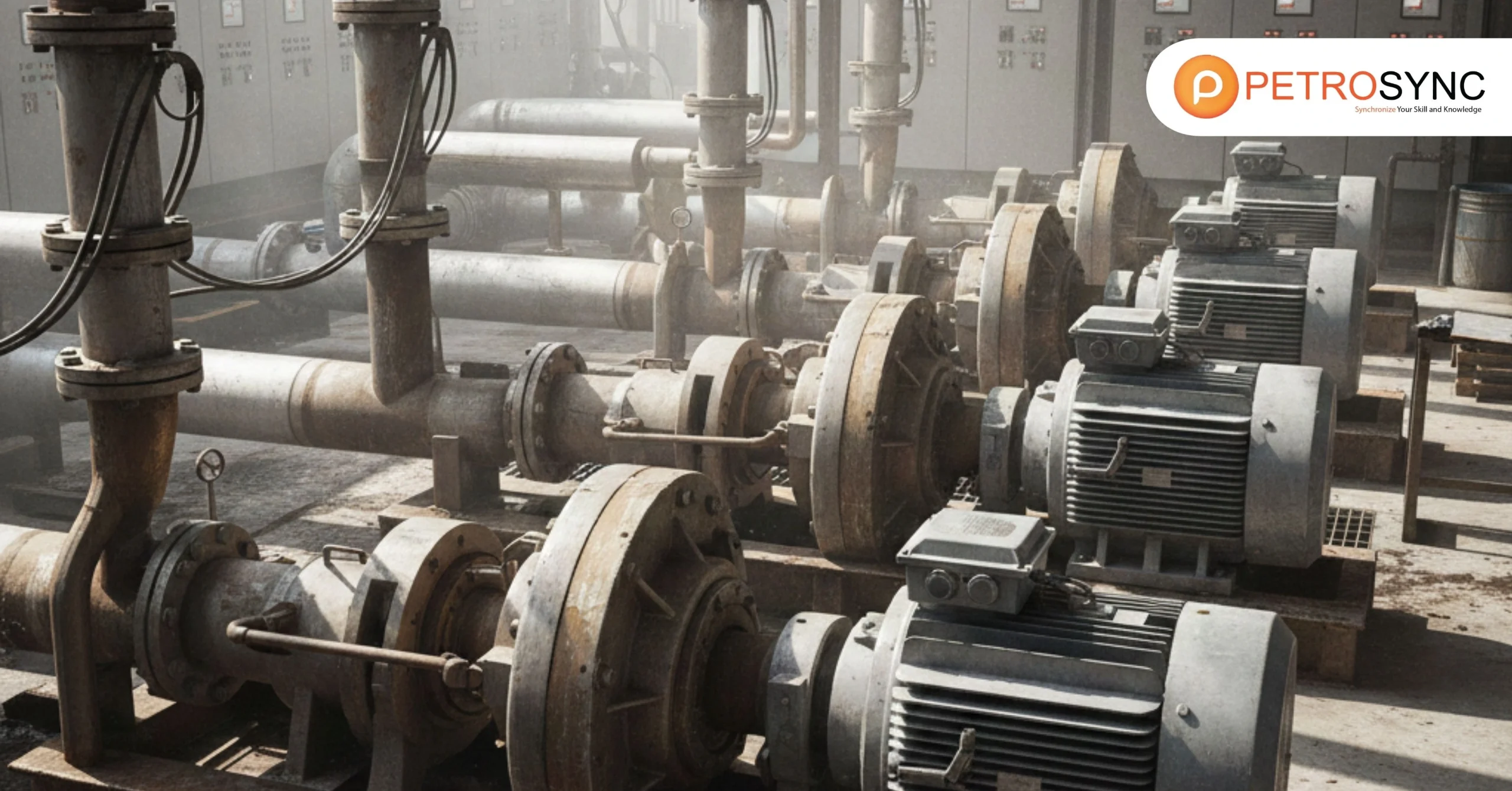
Rotating equipment in oil and gas plants—including pumps, compressors, turbines, and motors—is critical for ensuring plant efficiency, reliability, and continuous production. These machines serve as the mechanical heartbeat of operations, enabling fluid transport, pressure control, and power generation.
Despite their importance, rotating equipment faces constant stress, wear, and risk of unplanned downtime. For senior leaders, operations managers, and decision-makers, ensuring peak performance is not just a technical concern—it is a strategic priority.
This article explores how optimizing rotating equipment reliability can increase plant uptime, reduce operational costs, and deliver measurable business value.
What Is Rotating Equipment?
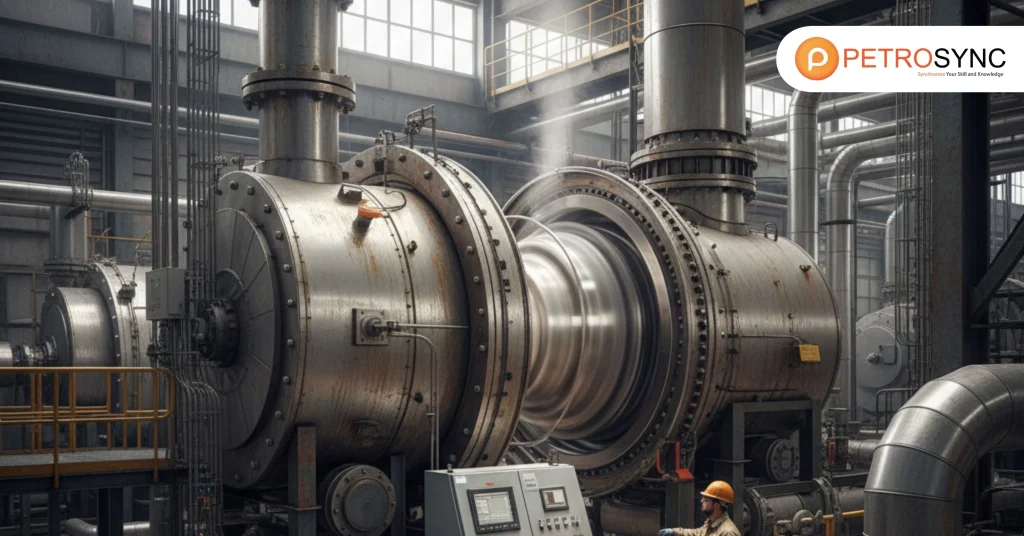
Rotating equipment refers to machinery that has a rotating component, such as pumps, motors, turbines, compressors, and fans, and these devices have moving parts and rotate during operation.
Unlike static equipment, engineers design this equipment to convert energy into mechanical motion, performing tasks like moving fluids, generating power, or driving mechanical systems.
This type of equipment is crucial in various industries such as manufacturing, energy production, transportation, and construction due to its ability to perform mechanical work through rotational motion.

How Many Types of Rotating Equipment Are There?
There are several types of rotating equipment used in different industries. Some common types include pumps, motors, turbines, compressors, fans, and generators. These rotating equipment types serve various purposes such as moving fluids, generating power, compressing gasses, circulating air, and converting mechanical energy into electrical energy
1. Compressors
A compressor in the industry is a type of machine that increases the pressure of gasses or air by reducing its volume. It works by drawing in the gas or air and then compressing it to a higher pressure before releasing it.
Compressors are considered rotating equipment because they have moving parts that rotate during operation, such as rotors or blades, which create the compression action. This rotational motion is essential for the compressor to perform its function of increasing the pressure of gasses or air, making it a crucial component in various industrial processes like refrigeration, air conditioning, power generation, and manufacturing.
2. Gas Turbines
Gas turbines are a type of equipment used in various industries, including power generation, aviation, and oil and gas. They are engines that utilize combustion to produce a high-velocity gas stream, which then drives a turbine to generate mechanical power.
In the industry, power plants commonly use gas turbines to produce electricity efficiently. Aircraft engines use them for propulsion, and oil and gas facilities use them to drive compressors and pumps.
The role of a gas turbine as rotating equipment is significant because it converts the chemical energy of fuel into mechanical energy through the combustion process and the rotation of the turbine blades.
This mechanical energy can then be used to drive generators, compressors, or other machinery, depending on the specific application. Gas turbines are relevant as rotating equipment due to their ability to provide reliable and high-power output, making them essential in various industrial processes and power generation systems.
3. Pumps
In the industry, pumps are devices used to move fluids such as liquids or gasses from one place to another. They operate by creating mechanical pressure or suction to push or pull the fluid through pipes or channels.
Pumps play a crucial role in various industrial processes by transferring substances like water, chemicals, oil, or gasses efficiently and reliably. As rotating equipment, pumps are essential for moving fluids in sectors such as manufacturing, water treatment, oil and gas production, and chemical processing. They help maintain the flow of materials within systems and are vital components in ensuring smooth operations across different industries.
4. Steam Turbines
Steam turbines are a type of rotating equipment used in various industries, including power generation, oil and gas, and manufacturing. These machines convert thermal energy from steam into mechanical energy, which operators can use to drive generators or other systems.
Steam turbines play a crucial role in power plants by using high-pressure steam to spin turbine blades, which are connected to a shaft. As the blades rotate, they drive a generator to produce electricity. In industries such as oil and gas, steam turbines can be used for processes like driving compressors or pumps. Their relevance as rotating equipment lies in their ability to efficiently convert steam energy into mechanical work, making them essential for power generation and industrial processes requiring mechanical energy.
5. Gearboxes
Gearboxes transmit and control rotational speed and torque between machinery components, adjusting speed or motion direction. Gearboxes ensure efficient power transmission and reliable operation of rotating equipment like motors, turbines, pumps, and compressors.
6. Centrifugal Pump
A centrifugal pump is a type of rotating equipment used in various industries to move fluids, such as liquids or gasses, by utilizing centrifugal force. It consists of an impeller that rotates inside a casing, creating a high-velocity flow that increases the fluid’s kinetic energy. This energy is then converted into pressure, pushing the fluid through the pump and into the desired system or process.
The role of a centrifugal pump is crucial in many applications. Industries use centrifugal pumps to efficiently move water, chemicals, oils, and other fluids in various processes.
11. Reciprocating Engine / Heat Engine
A reciprocating engine converts heat energy into mechanical work, powering machinery like pumps, compressors, generators, and vehicles.
The role of a reciprocating engine or heat engine is crucial in industrial processes and transportation. These engines drive pumps and compressors, enabling fluid handling and processing in oil, gas, manufacturing, and power industries.
Reciprocating engines convert fuel into mechanical energy, powering cars, trucks, and ships across industries and transportation.
12. Blowers
Blowers are mechanical devices used in various industries to move air or gasses. They are a type of rotating equipment that works by generating airflow through rotating blades or impellers. Blowers play a crucial role in processes that require air circulation, ventilation, or gas compression.
Blowers use rotational motion to create airflow, supporting cooling, drying, aeration, pressure control, and industrial process efficiency.
13. Pressure Enhancement
Pressure enhancement in the industry refers to the process of increasing the pressure of fluids or gasses within a system. This enhancement is important for various reasons such as improving efficiency, facilitating transportation, or meeting operational requirements.
Pumps and compressors enhance fluid or gas pressure, with pumps for liquids and compressors for gasses.
What Is The Difference between Static and Rotating Equipment?
The main difference between static and rotating equipment lies in their movement during operation. Static equipment stays in one place and doesn’t move, such as tanks and pipes. On the other hand, rotating equipment has moving parts that spin or rotate during operation, like pumps and compressors.
Static equipment stores or contains materials, while rotating equipment moves fluids or gases and generates mechanical power. Both types are important in industrial processes but serve different purposes based on their movement characteristics.
Rotating equipment drives oil and gas operations, performing key tasks while meeting strict safety, reliability, and compliance standards.
Two prominent standards in this regard are API standards and ASME codes. These standards guide the design, installation, and maintenance of rotating equipment, ensuring operational efficiency and integrity.
PetroSync offers specialized training programs in API standards and ASME codes to help engineers master the design, operation, and maintenance of rotating equipment in the oil and gas industry. These training courses cover a wide range of topics related to pumps, compressors, turbines, and other rotating machinery, providing you with valuable insights and practical skills to ensure safe and efficient operation of equipment.
By attending PetroSync’s API training and ASME training, you can enhance your knowledge, stay updated with industry standards, and improve your ability to manage and optimize rotating equipment in various industrial applications.

Results-oriented and thorough SEO specialist with extensive experience in conducting keyword research, developing and implementing digital website promotion strategies and plans, managing campaigns to develop company websites in the digital world, excellent knowledge of marketing techniques and principles, and attentive strong attention to detail.