


- Carbon Capture and Storage is a practical net-zero solution that cuts emissions while protecting asset value and operational continuity.
- CCS shifts carbon management from compliance to strategy, directly shaping investment decisions, risk exposure, and market credibility.
- The technology captures, transports, and stores CO₂ permanently, delivering measurable reductions critical for ESG and regulatory alignment.
- Multiple capture methods enable adoption across hard-to-abate sectors without dismantling existing infrastructure.
- Early CCS adoption strengthens long-term competitiveness through incentives, funding access, and leadership-ready decarbonization capability.
Carbon Capture and Storage (CCS) has become one of the most critical technologies shaping the future of net-zero strategies across the global energy industry. As the energy transition accelerates, oil and gas companies are no longer debating whether decarbonization is necessary, but how it can be executed without undermining operational stability, asset value, and long-term profitability.
Across the oil and gas value chain, executives face increasing pressure to reduce carbon intensity while maintaining reliable production and financial performance. This dual challenge has elevated carbon management from a regulatory obligation into a strategic business priority—one that directly influences investment decisions, stakeholder confidence, and competitive positioning.
Among available decarbonization solutions, Carbon Capture and Storage stands out as a practical and scalable pathway for emissions-intensive industries that cannot rely solely on renewable energy or electrification. Rather than dismantling existing assets, CCS enables organizations to significantly lower emissions while preserving infrastructure value and operational continuity.
Understanding why CCS plays a central role in credible net-zero pathways is therefore essential, especially at the leadership level where long-term strategy is defined.
What is Carbon Capture and Storage and How Does it Work?
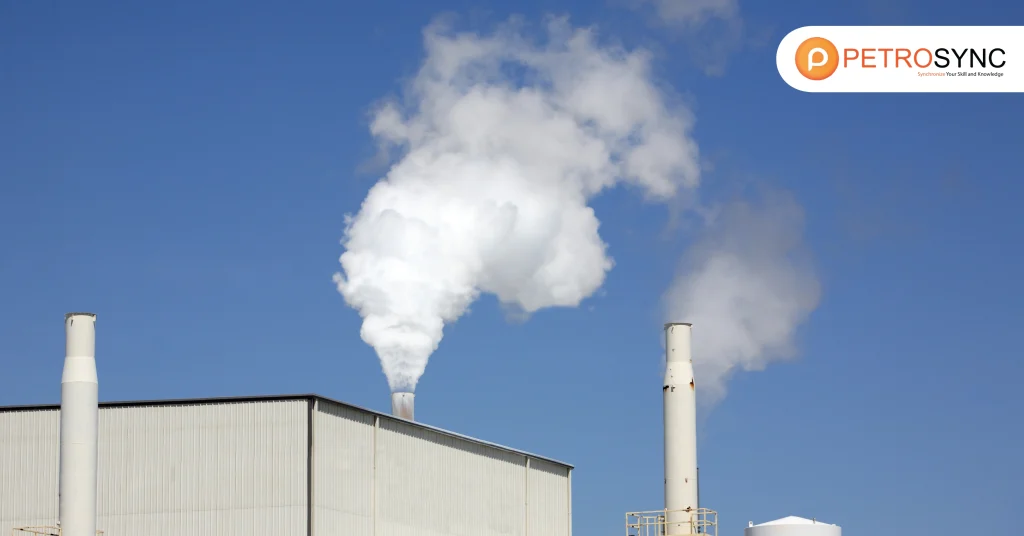
Carbon Capture and Storage integrates systems that prevent carbon dioxide (CO₂) from industrial activities from entering the atmosphere. The process consists of three interconnected stages: capturing CO₂ at the source, transporting it safely, and storing it permanently in secure underground formations.
CO₂ capture typically occurs at large stationary sources such as power plant, refineries, petrochemical complexes, cement facilities, and hydrogen production units. Modern capture systems are capable of removing up to 90% or more of emitted CO₂, making CCS one of the most effective emission-reduction technologies currently available for industrial-scale operations.
Once captured, CO₂ is compressed into a dense state and transported—most commonly via pipelines—to designated storage locations. The final stage involves injecting CO₂ deep underground into carefully selected geological formations that isolate it from the atmosphere over the long term.
Unlike indirect offset mechanisms, CCS delivers direct, measurable, and verifiable emissions reduction, which is increasingly critical for ESG reporting, regulatory compliance, and long-term investor confidence.
Why is Carbon Capture and Storage Critical for Achieving Net Zero?
Achieving net zero without CCS presents a significant structural challenge. Many industrial processes inherently generate CO₂ as part of their chemical reactions or high-temperature operations. For these sectors, emissions cannot be fully eliminated through renewable energy adoption alone.
Energy transition outlooks consistently indicate that large-scale CCS deployment is essential to close the gap between current emissions trajectories and net-zero targets. CCS directly addresses emissions from hard-to-abate sectors, including refining, petrochemicals, steel, cement, and gas processing.
From a business perspective, CCS delivers tangible strategic value:
- It allows companies to decarbonize existing assets rather than retiring them prematurely.
- It reduces exposure to carbon pricing mechanisms and future regulatory constraints.
- It enables low-carbon product pathways, such as blue hydrogen and low-emission fuels.
- It strengthens long-term license-to-operate in carbon-sensitive markets.
Organizations that integrate CCS into their decarbonization roadmap early tend to protect asset value more effectively and maintain stronger resilience during periods of regulatory and market transition.
What are the Main Carbon Capture and Storage Methods?
1. Post-Combustion Capture
Post-combustion capture removes CO₂ from exhaust gases after fuel combustion. This method is widely applicable because it can be retrofitted to existing facilities with minimal disruption to core operations. Chemical solvents selectively absorb CO₂ from flue gas streams, allowing the remaining gases to be released with significantly lower carbon content.
Post-combustion systems represent one of the most mature CCS technologies and have already been deployed at commercial scale across multiple industrial sectors. For asset-intensive organizations, this approach offers a practical entry point into CCS adoption.
2. Pre-Combustion Capture
Pre-combustion capture separates CO₂ before combustion occurs. Hydrocarbon fuels are converted into a mixture of hydrogen and CO₂, after which the CO₂ is removed and the hydrogen is used as a low-carbon energy source.
This method achieves high capture efficiency and plays a central role in low-carbon hydrogen production, which is increasingly viewed as a strategic fuel for future power generation, refining, and industrial heating.
Pre-combustion systems are particularly relevant for integrated facilities with existing hydrogen demand.
3. Oxy-Fuel Combustion Capture
Oxy-fuel combustion uses nearly pure oxygen instead of air during combustion. This results in a flue gas stream composed primarily of CO₂ and water vapor, simplifying separation.
Although still evolving, oxy-fuel combustion shows strong potential for applications where high-purity CO₂ streams are advantageous, including cement manufacturing and next-generation power plants.
4. Direct Air Capture (DAC)
Direct Air Capture removes CO₂ directly from ambient air rather than from industrial point sources. While currently more energy-intensive, DAC offers a critical advantage: the ability to deliver negative emissions. DAC increasingly plays a critical role in addressing residual emissions that operational improvements alone cannot eliminate, especially in long-term net-zero strategies.

How is Carbon Capture and Storage Implemented in Safe Carbon Storage?
1. Geological Storage: Depleted Oil & Gas Reservoirs
Depleted oil and gas reservoirs represent one of the most secure and well-understood CO₂ storage options. These formations have safely contained hydrocarbons for millions of years and possess proven sealing characteristics.
For oil and gas operators, this option offers a strategic advantage. Existing subsurface data, wells, and infrastructure can often be repurposed, reducing development costs while extending the economic life of mature assets.
2. Deep Saline Aquifers
Deep saline aquifers provide vast storage capacity and are widely distributed across many regions. Located far below potable water sources, these formations are unsuitable for other uses and therefore ideal for permanent CO₂ storage. Their scale makes saline aquifers essential for the long-term expansion of CCS at a global level.
3. Mineralization / Solid Storage
Mineralization converts CO₂ into stable carbonate minerals through reactions with suitable rock formations. This process effectively locks carbon into a solid form, eliminating long-term leakage risks. While still emerging, mineralization highlights the ongoing evolution of CCS technologies beyond conventional storage concepts.
4. Monitoring and Verification for Safety
Safe CO₂ storage relies on rigorous monitoring and verification systems. Operators use seismic surveys, pressure monitoring, and advanced data analytics to track CO₂ behavior underground. Decades of operational experience demonstrate that with proper site selection and monitoring, CO₂ can be stored safely and securely, reinforcing confidence among regulators, investors, and stakeholders.
What Challenges and Opportunities Exist in Carbon Capture and Storage?
Despite its potential, CCS faces challenges such as high upfront capital costs, regulatory complexity, and stakeholder perception. However, these challenges are increasingly balanced by significant opportunities.
Governments offer incentives to accelerate CCS, while financial institutions prioritize funding for credible emissions-reduction projects. Organizations that act early gain competitive advantages through better funding access, strategic partnerships, and strong positioning as low-carbon leaders.
How Professionals Can Stay Ahead in Carbon Capture and Storage Expertise
As CCS becomes integrated into corporate decarbonization strategies, leadership-level understanding is no longer optional. Decision-makers must evaluate CCS from a technical, commercial, and regulatory perspective.
Professionals with CCS expertise can guide investments, manage transition risks, and align carbon strategies with business objectives. In today’s energy landscape, CCS literacy has become a critical leadership capability.
Advance Your Carbon Capture and Storage Knowledge with PetroSync Training
As CCS deployment accelerates globally, organizations require leaders who can translate technical complexity into sound business decisions. This is particularly true for managers and executives responsible for approving investments, managing risk, and ensuring regulatory alignment.
PetroSync designs its training programs to equip experienced professionals with practical, decision-oriented CCS knowledge. Through real-world case studies and industry-focused discussions, participants gain practical insight into safe, economical, and strategic CCS implementation
For senior leaders aiming to future-proof organizations and expertise, investing in CCS capability is no longer optional. PetroSync provides the structured insight needed to lead confidently in the transition toward net zero.
Frequently Asked Questions (FAQ)
Carbon Capture and Storage (CCS) is a technology that captures carbon dioxide (CO₂) emissions from industrial sources, transports it, and stores it permanently in secure underground formations. CCS is critical for net-zero strategies because it enables emissions reduction from hard-to-abate sectors such as oil and gas, refining, cement, and petrochemicals, where emissions cannot be fully eliminated through renewable energy or electrification alone.
CCS operates through three main stages: capturing CO₂ at the emission source, compressing and transporting it—typically via pipelines—and injecting it into deep geological formations for permanent storage. Modern capture systems can remove up to 90% or more of CO₂ emissions, providing direct, measurable, and verifiable emissions reductions.
For oil and gas companies, CCS allows significant emissions reduction while preserving existing asset value and operational continuity. It helps reduce exposure to carbon pricing, supports low-carbon products such as blue hydrogen, and strengthens long-term license-to-operate in increasingly carbon-sensitive markets.
The main CCS capture methods include post-combustion capture, which removes CO₂ from exhaust gases; pre-combustion capture, which separates CO₂ before combustion while producing hydrogen; oxy-fuel combustion, which simplifies CO₂ separation by using pure oxygen; and Direct Air Capture (DAC), which removes CO₂ directly from the atmosphere to support negative emissions.
Captured CO₂ is stored in carefully selected geological formations such as depleted oil and gas reservoirs, deep saline aquifers, or through mineralization processes. Safety is ensured through rigorous site selection, monitoring systems, seismic surveys, and pressure analysis, with decades of experience demonstrating that properly managed CO₂ storage is secure and reliable.

Results-oriented and thorough SEO specialist with extensive experience in conducting keyword research, developing and implementing digital website promotion strategies and plans, managing campaigns to develop company websites in the digital world, excellent knowledge of marketing techniques and principles, and attentive strong attention to detail.