

- Meaning: Oil and gas supports industrial production and energy operations. These resources improve facility continuity and operational performance.
- Benefit: Proper training reduces downtime and maintenance inefficiencies. Strong competency also improves safety and compliance performance.
- Solution: PetroSync provides industry-focused oil and gas training programs. The sessions combine practical learning with operational discussions.
- Advantage: Training uses real industrial case studies and field experience. Participants gain practical insights for operational decision-making.
Unstable oil and gas operations often increase downtime, maintenance delays, and operational safety risks. Many industrial facilities also struggle with inspection readiness and long-term asset reliability performance.
Strong oil and gas competency helps companies improve operational continuity and reduce costly production disruptions significantly. Proper industrial training also strengthens maintenance planning, compliance performance, and operational decision-making accuracy.
What is Oil and Gas?
Oil and gas refers to industrial energy resources used across production, refining, transportation, and manufacturing operations. These resources support industrial productivity, facility performance, and operational continuity across global industries.
Modern oil and gas operations require strong technical competency, maintenance planning, and operational reliability management. Companies also prioritize industrial compliance, inspection readiness, and long-term asset integrity performance.
Types and Industrial Applications of Oil and Gas
Oil and gas supports industrial production systems, energy facilities, and operational activities across multiple sectors worldwide. The following sections explain common types and industrial applications of oil and gas:
1. Common Types of Oil and Gas in Industrial Operations
Crude oil, natural gas, LNG, and condensate support refining, power generation, petrochemical processing, and industrial manufacturing systems. These resources help facilities maintain operational stability and improve production efficiency significantly.
2. Industrial Applications and Operational Use Cases of Oil and Gas
Oil and gas supports drilling operations, refinery systems, offshore production, pipeline transportation, and industrial processing facilities. Effective operational management can improve facility reliability by 40% and reduce downtime risks significantly.
Industrial production environments continue becoming more complex due to rising operational demands and stricter compliance expectations. Poor operational coordination often creates maintenance inefficiencies, inspection delays, and operational continuity risks.
Common Challenges in Managing Oil and Gas
Many industrial facilities face operational difficulties while managing large-scale oil and gas production systems daily. The following sections explain common operational and industrial challenges affecting facility performance:
1. Operational and Technical Challenges
Many facilities experience unstable production performance, equipment failures, and ineffective maintenance coordination activities. Weak operational planning often increases downtime risks and reduces operational reliability performance.
2. Safety, Compliance, and Performance Risks
Poor compliance management can increase operational incidents, regulatory findings, and industrial safety violations significantly. Inconsistent operational procedures may also reduce compliance accuracy by up to 50% during inspections.
3. Cost, Maintenance, and Operational Efficiency Issues
Unplanned shutdowns often increase operational costs and reduce long-term facility productivity performance significantly. Poor maintenance strategies may also shorten equipment lifespan and weaken operational efficiency.
Industrial companies continue improving workforce competency to reduce operational risks and strengthen facility reliability performance. Strong technical understanding also helps teams improve maintenance planning and operational continuity across industrial facilities.
Why Proper Oil and Gas Training Matters in Industrial Operations
Industrial facilities require skilled operational teams to maintain production continuity and improve long-term operational reliability. The following sections explain why proper oil and gas training remains essential for industrial operations:
1. Improving Operational Efficiency and Reliability
Proper oil and gas training helps teams reduce operational downtime by 30% through stronger maintenance coordination practices. Better technical understanding also improves facility reliability and operational continuity performance significantly.
2. Supporting Safety and Compliance Performance
Industrial training strengthens compliance readiness and improves safety procedure implementation across operational environments effectively. Many companies achieve 2x faster certification readiness after structured operational competency development programs.
3. Reducing Operational Errors and Downtime Risks
Well-trained personnel identify operational risks faster and reduce equipment failure incidents significantly across industrial facilities. Better operational awareness also minimizes costly shutdowns and unexpected production interruptions.
4. Strengthening Technical and Operational Understanding
Oil and gas training improves technical understanding related to asset integrity and industrial operational systems management. Teams also develop stronger troubleshooting capabilities and inspection readiness performance.
5. Supporting Better Operational and Business Decisions
Operational training helps managers make faster decisions based on technical analysis and operational performance evaluations. Better decision-making often improves operational efficiency and long-term industrial business sustainability.
“Companies with stronger oil and gas competency consistently achieve higher operational reliability and lower industrial downtime risks.”
Industrial companies with highly skilled operational teams usually achieve better maintenance performance and stronger compliance readiness. Strong workforce competency also supports safer operations and long-term industrial operational excellence.
The Difference Between Proper Oil and Gas Training and Limited Operational Knowledge
Many industrial companies still rely on limited operational knowledge without structured technical competency development programs. The comparison below explains the operational impact of professional oil and gas training:
|
Operational Area |
Proper Oil and Gas Training |
Limited Operational Knowledge |
|
Inspection Readiness |
✅ Better inspection preparation and compliance accuracy |
❌ Frequent inspection findings and operational delays |
|
Maintenance Planning |
✅ Structured maintenance coordination and reliability improvement |
❌ Reactive maintenance and higher downtime risks |
|
Operational Reliability |
✅ Improved operational continuity and stable facility performance |
❌ Frequent operational interruptions |
|
Safety and Compliance |
✅ Stronger industrial compliance implementation |
❌ Increased operational safety risks |
|
Technical Understanding |
✅ Better troubleshooting and operational analysis capabilities |
❌ Limited operational problem-solving skills |
|
Cost Efficiency |
✅ Reduced downtime and lower operational losses |
❌ Increasing maintenance and production costs |
|
Career Development |
✅ Stronger certification readiness and industry competitiveness |
❌ Slower professional growth opportunities |
Professional oil and gas training creates measurable operational improvements across industrial production environments and energy facilities. Companies also benefit from stronger workforce capability and better long-term operational sustainability.
Industrial professionals increasingly seek practical training aligned with real industrial operational and maintenance requirements worldwide. Strong technical competency also becomes essential for improving operational reliability and global industrial competitiveness.
Industry-Focused Oil and Gas Training Program by PetroSync
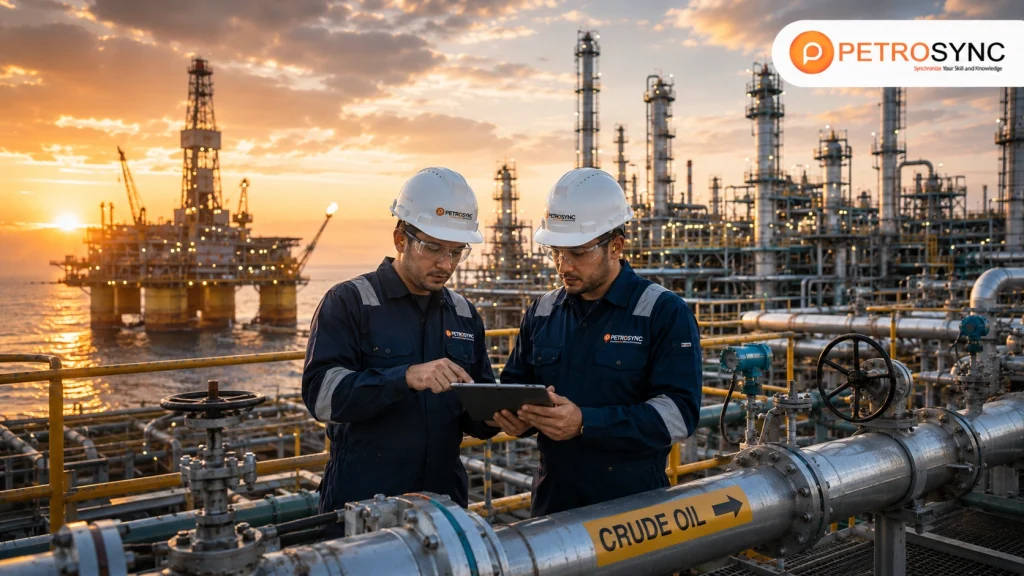
PetroSync provides professional oil and gas training programs for industrial and energy sector professionals worldwide. The programs focus on operational excellence, maintenance planning, inspection readiness, asset integrity, and industrial compliance performance.
Training sessions combine practical operational discussions with industry-focused technical learning based on real industrial applications. Participants also gain valuable operational insights supporting certification preparation and long-term technical competency development.
Why Industry Professionals Choose PetroSync for Oil and Gas Training
Industrial professionals require practical learning programs that directly support operational performance and workforce competency improvement. The following sections explain why many companies choose PetroSync for oil and gas training:
1. Practical Learning Based on Real Industrial Applications
Training materials focus on operational reliability, maintenance planning, and industrial operational problem-solving activities daily. Participants learn practical approaches used across real industrial facilities and production systems.
2. Industry-Relevant Case Studies and Operational Discussions
Operational discussions use realistic industrial case studies from oil and gas operational environments worldwide. These discussions help participants improve operational analysis and technical decision-making skills significantly faster.
3. Sessions Delivered by Experienced Industry Practitioners
Experienced practitioners share operational knowledge based on real industrial projects and field operational experience directly. Participants gain practical operational insights beyond standard theoretical industrial learning approaches.
4. Training Materials Designed for Industrial Operational Needs
Training modules support operational continuity, inspection readiness, compliance performance, and maintenance coordination requirements effectively. The materials also help teams improve technical understanding across industrial operational systems.
5. Interactive Learning with Practical Industrial Insights
Interactive discussions encourage participants to solve operational problems using practical industrial approaches and technical evaluations. This learning method improves workplace implementation accuracy and operational understanding significantly.
6. Trusted Training Provider for Energy and Industrial Companies
Many energy and industrial companies trust PetroSync for workforce development and operational competency improvement programs. The training programs support long-term operational excellence and stronger industrial workforce performance globally.
“Strong technical competency helps industrial professionals improve operational reliability, reduce risks, and strengthen long-term career competitiveness.”
Many industrial companies continue investing in workforce development to improve operational continuity and reduce operational risks effectively. Strong technical learning also supports better inspection readiness and long-term industrial operational performance.
Oil and Gas Training Fees and Registration Information
Oil and gas training fees at PetroSync typically start from $3000 depending on program scope and operational learning objectives. Training packages include technical materials, practical industrial discussions, and certification preparation support.
Participants also receive learning guidance from experienced instructors with strong industrial operational and field experience backgrounds. Several programs additionally support inspection readiness and long-term workforce competency development requirements.
Industrial professionals require reliable learning partners to strengthen operational competency and improve long-term industrial career opportunities. Strong technical competency also helps companies improve operational reliability and maintain industrial competitiveness globally.
Consult Your Oil and Gas Training Requirements with PetroSync
Professional oil and gas training helps companies improve operational reliability, technical competency, and industrial compliance performance effectively. Strong workforce capability also supports better maintenance planning and long-term operational continuity improvement.
Join PetroSync training programs to strengthen operational excellence and improve industrial career competitiveness globally. Develop stronger inspection readiness, technical understanding, and operational confidence for future industrial challenges.
Frequently Asked Questions (FAQ)
Oil and gas refers to industrial energy resources used for production, refining, transportation, and manufacturing operations. These resources support operational continuity, industrial productivity, and facility performance across global industries.
Professional oil and gas training helps companies improve operational reliability, maintenance planning, and compliance performance. Strong technical competency also reduces downtime risks and supports better operational decision-making.
Common challenges include equipment failures, unstable production performance, maintenance inefficiencies, compliance risks, and operational downtime. Poor operational coordination can also reduce facility reliability and increase operational costs.
Oil and gas training improves technical understanding, troubleshooting skills, inspection readiness, and operational analysis capabilities. Participants also strengthen career competitiveness and certification preparation.
Industry professionals choose PetroSync because the training programs focus on practical industrial applications, operational reliability, and real-world case studies. Sessions are delivered by experienced practitioners with strong field and operational expertise.

Results-oriented and thorough SEO specialist with extensive experience in conducting keyword research, developing and implementing digital website promotion strategies and plans, managing campaigns to develop company websites in the digital world, excellent knowledge of marketing techniques and principles, and attentive strong attention to detail.

Business Development Manager at PetroSync with 12+ years of experience in professional training and business development across the energy and industrial sectors.