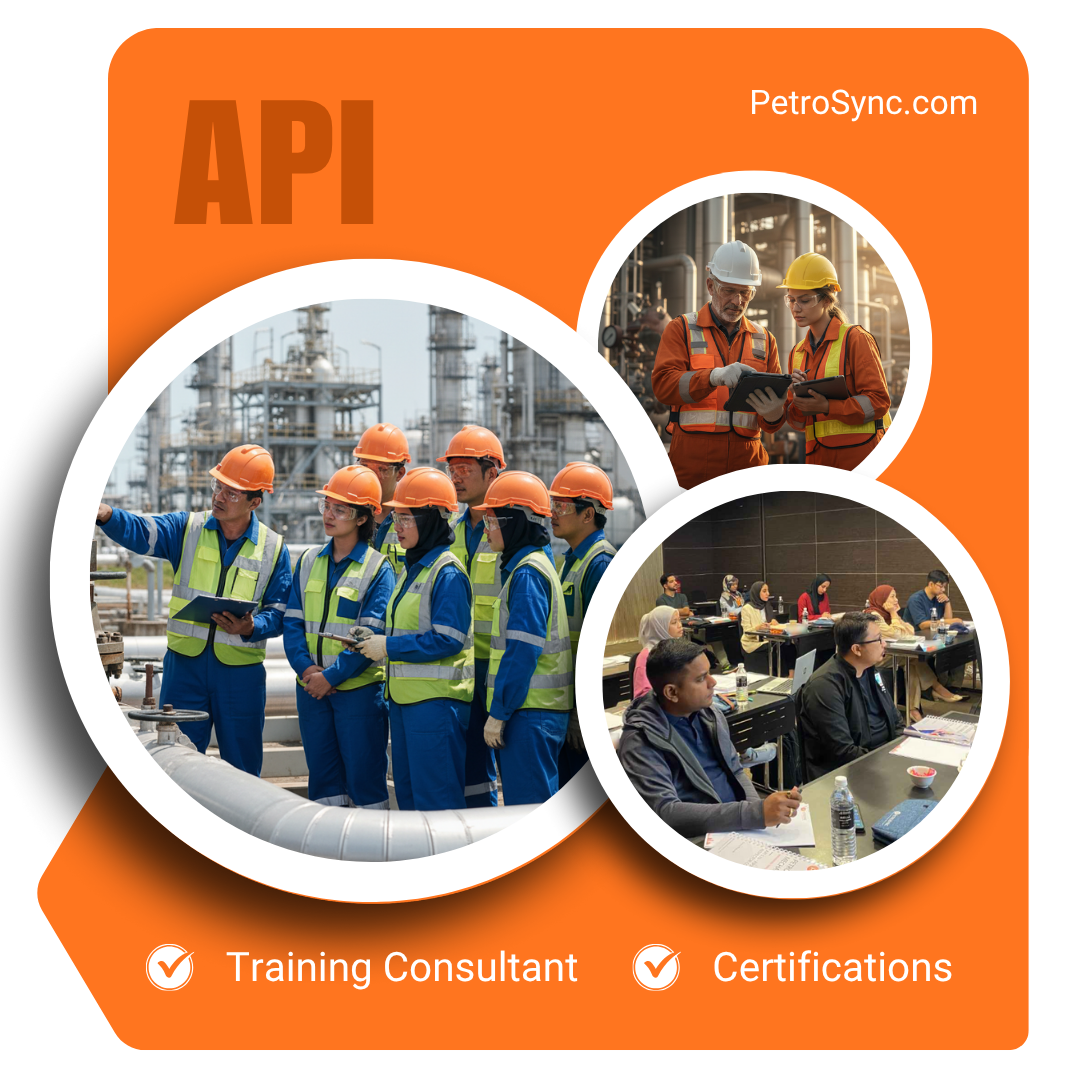



- API Course is structured training based on global API standards to strengthen safety, integrity, and compliance in oil & gas operations.
- Poor understanding of standards increases audit findings, asset failures, shutdowns, and costly emergency repairs.
- Structured programs close knowledge gaps and align field execution with internationally accepted inspection practices.
- Practical case studies and expert instructors turn standards into daily engineering decisions, not just theory.
- PetroSync builds long-term competency through updated materials, flexible formats, and programs aligned with real operational needs.
API Course programs have become an essential foundation for developing industry-ready technical skills in today’s oil and gas sector. As assets continue to age, operating conditions grow more demanding, and regulatory expectations intensify, organizations face a critical challenge: ensuring their technical workforce is capable of managing risk, safeguarding asset value, and sustaining reliable operational performance.
The margin for error has narrowed significantly, and technical decisions made at the engineering level now directly influence safety outcomes, regulatory compliance, and overall business profitability. For senior leaders and decision-makers, this reality raises a strategic question.
How can organizations ensure that engineers, inspectors, and managers possess not only hands-on experience, but also globally aligned technical competence that meets international standards?
One proven solution lies in structured, standard-based professional development—specifically through an API Course designed to bridge operational practice with recognized industry benchmarks. Before exploring its technical and business impact in greater depth, it is important to clearly understand what an API Course represents and why it has become a benchmark for professional credibility across the oil and gas industry.
What is API Course?
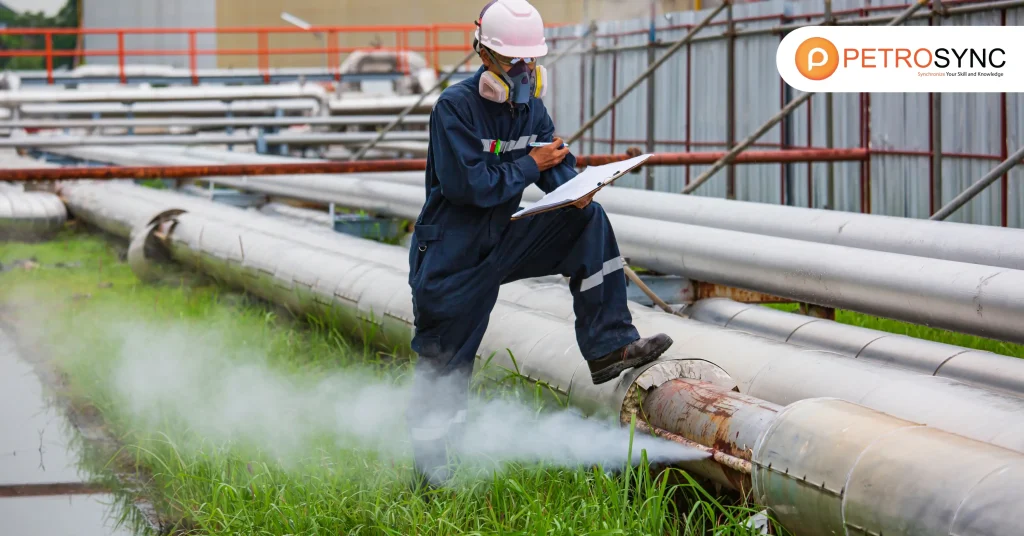
In the oil and gas industry, technical competence is not optional—it is essential for maintaining operational safety, asset integrity, and regulatory compliance. One of the most effective ways professionals develop this competence is through an API Course, which refers to structured training programs based on standards issued by the American Petroleum Institute (API).
API standard are globally recognized technical guidelines covering inspection, maintenance, design, operation, and risk management of equipment used throughout upstream, midstream, and downstream operations. These standards form the backbone of inspection and integrity management systems used by energy companies worldwide.
An API Course is designed to help engineers, inspectors, supervisors, and technical professionals understand how these standards apply in real operational environments. Rather than focusing solely on theory, modern API training emphasizes practical implementation—helping participants translate standards into daily engineering decisions.
Typical API training programs cover areas such as:
- Pressure vessel inspection
- Piping integrity management
- Storage tank inspection
- Risk-based inspection methodologies
- Welding and materials evaluation
- Corrosion management and mechanical integrity
By participating in structured API Courses, professionals gain both technical understanding and operational confidence, enabling them to align field practices with international safety expectations.
Potential Risks of Improper Management or Misunderstanding of API Standard
Without proper understanding of API standards, organizations may unknowingly introduce operational vulnerabilities. A poorly implemented training approach can create gaps between compliance requirements and real field execution.
1. Knowledge Gaps in API Standards Compliance
API standards are detailed and continuously updated. Without structured learning, personnel may rely on outdated interpretations or incomplete knowledge, resulting in inconsistent inspection practices and documentation errors.
These knowledge gaps often become visible only during audits, incident investigations, or equipment failures—when corrective action becomes more costly.
2. Increased Operational & Safety Risks
Oil and gas facilities operate under high pressure, high temperature, and hazardous conditions. Misinterpretation of inspection intervals, acceptance criteria, or damage mechanisms can increase safety risks.
A well-structured API Course helps professionals recognize early warning signs before incidents escalate into safety events.
3. Higher Likelihood of Asset Failure
Untrained or insufficiently trained personnel may overlook degradation mechanisms such as corrosion, fatigue, creep, or mechanical damage.
When asset integrity programs are not supported by proper API knowledge, organizations face higher probabilities of:
- Unplanned shutdowns
- Equipment leaks
- Production losses
- Expensive emergency repairs
4. Regulatory Non-Compliance Issues\
Many regulatory bodies and operating companies adopt API standards as compliance benchmarks. Failure to understand these requirements can lead to:
- Audit findings
- Compliance penalties
- Project delays
- Loss of operational credibility
Proper API training ensures organizations maintain alignment with global regulatory expectations.
5. Reduced Engineering & Inspection Efficiency
Without standardized understanding across teams, engineers and inspectors may apply different interpretations of the same requirement. This inconsistency reduces efficiency, increases rework, and slows decision-making processes.
An effective API Course creates a shared technical language across departments.
Benefits of Mastering API Course for the Oil & Gas Industry
Organizations that invest in structured API competency development typically see measurable improvements in operational reliability and workforce capability.
1. Aligned with API Standards & Industrial Inspection Practices
API Courses ensure professionals apply inspection methodologies consistent with globally accepted practices. This alignment strengthens integrity management programs and improves audit readiness.
2. Practical & Applied Case Study Approach
Modern API training goes beyond classroom lectures. Participants analyze real industry scenarios, failure investigations, and inspection decision processes that mirror actual field challenges.
This applied learning approach helps professionals immediately implement knowledge after training.
3. Experienced Instructors from Global Industry Practitioners
Effective learning comes from instructors who understand both theory and real operational constraints. Experienced trainers bring practical insights from refineries, offshore platforms, petrochemical plants, and pipeline operations.
4. Curriculum Aligned with International Standards & Best Practices
A high-quality API Course integrates API standards with other global frameworks, ensuring participants understand how multiple engineering standards interact within complex facilities.
5. Trusted by Energy Companies & Global Industries
Leading oil and gas companies prioritize workforce competency as part of risk management strategies. API training programs recognized by industry stakeholders help professionals strengthen credibility within international projects.
6. International Reputation as an Oil & Gas Training Provider
Training providers with strong global experience deliver consistent quality, updated materials, and learning methodologies aligned with evolving industry needs.

How to Address API Course Challenges More Effectively
Implementing API training successfully requires more than sending employees to occasional courses. Organizations need structured competency strategies.
1. Develop Professional Competence through Structured Programs like PetroSync
Structured competency pathways ensure training progression—from foundational understanding to advanced inspection expertise. Programs developed by PetroSync emphasize continuous learning rather than one-time certification goals.
2. Apply Relevant Industry Best Practices & Standards for API Course
Training should reflect current industry challenges, integrating lessons learned from operational incidents, inspection innovations, and evolving regulatory expectations.
3. Integrate API Course Knowledge into Operational & Engineering Processes
The real value of an API Course emerges when knowledge is embedded into daily workflows:
- Inspection planning
- Maintenance strategies
- Asset integrity reviews
- Engineering decision-making
- Integration bridges the gap between training and operational performance.
4. Enhance Team Capability through Case Studies & Field Learning
Organizations benefit when teams learn collaboratively. Case studies, simulations, and practical exercises help engineers and inspectors develop shared problem-solving skills.
5. Conduct Evaluation, Review & Continuous Improvement
Competency development must include evaluation mechanisms such as:
- Post-training assessments
- Competency mapping
- Performance reviews
- Continuous improvement cycles
This ensures learning outcomes translate into measurable operational improvements.
Competency Development Solutions for API Course via PetroSync
PetroSync provides competency development solutions designed specifically for oil and gas professionals seeking practical mastery of API standards. The programs combine technical depth, industry experience, and applied learning methodologies to support long-term workforce development.
PetroSync API Course Competency Development Programs for Oil & Gas Professionals
1. Curriculum Based on International Standards & Industry Practice
PetroSync programs are structured around internationally recognized engineering standards and real operational requirements, ensuring relevance across global energy projects.
2. Experienced Instructors from Practitioners & Subject Matter Experts
Courses are delivered by professionals with extensive field and consulting experience, allowing participants to learn practical solutions rather than theoretical concepts alone.
3. Practical & Applied Learning Approach
Interactive discussions, technical workshops, and real examples help participants translate standards into actionable inspection strategies.
4. Case Studies Based on Real Field Conditions
Participants analyze real industry challenges, including equipment degradation cases, inspection failures, and integrity management decisions.
5. Public & In-House Program Schemes
Organizations can select:
- Public training sessions for individual professionals
- Customized in-house programs tailored to company assets and projects
6. Always Updated & Relevant Learning Materials
API standards evolve regularly. PetroSync continuously updates course materials to reflect the latest industry developments and best practices.
7. Learning Experience Support from Engineers to Management
Programs are suitable for multiple organizational levels—from inspectors and engineers to supervisors and decision-makers—ensuring alignment across departments.
8. Program Certificate for Competency & Career Development
Participants receive recognized certification demonstrating professional competence and commitment to continuous development.
PetroSync API Course Program Advantages for Companies
1. Relevant for Various Disciplines & Professional Levels
API Courses support professionals across disciplines, including inspection, mechanical engineering, maintenance, reliability, and asset integrity management.
2. Focused on Competency Improvements with Real Impact
Training outcomes emphasize measurable operational improvements rather than theoretical completion metrics.
3. Supports Compliance, Audits & Operational Reliability
Organizations strengthen audit readiness while improving equipment reliability and safety performance.
4. Flexible for Project, Asset & Organizational Needs
Programs can be customized according to operational priorities, project timelines, or asset-specific challenges.
5. Global Reputation & Experience in the Oil & Gas Industry
PetroSync’s international exposure enables consistent training quality aligned with global industry expectations.
6. Trusted by Energy Companies & Global Industries
Many energy organizations rely on structured competency programs to ensure workforce readiness in complex operational environments.
Schedule Your PetroSync API Course Competency Program Now
In today’s energy landscape, operational success depends heavily on workforce competence. API standards continue to evolve alongside technological advancement, regulatory pressure, and increasing safety expectations.
Organizations that proactively invest in structured API Courses position themselves for:
- Safer operations
- Improved asset reliability
- Stronger compliance performance
- Higher engineering efficiency
- Sustainable long-term growth
Whether you are developing individual expertise or enhancing organizational capability, PetroSync provides comprehensive API Course competency development solutions tailored for oil and gas professionals worldwide.
Start strengthening your team’s expertise today by scheduling your PetroSync API Course Competency Program and advancing toward safer, smarter, and more reliable operations.
Frequently Asked Questions (FAQ)
An API Course is a structured training program based on standards issued by the American Petroleum Institute (API). It helps engineers, inspectors, and managers apply globally recognized inspection, maintenance, and integrity standards in real operational environments.
API training strengthens technical competence, reduces knowledge gaps, and ensures inspection practices align with international standards. This supports safer operations, improved asset reliability, and stronger regulatory compliance.
Without structured API knowledge, organizations may face inconsistent inspections, documentation errors, higher safety risks, asset failures, audit findings, compliance penalties, and costly unplanned shutdowns.
API Courses commonly cover pressure vessel inspection, piping integrity management, storage tank inspection, risk-based inspection, welding and materials evaluation, corrosion management, and mechanical integrity practices.
PetroSync delivers structured API training programs with experienced instructors, practical case studies, updated materials, and flexible public or in-house formats to help organizations build long-term technical competence.

Results-oriented and thorough SEO specialist with extensive experience in conducting keyword research, developing and implementing digital website promotion strategies and plans, managing campaigns to develop company websites in the digital world, excellent knowledge of marketing techniques and principles, and attentive strong attention to detail.