

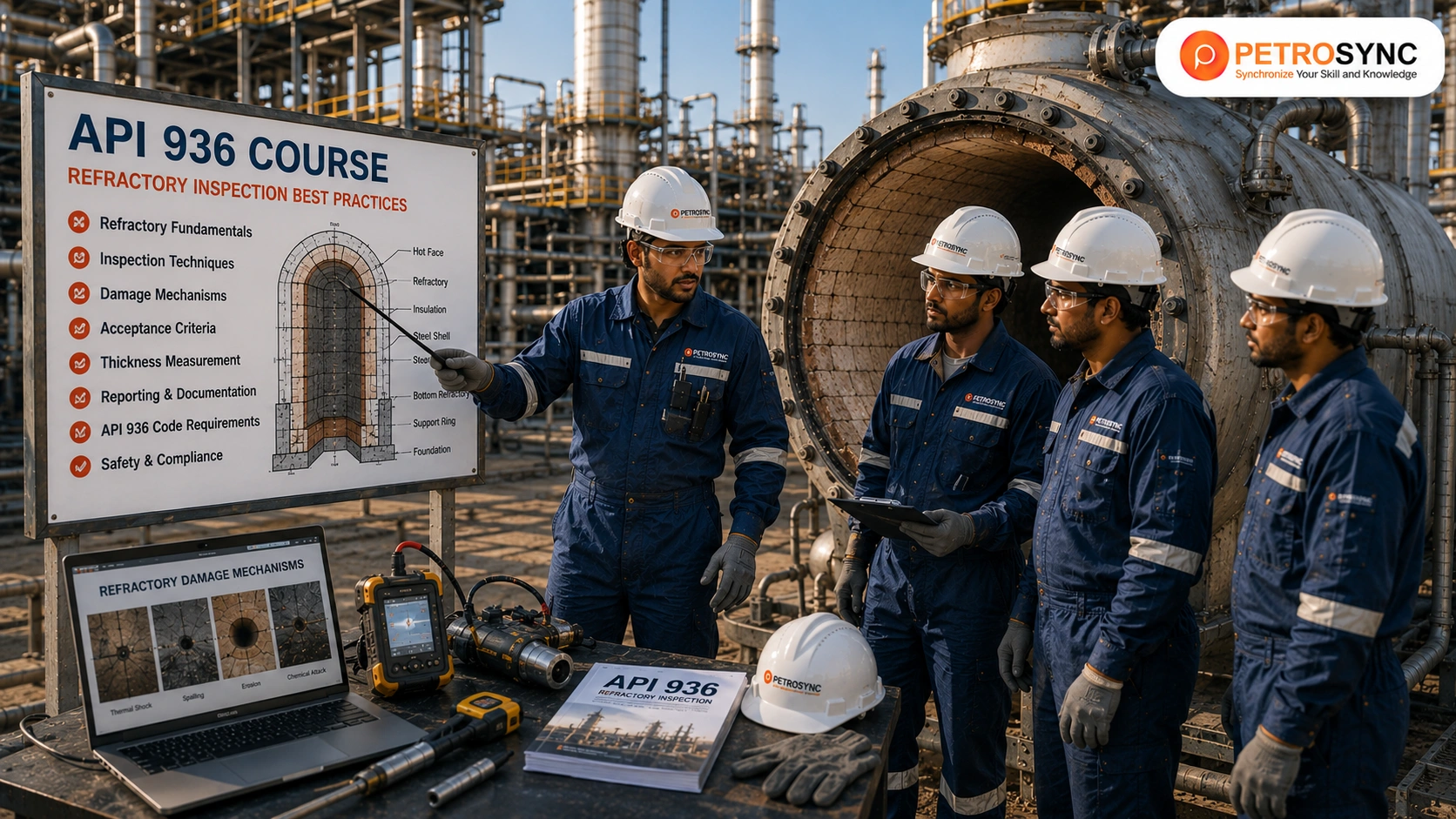
- Meaning: API 936 Course prepares professionals for refractory inspection activities. The training covers materials, installation, testing, and quality control.
- Benefit: API 936 training improves inspection accuracy and operational reliability. It also helps reduce refractory failures and maintenance risks.
- Solution: PetroSync provides practical API 936 training for industrial professionals. The course includes case studies and certification preparation support.
- Advantage: Participants learn from experienced refinery industry practitioners. The program follows current international inspection standards and operational practices.
Refractory failures frequently disrupt refinery operations and increase unexpected industrial maintenance costs worldwide. Many facilities struggle maintaining thermal equipment reliability under extreme operational temperatures daily.
API 936 training strengthens refractory inspection competency for demanding oil and gas industrial environments. The course improves inspection accuracy, compliance readiness, and long-term operational reliability significantly.
What is API 936 Course?
The API 936 Course prepares professionals performing refractory inspection within refinery and petrochemical facilities. Participants learn refractory materials, installation practices, quality control, and failure prevention methodologies effectively.
The training also supports API 936 certification preparation using internationally recognized industrial inspection standards. Professionals gain practical understanding supporting safer operations, maintenance planning, and refractory integrity management.
Key Benefits of Mastering API 936 Course for the Oil & Gas Industry
Modern facilities require qualified professionals ensuring refractory systems operate safely under severe conditions. The following benefits explain why API 936 training supports operational excellence effectively:
1. Improved Safety & Operational Reliability
API 936 competency helps reduce refractory-related incidents by nearly 40% across industrial processing environments. Better inspection accuracy also improves equipment reliability and supports safer refinery operations consistently.
2. Compliance with Industry Standards, Codes & Regulations
The training strengthens understanding of international refractory inspection standards and compliance requirements effectively. Participants improve audit readiness and increase inspection documentation accuracy by approximately 50%.
3. Reduced Asset Failure & Field Incident Risks
Qualified inspectors identify refractory degradation earlier before severe equipment failures occur unexpectedly. Early detection strategies may reduce emergency shutdown risks by nearly 30% annually.
4. Optimized Equipment Performance, Lifespan & Integrity
Proper refractory inspection supports stable furnace performance and improves thermal efficiency significantly. Facilities often achieve longer refractory lifespan and improved asset integrity management performance.
5. Cost Efficiency in Operations, Maintenance & Downtime
Effective refractory management minimizes repair expenses and reduces unplanned operational downtime substantially. Many facilities experience maintenance savings exceeding 25% after implementing stronger inspection practices.
“Strong refractory inspection competency protects industrial assets, improves operational reliability, and supports long-term refinery performance.”
Industrial facilities continuously prioritize reliability, compliance, and safer operational performance globally. API 936 competency now supports critical inspection responsibilities across modern refinery environments.

Why API 936 Course Is Important for Industrial Inspection Professionals
Industrial refractory systems require qualified inspectors ensuring operational integrity and long-term equipment reliability. API 936 training improves technical competency supporting safer industrial maintenance and inspection activities.
|
Areas |
Without API 936 Training |
With API 936 Training |
|
Refractory Knowledge |
❌ Limited refractory understanding |
✅ Strong refractory inspection competency |
|
Safety Awareness |
❌ Higher operational risks |
✅ Improved industrial safety practices |
|
Standards Compliance |
❌ Inconsistent inspection practices |
✅ Better compliance accuracy |
|
Maintenance Planning |
❌ Reactive maintenance decisions |
✅ Proactive maintenance strategies |
|
Operational Reliability |
❌ Increased refractory failures |
✅ Improved equipment reliability |
|
Career Development |
❌ Limited industrial opportunities |
✅ Stronger global certification competitiveness |
API 936 competency supports both operational performance and long-term professional career advancement effectively. Many global energy companies prioritize certified refractory inspection professionals during recruitment processes.
Best API 936 Course Program by PetroSync
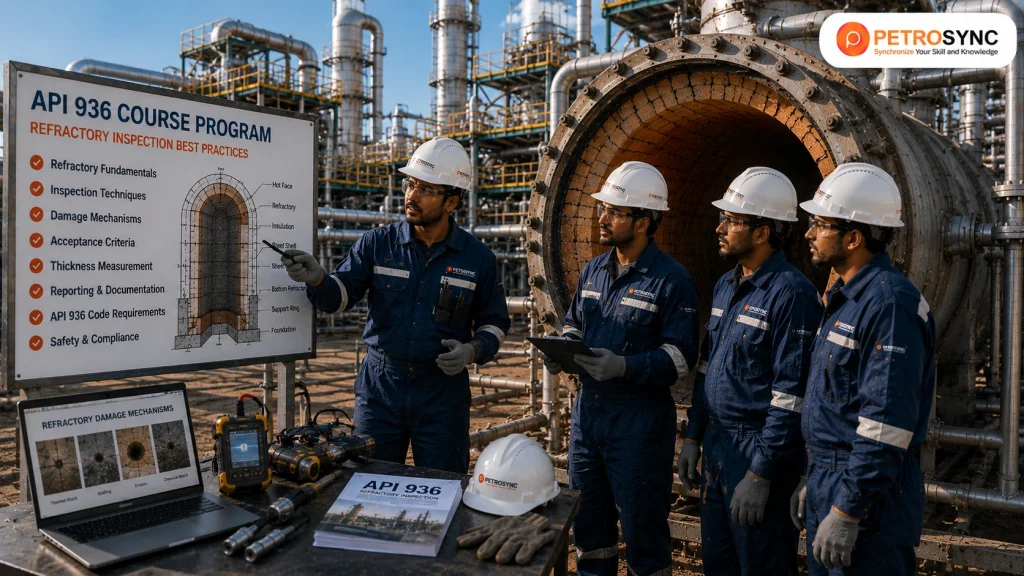
PetroSync delivers professional API 936 training designed for refinery and petrochemical inspection professionals. The course combines international standards, industrial case studies, and practical inspection learning discussions effectively.
Participants learn directly from experienced instructors with extensive refinery refractory inspection project backgrounds. The program also supports stronger certification readiness for demanding global industrial environments.
What Are the Learning Objectives of API 936 Course by PetroSync?
Industrial inspection professionals require practical competency supporting refinery refractory reliability and safety. The following objectives explain expected participant outcomes after completing API 936 training:
1. Improve API 936 Certification Preparation
Participants strengthen certification readiness through structured learning materials and practical industrial discussions effectively. Many professionals achieve certification preparation improvements nearly two times faster after training completion.
2. Master ASME Codes for Accurate Inspection
The training improves understanding of ASME refractory inspection requirements supporting accurate industrial evaluations consistently. Participants often improve inspection documentation quality and compliance accuracy by approximately 45%.
3. Perform API 936 Calculations with Accuracy
Professionals learn essential refractory calculations supporting safer installation and inspection decision-making activities. Improved calculation competency helps reduce inspection errors during critical operational evaluations significantly.
4. Apply API 936 Standards in Industrial Operations
Participants understand practical API 936 implementation within refinery and petrochemical operational environments effectively. The training strengthens operational consistency and improves inspection workflow reliability substantially.
5. Understand Welding Standards and Qualification Requirements
The course explains welding qualifications supporting refractory anchoring system inspection requirements thoroughly. Participants improve installation evaluation competency and reduce quality-related inspection issues significantly.
Comprehensive learning objectives strengthen technical competency for demanding industrial inspection responsibilities globally. Structured course discussions also improve participant readiness before practical refractory inspection activities.
What Is the API 936 Course Outline by PetroSync?
|
Day |
Main Topics |
Key Learning Outcomes |
|
Day 1 |
Refractory fundamentals, classifications, testing, quality control, inspection procedures |
Understand refractory materials, testing standards, inspection requirements, and quality control principles |
|
Day 2 |
Monolithic refractories, anchorage systems, installation design, firing effects |
Learn monolithic refractory properties, installation methods, and operational performance impacts |
|
Day 3 |
Modern installation techniques, refractory repairs, failure analysis methods |
Understand repair strategies, thermal failures, erosion causes, and installation technologies |
|
Day 4 |
Furnace linings, curing methods, refractory selection guidelines, industrial applications |
Improve refractory selection competency and understand operational exposure considerations |
|
Day 5 |
Refinery applications, FCCU systems, sulfur plants, hot spot detection, case studies |
Apply refractory inspection knowledge across refinery operations and industrial process equipment |
Who Should Attend API 936 Course by PetroSync?
This training supports professionals involved within refractory inspection and industrial maintenance activities regularly. Engineers, inspectors, maintenance personnel, and quality assurance professionals benefit significantly from the program.
The course also suits refinery supervisors managing refractory integrity and operational reliability improvement initiatives. Professionals preparing API 936 certification examinations gain valuable technical and practical preparation support.
Why Join API 936 Course at PetroSync?
Industrial professionals require practical training supporting inspection competency and operational problem-solving capabilities. The following advantages explain why PetroSync remains trusted across global energy industries:
1. Course Based on Current API 936 Certification Standards
The program follows current API 936 certification frameworks supporting accurate industrial inspection competency development. Participants improve certification preparation effectiveness and compliance understanding significantly.
2. Real Case Studies from Oil & Gas Industry Operations
The training includes refinery case studies covering refractory failures and operational inspection challenges comprehensively. Real industrial discussions improve participant analytical capability and practical troubleshooting competency effectively.
3. Sessions Delivered by Experienced Industry Practitioners
Participants learn directly from instructors possessing extensive refinery and petrochemical operational experience globally. Practical guidance improves workplace application accuracy and inspection confidence substantially.
4. Comprehensive Materials Based on International Standards
Training materials reference internationally recognized inspection standards supporting reliable industrial learning outcomes consistently. Participants strengthen technical understanding and improve operational documentation competency effectively.
5. Interactive Learning with Practical Inspection Discussions
Interactive discussions encourage stronger participant engagement throughout technical refractory inspection learning sessions regularly. Practical exercises also improve inspection decision-making accuracy during operational evaluations significantly.
6. Trusted Course Provider for Global Energy Companies
PetroSync supports energy companies worldwide through professional industrial competency development programs consistently. Many organizations trust PetroSync for internationally focused inspection and maintenance training solutions.
“Practical industrial training improves inspection competency, strengthens reliability, and accelerates professional certification readiness.”
Global industries continue prioritizing skilled refractory inspection professionals across refinery operations increasingly. PetroSync training supports competency development for modern industrial maintenance and inspection challenges.

How Much Does API 936 Course Cost at PetroSync?
PetroSync provides internationally focused API 936 training across multiple industrial training locations annually. Participants receive practical learning discussions supporting certification readiness and operational inspection competency.
|
Code |
Start Date |
End Date |
Location |
Cost |
Instructor |
|
PST0438-202602 |
10 Aug, 2026 |
14 Aug, 2026 |
Bandung, Indonesia |
USD 3485 |
M. El-Sayed Mahmoud Shama |
|
PST0438-202603 |
28 Sep, 2026 |
02 Oct, 2026 |
Bandung, Indonesia |
USD 3485 |
M. El-Sayed Mahmoud Shama |
|
PST0438-202604 |
23 Nov, 2026 |
27 Nov, 2026 |
Kuala Lumpur, Malaysia |
USD 3486 |
M. El-Sayed Mahmoud Shama |
|
PST0438-202605 |
30 Nov, 2026 |
04 Dec, 2026 |
Bali, Indonesia |
USD 3685 |
M. El-Sayed Mahmoud Shama |
The course includes technical materials, practical discussions, and certification preparation guidance comprehensively. Experienced instructors also provide valuable industrial insights supporting real operational inspection challenges.
Register for API 936 Course by PetroSync Today
API 936 competency remains highly valuable across refinery, petrochemical, and energy industry operations globally. Strong refractory inspection capability improves operational reliability and supports long-term industrial asset integrity significantly.
PetroSync training helps professionals strengthen certification readiness and advance industrial inspection career opportunities effectively. Join the API 936 Course today and improve refractory inspection competency for demanding global industries.
Frequently Asked Questions (FAQ)
API 936 Course is a professional training program that prepares participants for refractory inspection activities in refinery and petrochemical facilities. The course covers refractory materials, inspection procedures, quality control, installation practices, and certification preparation based on international standards.
API 936 training helps refinery professionals improve refractory inspection accuracy, operational reliability, and safety performance. The course also supports compliance with international inspection standards and reduces the risk of refractory failures and unplanned shutdowns.
API 936 Course by PetroSync is suitable for inspectors, engineers, maintenance personnel, supervisors, and quality assurance professionals involved in refractory inspection and industrial maintenance activities. The training also supports professionals preparing for API 936 certification examinations.
The learning objectives include improving API 936 certification readiness, understanding ASME codes, performing refractory calculations accurately, applying API 936 standards in industrial operations, and understanding welding qualification requirements for refractory inspection activities.
PetroSync provides API 936 training based on current certification standards, real refinery case studies, practical inspection discussions, and internationally recognized materials. Participants also learn directly from experienced industry practitioners with extensive refinery and petrochemical project experience.

Results-oriented and thorough SEO specialist with extensive experience in conducting keyword research, developing and implementing digital website promotion strategies and plans, managing campaigns to develop company websites in the digital world, excellent knowledge of marketing techniques and principles, and attentive strong attention to detail.