

Key Notes
- Learn what an ASME Certification Provider is and why the term is often misunderstood within the engineering industry.
- Understand the difference between an ASME Certification Body and an ASME Training Provider.
- Discover the key factors to evaluate before selecting an organization for ASME-related professional development.
- Explore how ASME training helps engineers strengthen practical competency and apply internationally recognized engineering standards.
- Find out why PetroSync is trusted by professionals across Asia for industry-focused ASME training.
Many engineers and technical professionals search for an ASME Certification Provider because they want to improve their understanding of ASME Codes and Standards while earning formal recognition after completing professional training. However, the term “ASME Certification Provider” is often misunderstood because certification bodies and training providers perform different roles within professional competency development.
For heavy asset industries like oil and gas, unexpected equipment failures are exceptionally punishing; unplanned downtime is now estimated to cost operators roughly $500,000 per hour, a financial penalty that has more than doubled since 2019 due to complex facility interdependencies and cascading supply chain pressures.
Understanding this distinction is essential before choosing a provider. Certification bodies evaluate competency through structured assessment or certification schemes, while professional training providers focus on developing engineering knowledge through instructor-led learning, practical workshops, code interpretation, and industrial case studies. Many training providers, including PetroSync, award a Certificate of Attendance after participants successfully complete their training programs. This guide explains what to look for in an ASME Certification Provider while helping you choose the learning pathway that best supports your engineering career.
What Is an ASME Certification Provider?
The term ASME Certification Provider is commonly used by professionals searching for organizations that offer ASME-related education or issue certificates after completing technical training. In reality, however, the phrase may refer to two different types of organizations: certification bodies that assess competency through formal certification schemes and training providers that deliver education based on ASME Codes and Standards.
Understanding this distinction helps professionals make informed decisions when selecting a learning pathway. If your objective is to strengthen engineering competency and improve practical application of ASME requirements, professional training may be the most appropriate option. If your industry or employer requires formal competency validation, a certification body may also play an important role in your professional development.
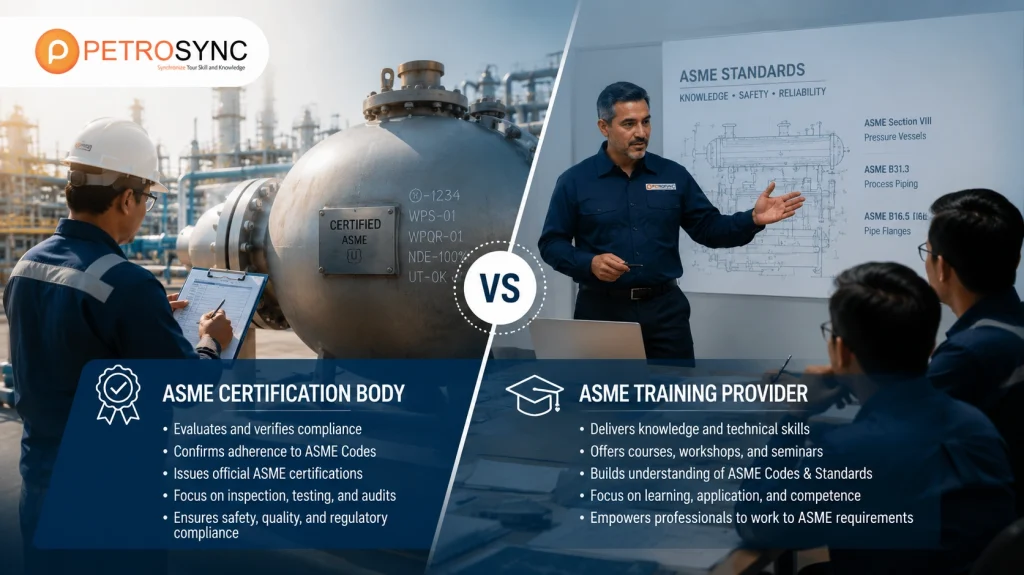
What Is the Difference Between an ASME Certification Body and an ASME Training Provider?
Although both certification bodies and training providers contribute to engineering competency development, they serve different purposes. Understanding these differences helps professionals invest in learning opportunities that align with their current responsibilities, career objectives, and long-term professional growth.
The following comparison explains the key differences:
1. ASME Certification Bodies Assess Professional Competency
Certification bodies evaluate candidates through structured assessments, examinations, or competency verification processes before awarding professional certifications. Their primary objective is to validate whether an individual meets predefined competency requirements established by the certification scheme.
2. ASME Training Providers Develop Practical Technical Skills
Professional training providers focus on helping participants strengthen engineering knowledge through instructor-led learning, engineering workshops, code interpretation, technical discussions, and real industrial case studies. The goal is to improve practical competency that can be immediately applied in engineering projects and industrial operations.
3. Most ASME Training Providers Award a Certificate of Attendance
Participants who successfully complete an ASME training program typically receive a Certificate of Attendance, recognizing successful participation in the course. While this differs from an independent professional certification, it demonstrates commitment to continuous learning and successful completion of structured technical training.
4. Choose the Right Learning Path for Your Professional Goals
The most appropriate pathway depends on your objectives. Professionals seeking competency validation may require certification through an authorized certification body, while those aiming to strengthen engineering capability often benefit from practical ASME training that develops technical skills and workplace confidence.
Understanding these differences enables professionals to choose the right investment for their engineering career while avoiding common misconceptions surrounding the term ASME Certification Provider.
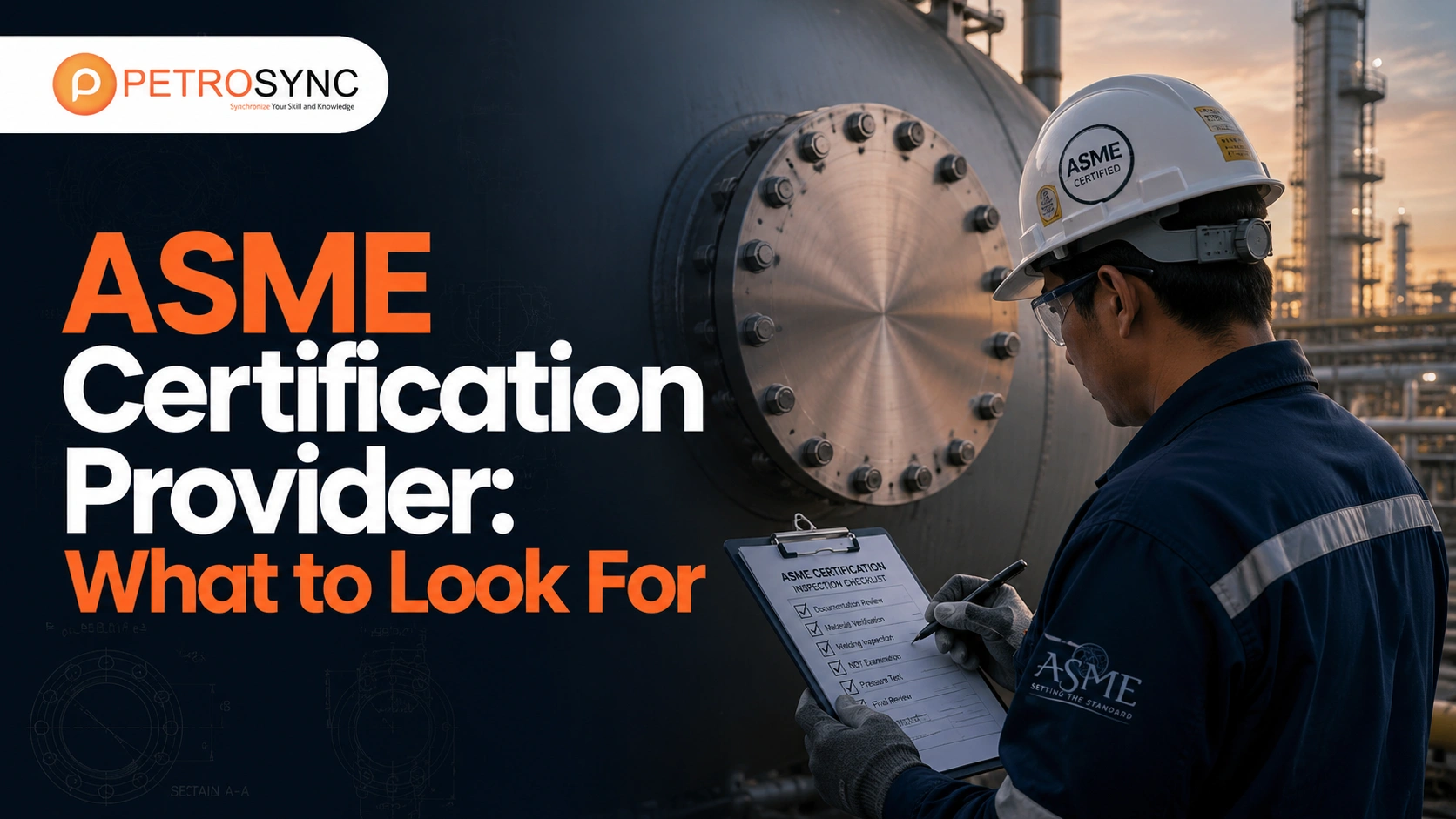
7 Things to Look for in an ASME Certification Provider
Selecting an organization for ASME-related professional development should involve more than comparing course schedules or the certificates offered. The quality of instruction, practical learning approach, and relevance of the training have a much greater impact on the knowledge and skills participants gain.
The following factors can help you evaluate potential providers:
1. Industry-Experienced Instructors
Choose a provider whose instructors have extensive engineering experience in design, fabrication, inspection, maintenance, EPC projects, or industrial operations. Practical industry experience allows instructors to explain how ASME Codes and Standards are applied beyond theoretical requirements.
2. Practical Learning Based on ASME Codes and Standards
Effective ASME Training should combine technical presentations with engineering workshops, code interpretation exercises, industrial case studies, and collaborative discussions that reflect real engineering situations.
3. Comprehensive ASME Training Programs
Providers offering multiple ASME-related courses allow professionals to continue building competency across different engineering disciplines as their responsibilities expand throughout their careers.
4. Clear Information About Certificates Awarded
Before registering, confirm exactly what certificate you will receive. Understanding whether the provider awards a Certificate of Attendance or delivers training linked to a formal certification pathway helps prevent misunderstandings and ensures your expectations are aligned with the program.
5. Strong Industry Reputation and Training Experience
Look for providers with extensive experience delivering technical training, experienced instructors, positive participant feedback, and a strong focus on engineering education relevant to your industry.
6. Flexible Public, Online, and In-House Training Options
Flexible delivery formats allow individuals and organizations to choose learning solutions that best fit operational schedules, workforce development plans, and organizational objectives.
7. Commitment to Continuous Professional Development
The best providers support ongoing learning through a broad portfolio of engineering programs, enabling professionals to continue strengthening competency as industry standards and technologies evolve.
Choosing the right provider is ultimately an investment in practical engineering competency, long-term professional development, and the ability to apply ASME Codes and Standards with confidence throughout your career.
How Can ASME Training Help Advance Your Engineering Career?
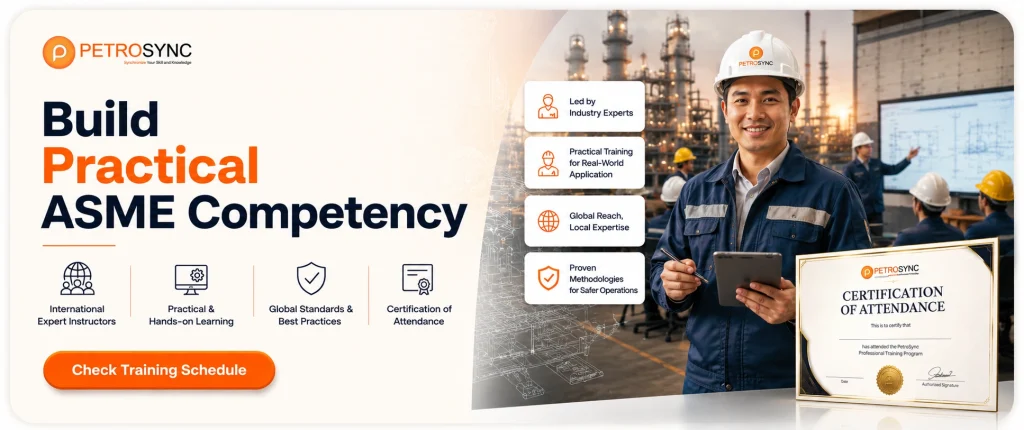
Professional ASME training helps engineers remain aligned with internationally recognized engineering practices while strengthening the technical knowledge required to solve increasingly complex industrial challenges. Continuous learning supports better engineering judgment, safer operations, and stronger long-term career development.
Engineering professionals typically strengthen their competency through the following learning journey:
1. Strengthen Your Understanding of ASME Codes and Standards
Structured learning provides a deeper understanding of ASME requirements, engineering principles, and internationally recognized best practices used across multiple industries.
2. Improve Engineering Decision-Making
Learning directly from experienced practitioners helps participants interpret engineering requirements more effectively and make sound technical decisions during design, construction, inspection, maintenance, and operational activities.
3. Apply Learning Through Real Industrial Case Studies
Engineering workshops and practical case studies allow participants to connect theoretical knowledge with real industrial challenges, improving confidence when applying ASME requirements in the workplace.
4. Expand Your Professional Network
Training programs provide opportunities to interact with engineers, inspectors, QA/QC professionals, maintenance specialists, and technical managers from different organizations and countries, creating valuable professional relationships.
5. Continue Developing Your Technical Competency
Engineering standards continue to evolve, making continuous professional development an essential part of long-term career success. Ongoing ASME training helps professionals remain current with industry expectations while strengthening technical expertise.
Continuous learning not only improves engineering competency but also prepares professionals to take on greater technical responsibilities and contribute more effectively to their organizations.
Why Is PetroSync a Trusted ASME Training Provider in Asia?
PetroSync has become a trusted provider of ASME training by helping engineers, inspectors, QA/QC professionals, maintenance specialists, project engineers, and organizations strengthen engineering competency through practical, industry-focused technical education. Rather than acting as a certification body, PetroSync focuses on developing the practical skills professionals need to confidently apply ASME Codes and Standards in real industrial environments.
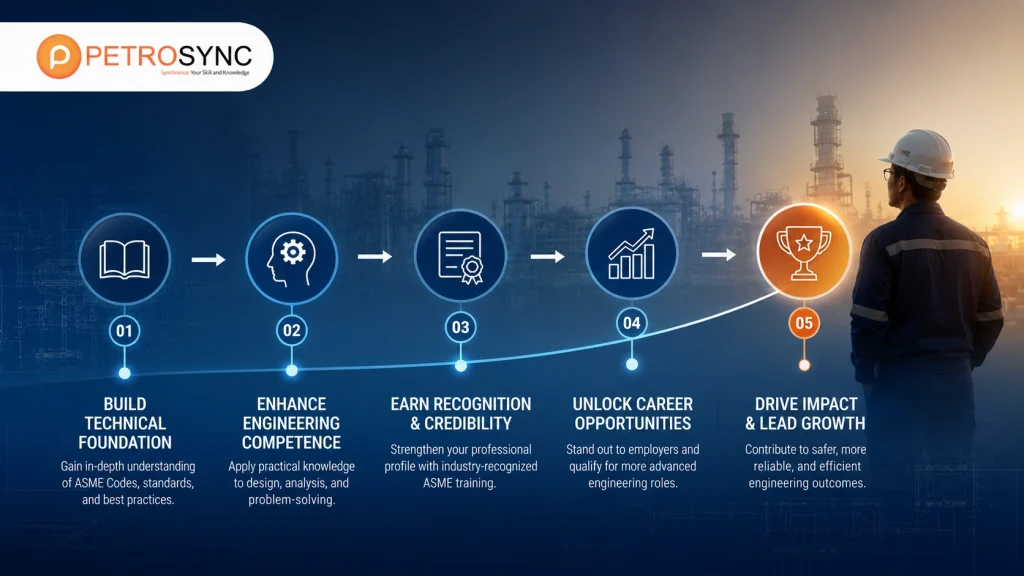
Delivered by experienced industry practitioners, PetroSync’s programs combine instructor-led learning, engineering workshops, code interpretation exercises, and real industrial case studies. Through Public Training, Online Training, and customized In-House Training, PetroSync continues to help professionals across Asia strengthen engineering competency while supporting safer operations, higher-quality engineering outcomes, and continuous professional development.
What ASME Training Programs Does PetroSync Offer?
Professionals searching for an ASME Certification Provider are often looking for training that helps them understand and apply ASME Codes and Standards in real engineering environments. PetroSync offers a comprehensive portfolio of ASME-related training programs designed to strengthen practical engineering competency across various industries, including oil and gas, petrochemical, power generation, manufacturing, and EPC projects.
Major ASME training categories include:
1. ASME B31.3 Process Piping
PetroSync’s ASME B31.3 Process Piping training covers piping design requirements, code interpretation, material selection, flexibility considerations, pressure design, fabrication, inspection, testing, and engineering best practices. Participants learn how to apply ASME B31.3 requirements to improve the safety, reliability, and integrity of industrial piping systems.
2. ASME Section VIII Pressure Vessel
This program provides a comprehensive understanding of ASME Section VIII Pressure Vessels requirements for pressure vessel design, construction, fabrication, inspection, and operation. Through practical engineering discussions and industrial examples, participants gain the knowledge needed to interpret code requirements and support safe pressure vessel applications.
3. Boiler and Pressure Vessel Engineering
PetroSync also offers technical training focused on boiler systems and pressure vessel, covering engineering principles, fabrication methods, inspection practices, maintenance strategies, and operational safety. These programs help participants strengthen their understanding of equipment lifecycle management while supporting compliance with internationally recognized engineering standards.
4. Pressure Equipment Design and Inspection
Professionals responsible for pressure equipment can participate in training covering engineering design principles, inspection planning, integrity assessment, lifecycle management, and equipment reliability. The courses emphasize practical engineering approaches that support safe, efficient, and compliant industrial operations.
5. Mechanical Integrity and Engineering Applications
Mechanical integrity training helps participants understand how engineering design, inspection programs, maintenance planning, and asset integrity strategies work together to improve equipment reliability and operational performance throughout industrial facilities.
6. Customized ASME Corporate Training
Organizations with specific engineering challenges can benefit from PetroSync’s customized ASME Corporate Training, where learning objectives are tailored to operational requirements, engineering disciplines, participant competency levels, and business goals. This flexible approach ensures training remains directly relevant to workplace applications.
By offering a broad portfolio of ASME-related technical programs, PetroSync helps engineering professionals build practical competency while supporting continuous learning across multiple engineering disciplines.
What Makes PetroSync Different from Other ASME Training Providers?
When evaluating an ASME Certification Provider, the value of the learning experience is often determined by the provider’s technical expertise, practical teaching approach, and ability to connect engineering theory with real industrial applications. These factors can significantly influence how effectively participants apply ASME Codes and Standards after completing the training.
The following advantages distinguish PetroSync from other ASME training providers:
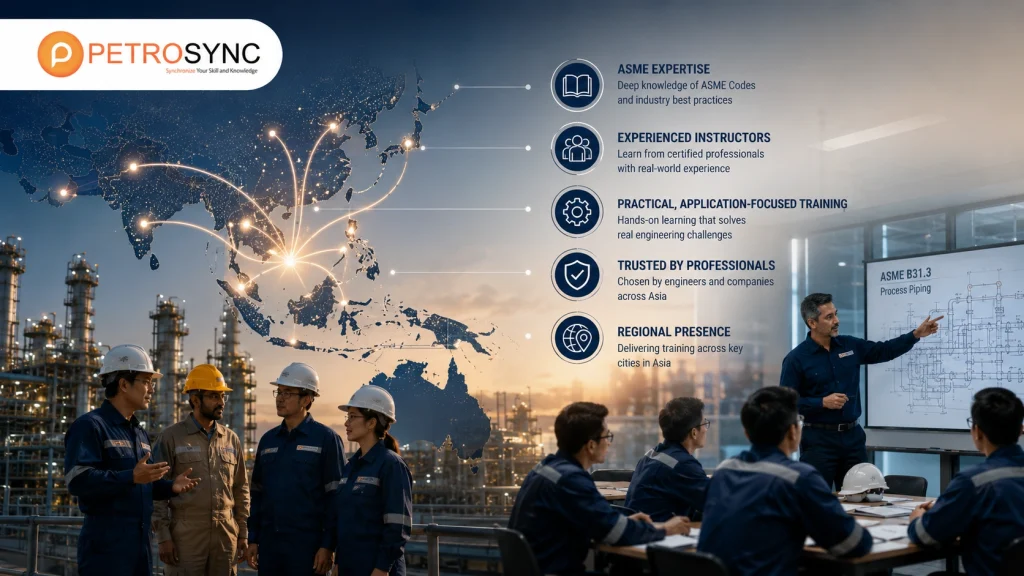
1. Industry-Experienced Instructors
PetroSync’s training programs are delivered by experienced engineering practitioners with backgrounds in design, fabrication, inspection, maintenance, EPC projects, and industrial operations. Their practical experience helps participants understand how ASME requirements are implemented in real engineering environments.
2. Practical Learning Through Real Industrial Case Studies
Every course combines instructor-led learning with engineering workshops, code interpretation exercises, industrial case studies, and technical discussions. This practical learning approach enables participants to connect engineering concepts with real workplace challenges.
3. Internationally Focused Technical Training
PetroSync’s programs are developed around internationally recognized engineering practices and ASME Codes and Standards, helping participants strengthen competencies that remain relevant across multinational projects and industrial sectors.
4. Flexible Public, Online, and In-House Training
Professionals can choose from scheduled Public Training, instructor-led Online Training, or customized In-House Training designed to address specific organizational objectives, engineering disciplines, and competency development needs.
5. Comprehensive Engineering Training Portfolio
In addition to ASME-related programs, PetroSync offers technical training covering API Standards, Process Safety, Asset Integrity, Reliability Engineering, Mechanical Engineering, Petroleum Engineering, Drilling, and many other disciplines. This comprehensive portfolio allows professionals and organizations to continue developing technical competency through one trusted training provider.
PetroSync combines experienced instructors, practical engineering education, flexible learning solutions, and internationally focused technical training to help professionals strengthen engineering competency while supporting safer operations and long-term career development.
How Much Does ASME Training Cost?
The cost of ASME training depends on several factors, including the selected course, delivery format, duration, training location, and organizational requirements. PetroSync provides flexible training solutions for both individual professionals and corporate teams, making it easier to select programs that align with technical objectives and workforce development strategies.
The following learning options are available:
1. Public Training Programs
PetroSync’s Public Training programs allow participants to attend scheduled courses alongside engineers and technical professionals from different companies and industries. Each session combines instructor-led presentations, engineering workshops, code interpretation, and practical discussions to maximize learning outcomes.
|
Training Type |
Typical Scope |
How to Get a Quote |
|
Public Training |
Scheduled classroom-based ASME training with engineering workshops and practical industrial discussions. |
Contact PetroSync to receive the latest training schedule and official quotation. |
|
Online Training |
Live virtual training providing the same learning objectives and instructor interaction as classroom sessions. |
Request the latest online schedule and pricing directly from PetroSync. |
2. In-House Training Solutions
Organizations seeking to strengthen engineering competency across multiple departments can choose In-House Training, where PetroSync customizes the curriculum according to technical disciplines, operational challenges, competency levels, and organizational development goals.
|
Training Type |
Typical Scope |
How to Get a Quote |
|
In-House Training |
Private training delivered at the client’s preferred location with customized engineering content and flexible scheduling. |
Submit an in-house training request to receive a proposal tailored to your organization’s technical requirements. |
Because every organization has unique learning objectives, PetroSync provides customized quotations based on the selected ASME course, delivery format, participant numbers, and training location. Contact the training team to obtain the latest schedule, availability, and pricing information.
Schedule a Consultation with PetroSync Today
Choose the right ASME training to strengthen engineering competency and support long-term professional growth. Contact PetroSync to explore ASME Public Training or discuss customized In-House Training solutions.
Frequently Asked Questions (FAQ)
Yes. Participants who successfully complete a PetroSync ASME training program receive a Certificate of Attendance confirming their successful completion of the course. This certificate recognizes participation in professional technical training and supports ongoing competency development.
Absolutely. PetroSync's training advisors can recommend the most appropriate course based on your engineering discipline, technical background, industry experience, current responsibilities, and professional development goals.
Yes. Many participants are experienced engineers, inspectors, and QA/QC professionals who attend PetroSync training to deepen their understanding of code interpretation, discuss complex engineering scenarios, learn updated industry practices, and exchange knowledge with experienced instructors and fellow professionals.
Yes. PetroSync provides customized In-House Training tailored to your organization's engineering disciplines, operational challenges, participant competency levels, and business objectives. The curriculum can be adapted to maximize relevance and practical application within your organization.
Yes. Before registering, you are encouraged to consult with PetroSync's training advisors to discuss your technical background, engineering responsibilities, learning objectives, and preferred training format. Based on your needs, PetroSync will recommend the most suitable ASME training program to support your long-term professional development.

Results-oriented and thorough SEO specialist with extensive experience in conducting keyword research, developing and implementing digital website promotion strategies and plans, managing campaigns to develop company websites in the digital world, excellent knowledge of marketing techniques and principles, and attentive strong attention to detail.

Business Development Manager at PetroSync with 12+ years of experience in professional training and business development across the energy and industrial sectors.