

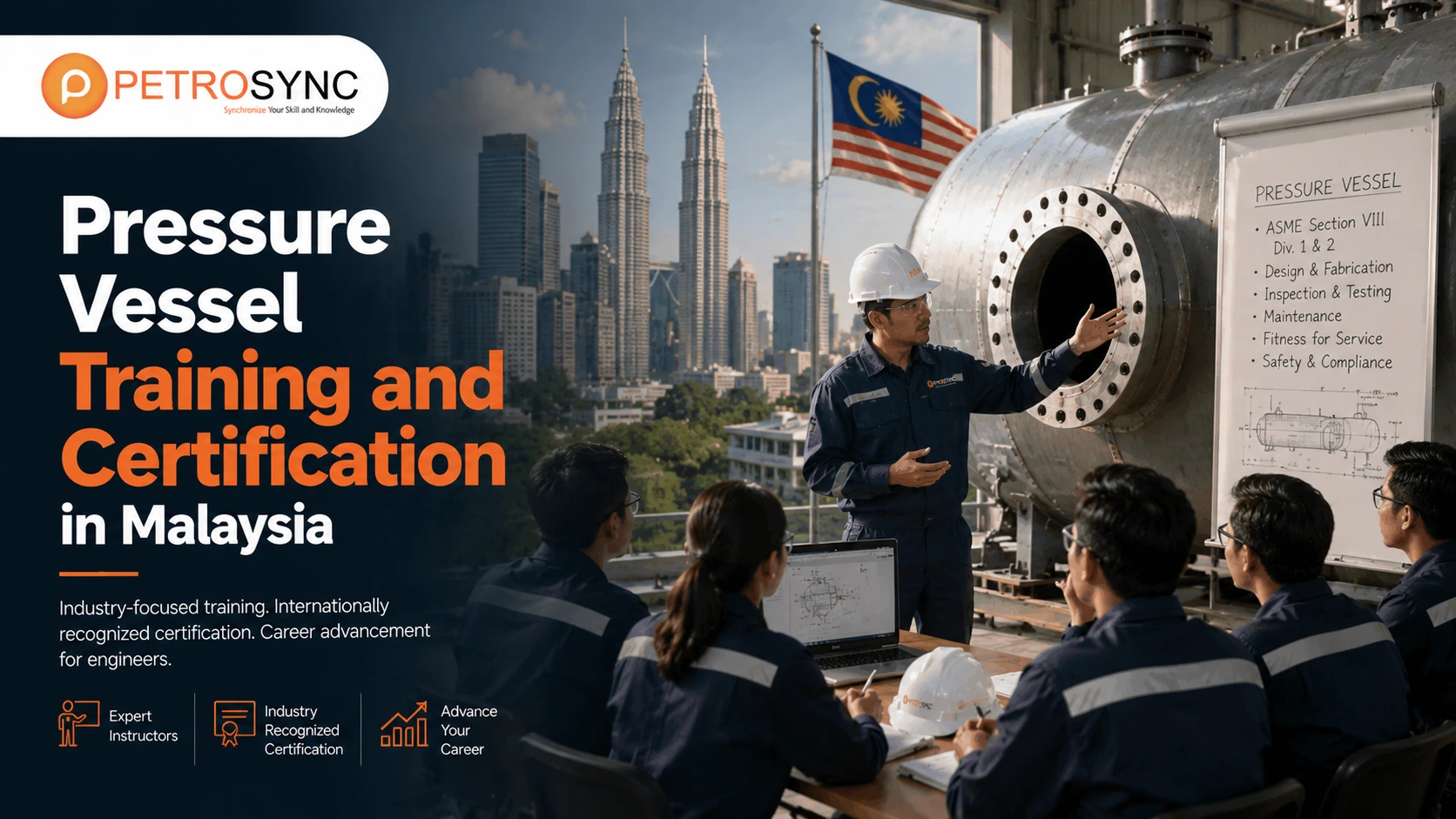
- Understand what pressure vessel certification in Malaysia means and how it differs from professional certification schemes.
- Discover which professionals should attend pressure vessel training and certification programs.
- Learn the benefits of pressure vessel training for competency development and career growth.
- Explore why Malaysia has become a preferred destination for technical training in Asia.
- Review the knowledge and practical skills covered in pressure vessel training programs.
- Discover the pressure vessel-related courses available in Malaysia.
- Understand the Certificate of Attendance and Certificate of Completion awarded after training.
- Learn how to choose the right pressure vessel certification provider in Malaysia.
- Discover why PetroSync is a trusted oil and gas training consultant.
Pressure vessel are critical assets in the oil and gas, petrochemical, power generation, and manufacturing industries. Because these equipment systems operate under high pressure and temperature conditions, organizations rely on competent engineers and inspectors to maintain equipment integrity and ensure safe operations.
As industries continue to prioritize asset reliability and process safety, the demand for technical training and competency development continues to increase. Consequently, many professionals seek pressure vessel training and certification programs in Malaysia to improve their technical capabilities and gain practical industry knowledge.
According to the official investigation by the U.S. Chemical Safety and Hazard Investigation Board (CSB), poor corrosion management can severely degrade pressure vessel wall thickness from 0.25 inches down to a mere 0.08 inches.
What is Pressure Vessel Certification in Malaysia?
Pressure vessel certification in Malaysia generally refers to professional training programs that provide participants with technical knowledge and recognize their participation through a Certificate of Attendance or Certificate of Completion.
However, it is important to understand the differences between training certificates and professional certifications.
|
Type |
Description |
|
Certificate of Attendance |
Awarded to participants who successfully attend a training program. |
|
Certificate of Completion |
Awarded to participants who complete the training requirements. |
|
Professional Certification |
Formal certifications such as API 510, API 570, API 653, CMRP, and CRE that generally require examinations and are issued by their respective certification bodies. |
As an oil and gas training consultant, PetroSync provides technical training programs and awards certificates upon successful participation in the training. These certificates support professional development and competency improvement but are different from third-party professional certifications.
Who Should Attend Pressure Vessel Training and Certification Programs in Malaysia?
Pressure vessel training programs are suitable for professionals responsible for equipment integrity, inspection, maintenance, and operational reliability.
1. Pressure Vessel Inspectors
Inspectors require a thorough understanding of inspection methodologies, degradation mechanisms, and integrity assessment principles. Training helps improve inspection quality and technical decision-making.
2. Mechanical Engineers
Mechanical engineers involved in equipment design, operation, and maintenance can benefit from understanding pressure vessel principles and industry best practices.
3. Integrity and Corrosion Engineers
Integrity professionals need to understand how pressure vessels degrade over time and how risks can be mitigated through effective integrity management.
4. Maintenance and Reliability Engineers
Maintenance professionals can apply training concepts to improve maintenance strategies, equipment performance, and reliability initiatives.
5. Plant Managers and Supervisors
Operational leaders benefit from understanding equipment risks and the importance of maintaining competent technical teams.
6. HSE and Asset Integrity Professionals
Health, safety, and asset integrity teams can use this knowledge to strengthen risk management and process safety programs.
Whether you work directly with pressure equipment or manage teams responsible for equipment reliability, pressure vessel training provides valuable knowledge that supports safer and more efficient operations.
6 Benefits of Pressure Vessel Training and Certification for Engineers
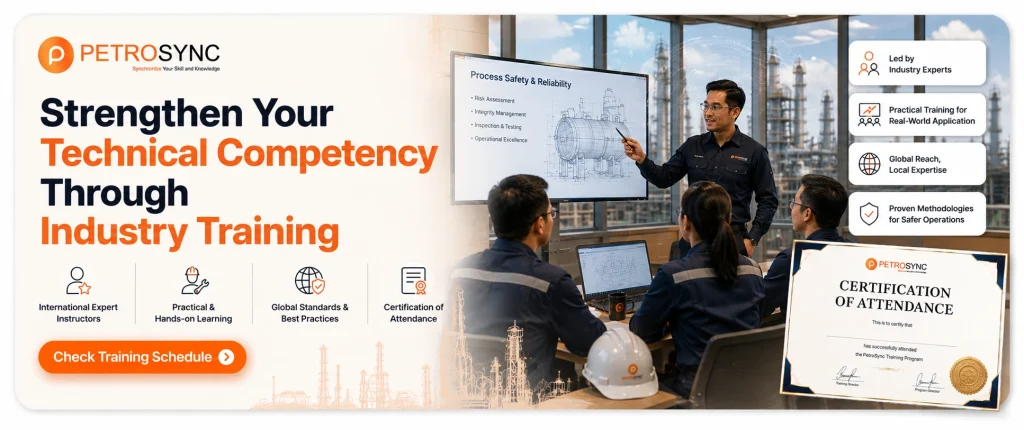
Pressure vessel training delivers both technical and business benefits by improving competency and operational performance.
1. Improve Pressure Vessel Inspection Competency
Training strengthens technical capabilities and improves the ability to identify equipment issues before failures occur.
2. Strengthen Understanding of Industry Codes and Standards
Participants gain a better understanding of internationally recognized standards and industry best practices.
3. Support Career Development and Professional Growth
Technical competency is highly valued across the energy industry. Training helps professionals expand their capabilities and prepare for future responsibilities.
4. Improve Asset Integrity and Reliability Management
Organizations that invest in competency development often achieve better equipment performance and more effective integrity management practices.
5. Build Confidence in Technical Decision-Making
Training equips engineers and inspectors with practical knowledge that supports informed technical decisions.
6. Reduce Operational and Safety Risks
A better understanding of pressure vessel principles and inspection methodologies contributes to safer operations and lower equipment failure risks.
Why Choose Malaysia for Pressure Vessel Training and Certification?
Malaysia has become one of Asia’s preferred destinations for technical and engineering training because of its strong industrial ecosystem and accessibility.
1. Strategic Hub for the Oil and Gas Industry
Malaysia has an established oil and gas sector that supports a wide range of technical and engineering activities.
2. Access to International Instructors and Participants
Training programs in Malaysia often attract professionals from different countries, creating opportunities for networking and knowledge sharing.
3. Cost-Effective Training Destination
Many organizations choose Malaysia because it offers high-quality technical training at competitive costs compared with several international training destinations.
4. Convenient Location for Professionals Across Asia
Malaysia’s accessibility makes it a practical training destination for professionals from Southeast Asia, the Middle East, and other regions.
5. Wide Availability of Industry-Focused Training Programs
The country offers numerous specialized programs that support competency development in inspection, integrity, maintenance, and reliability disciplines.
What Will You Learn in Pressure Vessel Training Programs?
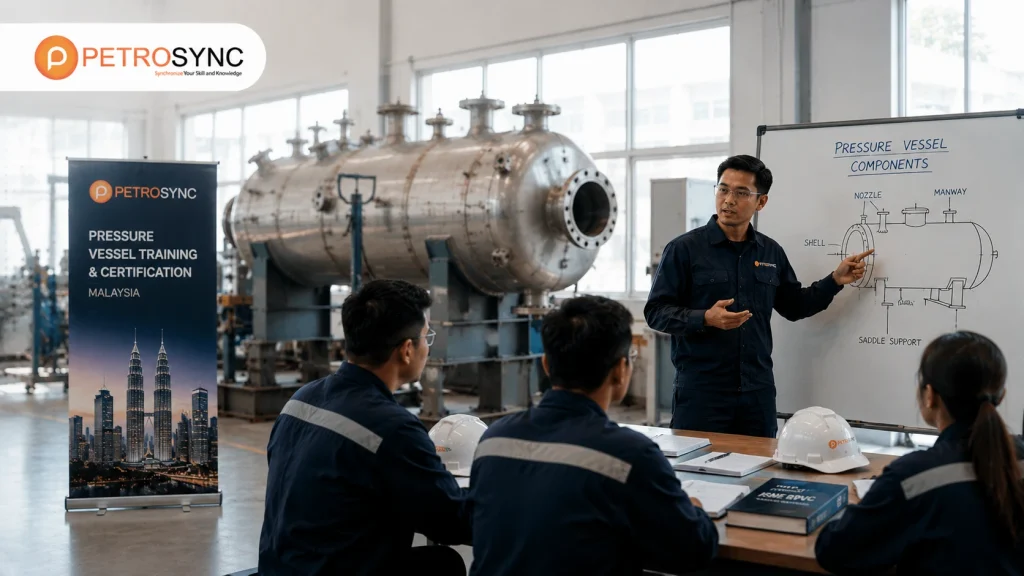
Pressure vessel training combines theoretical knowledge with practical industry applications.
1. Pressure Vessel Fundamentals and Design Principles
Participants learn the basic concepts of pressure vessel design, operation, and engineering considerations.
2. Inspection and Integrity Management Concepts
Training introduces inspection methodologies and integrity management principles used to maintain equipment reliability.
3. Industry Codes and Standards
Participants gain an understanding of the standards and requirements that govern pressure equipment.
4. Practical Case Studies and Applications
Real-world case studies help bridge the gap between theory and industrial practice.
5. Risk Management and Reliability Principles
Participants learn how to identify equipment risks and support long-term reliability initiatives.
This practical learning approach ensures that participants can apply their knowledge immediately in industrial environments.
Which Pressure Vessel Training Programs Are Available in Malaysia?
Several pressure vessel-related programs are available to support engineers and inspectors at different stages of their careers.
1. API 510 – Pressure Vessel Inspector Course
This program focuses on inspection, repair, alteration, and rerating concepts for pressure vessels.
2. API 579 – Fitness For Service Course
Participants learn fitness-for-service methodologies and remaining life assessment techniques for aging equipment.
3. ASME Section VIII Division 1 & 2 – Pressure Vessel Course
This course covers the requirements for pressure vessel design, fabrication, and construction.
4. ASME PCC-2 Repair of Pressure Equipment Course
The training introduces repair methodologies and best practices for maintaining pressure equipment and piping systems.
5. Metallurgy for Non-Metallurgists
This program provides a practical understanding of materials, degradation mechanisms, and metallurgy fundamentals.
These programs support competency development and help professionals improve their technical capabilities.
What Certificate Will You Receive After Completing the Training?
Participants who complete PetroSync’s training programs generally receive:
- Certificate of Attendance, or
- Certificate of Completion.
These certificates demonstrate participation in professional development activities and support competency development initiatives.
However, these certificates are different from third-party professional certifications, including:
Professional certifications usually require formal examinations and are issued directly by the respective certification bodies.
PetroSync’s training programs are designed to strengthen technical competency and practical knowledge rather than replace professional certification schemes.
How to Choose a Pressure Vessel Certification Provider in Malaysia?
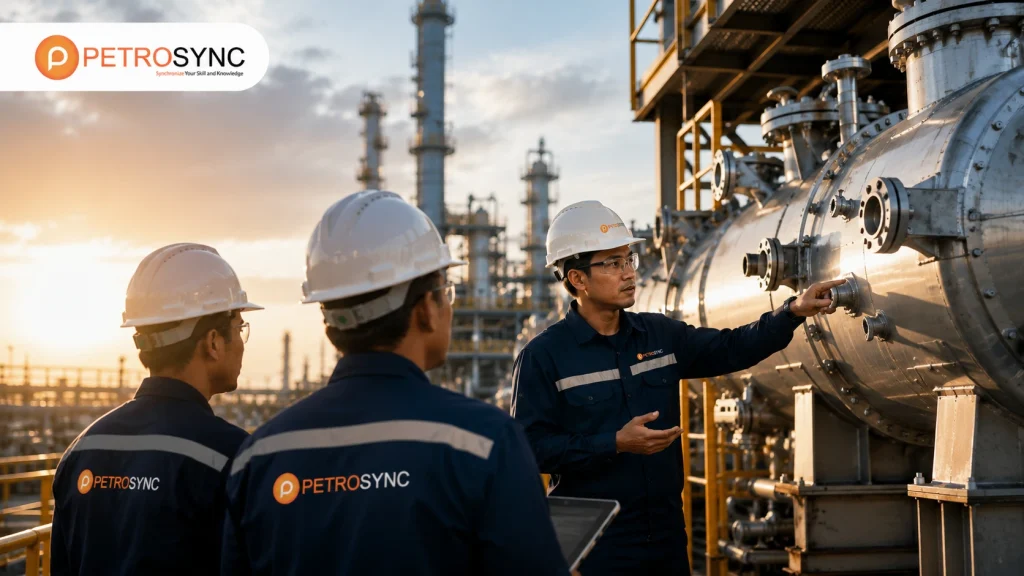
Selecting the right training provider is essential for achieving meaningful learning outcomes.
1. Industry Experience and Reputation
Choose providers with a proven track record of delivering technical training programs for industrial professionals.
2. Instructor Expertise and Practical Experience
Experienced instructors provide practical insights that extend beyond theoretical concepts.
3. Relevant and Up-to-Date Training Content
Training content should reflect current industry practices and internationally recognized standards.
4. Practical Learning and Industry Case Studies
Case studies and real-world applications improve knowledge retention and help participants apply concepts more effectively.
5. Flexible Public and In-House Training Options
Organizations often require flexible learning formats that can accommodate operational requirements and competency objectives.
PetroSync fulfills these criteria by providing practical, industry-focused, and instructor-led training programs in Malaysia for professionals across the oil and gas industry.
Why Choose PetroSync for Pressure Vessel Training and Certification in Malaysia?
Many organizations choose PetroSync because of its strong focus on competency development and practical industry learning.
1. Trusted Oil and Gas Training Consultant
PetroSync has extensive experience delivering technical training solutions for professionals in the oil and gas, petrochemical, and power industries.
2. Industry-Experienced Instructors
Participants learn directly from practitioners who understand real operational challenges.
3. Practical and Application-Focused Learning
Training programs emphasize practical problem-solving and industry applications.
4. Regular Public Training Programs in Kuala Lumpur
PetroSync regularly conducts public training programs in Kuala Lumpur, providing convenient access for professionals across Asia.
5. Public and In-House Training Options
Organizations can choose between public programs and customized in-house training solutions.
6. Certificate of Attendance Upon Completion
Participants receive certificates that recognize their commitment to professional development and technical competency improvement.
What is the Cost of Pressure Vessel Training in Malaysia?
Training costs vary depending on several factors.
1. Public and Online Training Package Pricing
|
Training Type |
Typical Scope |
|
Public Training |
Open enrollment programs delivered in Kuala Lumpur and other locations |
|
Online Training |
Live instructor-led training conducted remotely |
Training fees depend on:
- Course selected
- Training location
- Schedule
- Delivery format
2. Custom In-House Training and Additional Fees
Organizations can request customized proposals based on:
- Number of participants
- Training objectives
- Venue requirements
- Special requests and customization
Contact PetroSync directly to receive the latest quotation and training schedule.
Schedule a Consultation with PetroSync Today
Whether you want to improve inspection capabilities, strengthen asset integrity programs, or develop your team’s technical competency, PetroSync can help identify the most suitable training solution.
Contact PetroSync today to discuss your training objectives, request upcoming schedules, and receive a customized quotation for public and in-house training programs in Malaysia.
Frequently Asked Questions (FAQ)
Professionals who are new to pressure vessel inspection often begin with introductory pressure vessel integrity programs or API 510-related training to develop a strong technical foundation. PetroSync can also recommend the most suitable program based on your experience and responsibilities.
Participants typically gain knowledge related to pressure vessel fundamentals, inspection methodologies, integrity management, industry standards, practical case studies, and reliability principles that can be applied directly in their work.
Yes. Although the training does not replace professional certification programs, it helps strengthen technical knowledge and practical understanding that can support future certification preparation and professional development.
Yes. PetroSync offers customized in-house training programs that can be tailored to your organization's operational challenges, learning objectives, and competency requirements.
You can contact PetroSync directly to request the latest training calendar, receive course information, and reserve your seat in the upcoming training program. Early registration is recommended because seat availability may vary by course and schedule.

Results-oriented and thorough SEO specialist with extensive experience in conducting keyword research, developing and implementing digital website promotion strategies and plans, managing campaigns to develop company websites in the digital world, excellent knowledge of marketing techniques and principles, and attentive strong attention to detail.
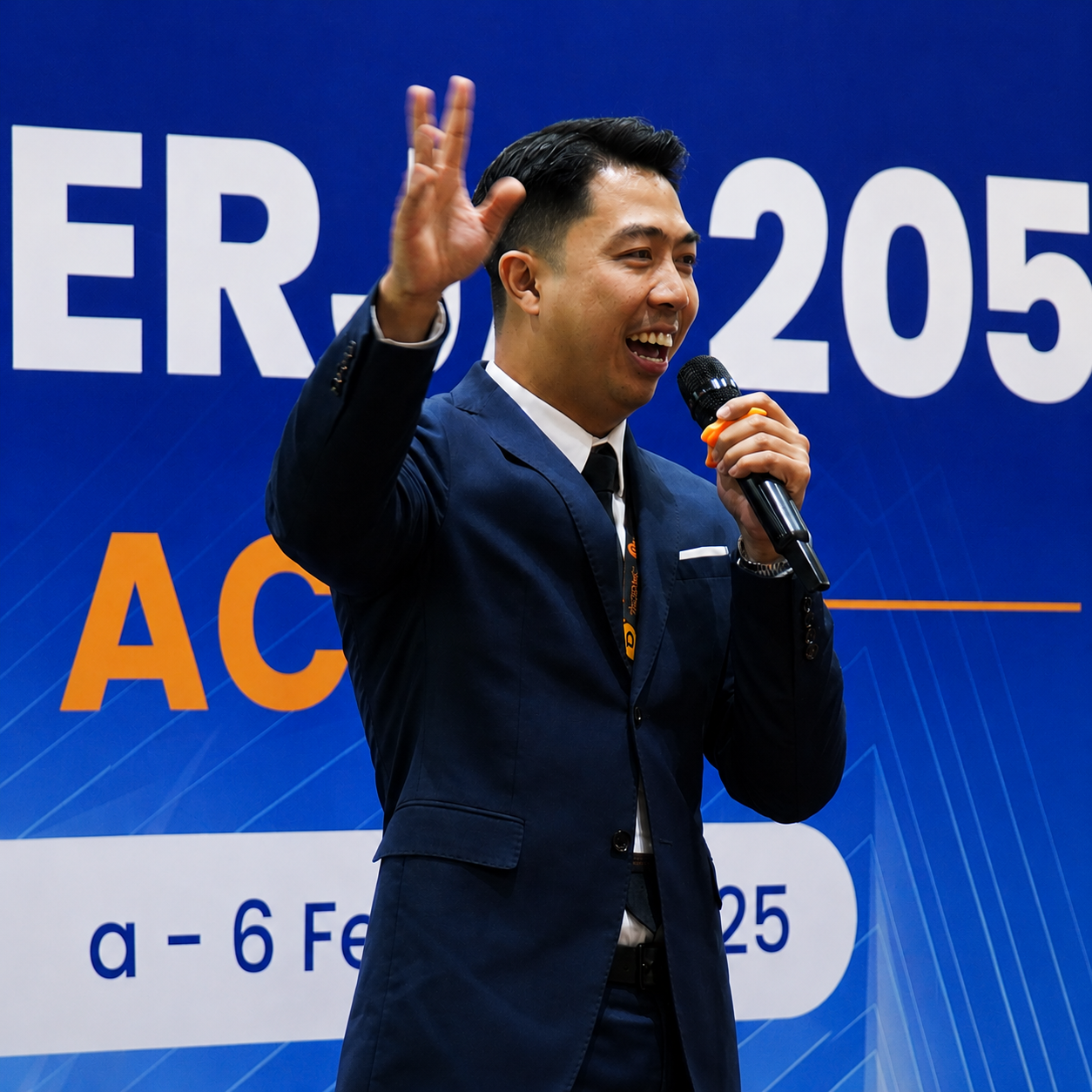
Business Development Manager at PetroSync with 12+ years of experience in professional training and business development across the energy and industrial sectors.