

- Mechanical inspector training should match the fixed equipment and inspection responsibilities in your work.
- API 510, API 570, and API 653 training address pressure vessels, piping, and aboveground storage tanks, respectively.
- Choose the syllabus and course level around your experience, practical learning needs, and exam preparation goals.
- Budget for the selected course and relevant travel or study expenses; team training requires its own quotation.
- PetroSync supports code review and practical preparation through relevant public courses and customized team training.
Choosing mechanical inspector training starts with the equipment you work on and the decisions your role involves. A pressure-vessel assignment, a piping system, and a storage tank each call for different inspection knowledge. The most useful course connects that knowledge with the responsibilities you already hold or are preparing to take on.
This guide compares three relevant API training options and explains how to assess their fit. You can then weigh your experience, learning goals, and budget before discussing an individual course or a training plan for your team.
Mechanical Inspector Training for Industrial Inspection
Mechanical inspector training develops the knowledge needed to interpret inspection requirements and assess fixed-equipment condition. In oil and gas and process facilities, that learning connects equipment condition, inspection records, and the codes used to guide technical decisions. Its value depends on how closely the course matches your responsibilities.
Inspection work also connects with maintenance and engineering. For example, a maintenance professional moving into vessel inspection may understand the equipment’s operating history but need more structured knowledge of inspection requirements. A relevant course can close that gap through code interpretation and related calculations.
Start, therefore, with the equipment and decisions in your role. Distinguishing vessel, piping, and tank responsibilities gives you a practical basis for comparing courses without treating every inspection assignment as the same learning need.
Which API Course Matches Your Inspection Work?
API 510 training fits pressure-vessel responsibilities, API 570 addresses in-service piping, and API 653 focuses on aboveground storage tanks. If your work covers several equipment groups, you may have more than one learning need. The following comparison shows the main focus of each course:
|
Course |
Equipment |
Main Training Focus |
|
API 510 |
Pressure vessels |
Vessel inspection, code interpretation, repair and alteration. |
|
API 570 |
In-service piping |
Piping inspection, degradation assessment and related calculations. |
|
API 653 |
Aboveground storage tanks |
Tank integrity, inspection, repair, alteration and reconstruction. |
1. API 510 for Pressure Vessel Inspection
API 510 training is relevant when your work involves pressure-vessel inspection and decisions concerning condition, repair, or alteration. The API 510 training course connects code interpretation with basic vessel calculations and inspection documentation, giving those responsibilities a structured learning focus.
For example, an inspector reviewing vessel condition alongside repair records needs to understand how the technical requirements relate to both. That combination makes the course relevant to vessel-focused work. Use the detailed course outline to explore those topics further, while keeping your own equipment responsibilities central to the choice.
Read Also: API 510 Training: Benefits, Course Outline & Certification
2. API 570 for Piping Inspection
API 570 training suits professionals working with in-service piping inspection. Its learning topics cover piping degradation, remaining-life evaluation, and the calculations that inform inspection and repair planning. The API 570 training course provides a focused route for developing knowledge around these piping-specific responsibilities.
Consider a professional reviewing corrosion information for an operating piping system. The learning need involves understanding what the information means for the piping assessment and associated inspection decisions. This is a different technical focus from vessel inspection, so the equipment and work involved should drive the training choice.
Read Also: API 570 Training: Benefits, Course Outline & Certification
3. API 653 for Storage Tank Inspection
API 653 training addresses aboveground storage tanks, including inspection and the context for repair, alteration, and reconstruction. It is relevant when your responsibilities involve tank-integrity review and the condition of the shell, bottom, or roof. This equipment focus gives the course a distinct place in an inspection-learning plan.
For instance, someone reviewing an in-service tank’s condition may need to connect inspection findings with tank-evaluation calculations and repair considerations. Once that equipment match is clear, the next decision is whether the course content and level address the person’s current knowledge gaps.
Read Also: Best API 653 Training for Oil & Gas Professionals
How Do You Choose the Right Training?
Choose the right training by matching its syllabus to the inspection decisions you need to make, then assessing the course level against your experience. A useful shortlist starts with a clear learning need, such as interpreting the relevant code or working through calculations used in your equipment area.
First, relate the syllabus to your responsibilities. Someone who reviews vessel inspection records needs different technical coverage from a colleague focused on piping degradation. Within the relevant course, identify the topics that address decisions you find difficult or responsibilities you are preparing to take on.
Next, consider your starting point. The selected PetroSync courses are intermediate, so existing equipment knowledge and relevant technical experience help you judge their fit. Finally, separate practical learning goals from exam preparation goals: you may need both, but one can be the immediate priority. A clear learning objective also makes the training budget easier to assess.
What Should You Budget for Inspector Training?
Your inspector-training budget should cover course fees, travel, accommodation, and additional study materials. If applicable, include certification exam fees separately.
Training costs vary depending on the certification program, location, and course format. Contact the training provider for the latest pricing and available options for API 510, API 570, or API 653 training.
Before booking, confirm whether the course fee includes learning materials, code books, and other essentials. Companies training multiple inspectors may also consider in-house training, with pricing tailored to their team’s needs.
Beyond cost, consider the instructor’s experience, technical content, and practical case studies to ensure the training meets your professional requirements.
How Can PetroSync Support Your Inspection Training?
PetroSync supports inspection learning through code-focused preparation and practical activities tied to the selected equipment. Individual professionals can explore relevant public courses, while organizations can discuss customized team training. The following areas show how that support connects with your learning needs:
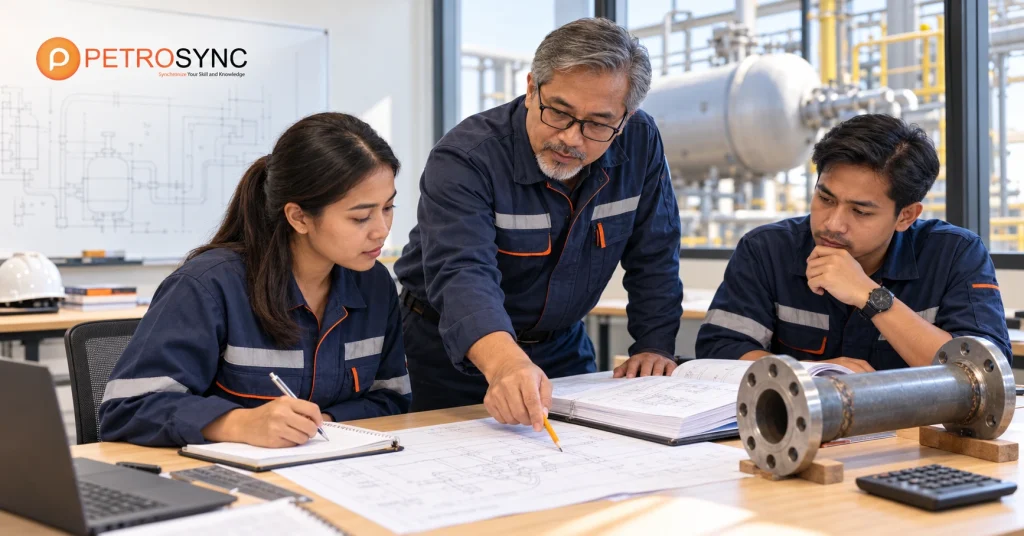
1. A Structured Review of Inspection Codes
A structured code review helps you connect inspection requirements with the calculations and decisions covered by your course. Vessel, piping, and tank programs each organize learning around their relevant technical context. For example, locating the applicable rule before attempting a calculation makes the reasoning part of the exercise, while supporting exam preparation.
Quote: PetroSync reports an API exam pass rate of around 90% after its preparation training.
Source: PetroSync, API Preparation Training FAQ.
This is PetroSync’s reported overall figure, rather than a separate result for each course or an individual pass guarantee. Use it alongside the program’s learning content when evaluating preparation support.
2. Practical Exercises and Exam Preparation
Practical exercises let you work through the calculations and reasoning relevant to your selected inspection course. API 510 includes assignments and a final practice examination. API 570 covers piping calculations and damage assessment, while API 653 provides illustrated case studies and tank-evaluation calculations.
These activities give you a way to identify where your understanding needs more work. For example, a practice calculation can reveal difficulty interpreting a requirement even when the arithmetic is familiar. A case discussion can then connect the technical question with an equipment condition, giving further study a clearer purpose.
3. Public Courses and In-House Team Training
Public courses offer individual professionals a way to pursue relevant inspection learning, while in-house training addresses shared team needs. The API 510 and API 570 batches outlined above provide public options; API 653 scheduling is by inquiry. Provider reputation offers another useful consideration alongside course fit.
Quote: Rated 4.9/5 on Google from 1,000+ reviews.
Source: Google Business Profile, PetroSync Jakarta; user-supplied snapshot, 6 September 2026.
For an organization, the discussion can focus on equipment responsibilities and knowledge gaps shared across the team. PetroSync offers customized in-house training, allowing those needs to shape the proposed learning program. That creates a practical starting point for discussing a quotation for the training your team requires.
Discuss Your Inspector Training Needs with PetroSync
Discuss your inspection responsibilities with PetroSync to identify a course option that fits your equipment, experience, and learning goals. Whether your priority is practical code knowledge or exam preparation, a focused conversation can help connect that need with relevant training. If several colleagues share those needs, request an in-house training quotation to explore a program for your team. Start with the inspection work you need to support and the knowledge you want to develop.
Frequently Asked Questions (FAQ)
Discuss course suitability with PetroSync first, because these intermediate programs target professionals with relevant technical experience. Without inspection or maintenance exposure, you may need a different starting point. Separately, API 510 eligibility requirements (and API 570 and API 653 criteria)—base exam qualification on education and documented experience with the relevant equipment.
API's published API 570 qualification criteria do not list API 510 certification as a prerequisite. They focus on education and relevant in-service metallic piping experience, which API verifies. Choose piping preparation around your responsibilities and learning needs while meeting the qualification requirements for the API 570 examination.
No, completing PetroSync training provides the applicable attendance or completion certificate, rather than automatic API inspector certification. API has a separate application, experience-verification, and examination process for its programs. Training supports preparation, but attendance does not establish exam eligibility or replace the requirements for the relevant API credential.
The standard preparation-course fee does not automatically include the API certification exam. PetroSync offers an optional training-plus-certification-exam package and assists with exam registration. This gives you a combined arrangement to discuss when planning your course, with the selected package determining which training and exam services it covers.
Classroom items differ by course: API 510 lists a calculator, straightedge or triangle, pencils, highlighters, and relevant codes. API 570 asks for a Windows laptop and a scientific calculator, while API 653 participants should follow their joining instructions. These are classroom preparation items, distinct from what API permits in an examination room.

Results-oriented and thorough SEO specialist with extensive experience in conducting keyword research, developing and implementing digital website promotion strategies and plans, managing campaigns to develop company websites in the digital world, excellent knowledge of marketing techniques and principles, and attentive strong attention to detail.