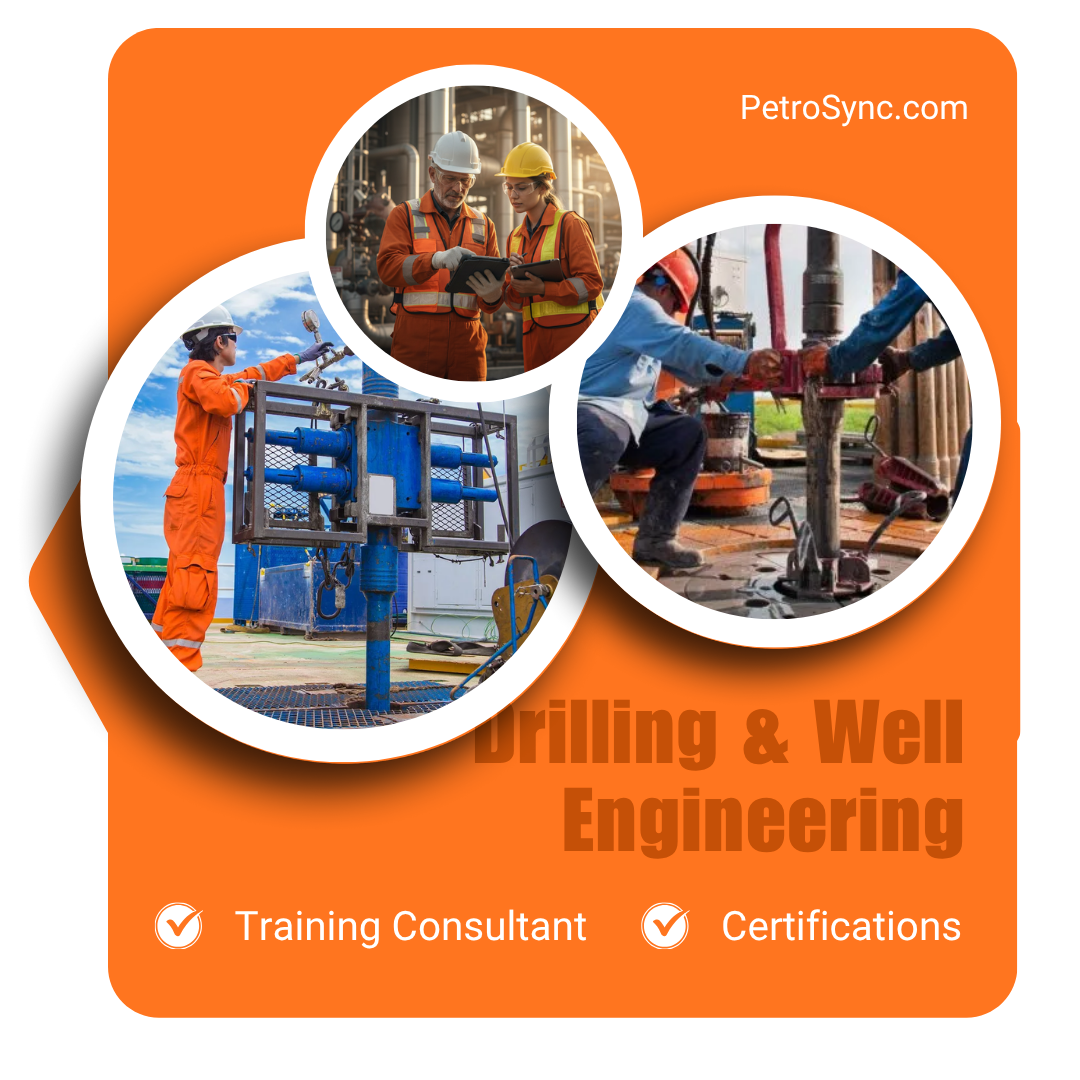



- Drilling and Well Engineering is the backbone of upstream success, ensuring safe design, execution, and long-term well integrity.
- Weak planning and pressure control increase risks of blowouts, NPT, regulatory issues, and costly downtime.
- Strong competency frameworks improve safety, efficiency, compliance, and asset performance across the well lifecycle.
- Structured training and real-case simulations sharpen decision-making under pressure and reduce operational uncertainty.
- PetroSync programs align teams with global standards, practical field insight, and measurable performance gains.
Drilling and Well Engineering is more than a technical discipline – it is the backbone of upstream oil and gas operations. Every successful well, whether onshore or offshore, begins with meticulous engineering design, precise execution, and disciplined operational control. For senior engineers, drilling supervisors, asset managers, and company leaders, mastering this discipline is not optional; it is a strategic imperative.
In today’s volatile energy landscape—marked by deeper reservoirs, harsher environments, tighter margins, and stricter regulations—Drilling and Well Engineering demands not only technical expertise but also strong competency frameworks and adherence to international best practices. A single oversight in well planning, pressure management, or equipment selection can escalate into operational disruptions, environmental incidents, and significant financial losses.
This article explores the fundamentals, risks, benefits, and practical competency development strategies in Drilling and Well Engineering—while outlining how structured programs such as those provided by PetroSync can help organizations strengthen operational resilience and long-term performance.
What is Drilling and Well Engineering?

Drilling and Well Engineering refers to the comprehensive engineering discipline responsible for planning, designing, executing, and maintaining oil and gas wells safely and efficiently.
It covers:
- Well design and trajectory planning
- Casing and cementing design
- Drilling fluid engineering
- Well control and pressure management
- Directional drilling and formation evaluation
- Completion design and integrity management
This discipline integrates geology, reservoir engineering, mechanical engineering, and safety management into one coordinated operational framework.
According to the Society of Petroleum Engineers, effective well engineering requires not only technical design capability but also strong risk management and real-time operational decision-making to ensure well integrity throughout the lifecycle.
In essence, Drilling and Well Engineering ensures that hydrocarbons are accessed safely, economically, and in compliance with industry regulations.
Potential Risks of Improper Management or Misunderstanding of Drilling and Well Engineering
Failure to properly manage Drilling and Well Engineering can result in significant operational, safety, and financial consequences.
1. Operational Failures and Well Control Incidents
Inadequate well design, poor pressure prediction, or insufficient well control preparedness can lead to kicks, blowouts, stuck pipe, or lost circulation events.
The catastrophic blowout in the Deepwater Horizon incident highlighted how failures in well integrity and decision-making can escalate into major disasters. While extreme cases are rare, minor well control events remain a persistent operational risk when competency gaps exist.
2. Increased Health, Safety & Environmental Risks
Improper drilling practices may expose personnel to hazardous pressure events, gas releases, or structural failures. Environmental contamination due to poor well integrity can damage corporate reputation and result in regulatory penalties.
3. Regulatory Non-Compliance and Legal Liabilities
Oil and gas operations must comply with stringent international and local regulations. Weak understanding of standards such as those developed by American Petroleum Institute can result in non-compliance, legal liabilities, and project shutdowns.
4. Equipment Damage and Asset Losses
Improper torque and drag management, incorrect mud selection, or flawed casing programs can lead to premature equipment failure and expensive non-productive time (NPT).
5. Financial and Schedule Impacts
Drilling delays, sidetracks, and remedial operations significantly inflate project costs. In high-cost offshore environments, even a single day of downtime can cost hundreds of thousands of dollars.
Benefits of Mastering Drilling and Well Engineering for the Oil & Gas Industry
When competency and best practices are fully integrated, the benefits are substantial and measurable.
1. Enhanced Well Design & Drilling Efficiency
Advanced engineering calculations and simulation tools enable optimized trajectory design, reduced NPT, and improved rate of penetration (ROP).
2. Improved Safety & Operational Reliability
A well-trained team ensures proper kick detection, blowout preventer (BOP) readiness, and pressure control procedures, minimizing incident risks.
3. Compliance with Industry Standards, Codes & Regulations
Strong understanding of global standards ensures smooth audits and regulatory approvals.
4. Reduced Asset Failure & Field Incident Risks
Structured engineering design reduces casing collapse, cement channeling, and formation damage risks.
5. Optimized Equipment Performance, Lifespan & Integrity
Proper operational parameters extend the life of drilling tools and surface equipment.
6. Cost Efficiency in Operations, Maintenance & Downtime
Reduced NPT, minimized rework, and optimized planning directly improve project economics.
How to Address Drilling and Well Engineering Challenges More Effectively
Technical complexity requires systematic solutions—not ad-hoc fixes.
1. Develop Professional Competence through Structured Programs like PetroSync
Competency development programs help engineers and supervisors strengthen their technical foundation while aligning with international standards.
2. Apply Relevant Industry Best Practices & Standards for Drilling and Well Engineering
Incorporating guidance from organizations such as the International Association of Drilling Contractors ensures operational alignment with global best practices.
3. Integrate Drilling and Well Engineering Knowledge into Operational & Engineering Processes
Knowledge must not remain theoretical. It must be embedded into daily planning meetings, risk assessments, and engineering reviews.
4. Enhance Team Capability through Case Studies & Field Learning
Real-case simulations improve decision-making speed and confidence under operational pressure.
5. Conduct Evaluation, Review & Continuous Improvement
Post-well analysis and lessons learned sessions help refine future well programs and strengthen institutional knowledge.

Competency Development Solutions for Drilling and Well Engineering via PetroSync
PetroSync offers structured Drilling and Well Engineering competency programs tailored to oil and gas professionals across operational and managerial levels.
1. PetroSync Drilling and Well Engineering Competency Development Programs for Oil & Gas Professionals
Designed for drilling engineers, well engineers, supervisors, and asset managers.
2. Curriculum Based on International Standards & Industry Practice
Aligned with recognized global standards and practical field applications.
3. Experienced Instructors from Practitioners & Subject Matter Experts
Instructors bring hands-on operational experience from complex onshore and offshore projects.
4. Practical & Applied Learning Approach
Focused on solving real engineering challenges—not just theoretical discussion.
5. Case Studies Based on Real Field Conditions
Participants analyze real drilling events, well integrity challenges, and operational decision-making scenarios.
6. Public & In-House Program Schemes
Flexible formats allow companies to customize learning objectives according to project needs.
7. Always Updated & Relevant Learning Materials
Programs are continuously refined to reflect evolving industry technologies and regulations.
8. Learning Experience Support from Engineers to Management
Content is designed to bridge technical depth with managerial oversight.
9. Program Certificate for Competency & Career Development
Participants receive certification supporting professional development and career progression.
PetroSync Drilling and Well Engineering Program Advantages for Companies
1. Designed for Drilling & Well Operational Challenges
Programs directly address real-world operational bottlenecks.
2. Practical & Applied Case Study Approach
Hands-on exercises ensure immediate workplace application.
3. Experienced Instructors from Global Industry Practitioners
Trainers understand the complexity of high-risk drilling environments.
4. Curriculum Aligned with International Standards & Best Practices
Ensures compliance and technical credibility.
5. Trusted by Energy Companies & Global Industries
PetroSync has supported various multinational energy organizations.
6. International Reputation as an Oil & Gas Training Provider
Recognized for delivering competency-based learning solutions across regions.
Schedule Your PetroSync Drilling and Well Engineering Competency Program Now
In a high-risk, capital-intensive industry, competency is not a luxury—it is a safeguard for operational excellence and corporate sustainability.
Drilling and Well Engineering sits at the center of upstream success. Companies that invest in structured competency development reduce risk exposure, enhance asset performance, and strengthen regulatory compliance.
Equip your engineers, supervisors, and leaders with the knowledge and best practices required to navigate modern drilling complexities.
Schedule your PetroSync Drilling and Well Engineering Competency Program today and transform operational challenges into sustainable performance advantages.
Frequently Asked Questions (FAQ)
Drilling and Well Engineering is a comprehensive engineering discipline focused on planning, designing, executing, and maintaining oil and gas wells safely and efficiently. It integrates well design, casing and cementing, drilling fluids, pressure control, directional drilling, and completion integrity into a coordinated operational framework.
It serves as the backbone of upstream operations by ensuring wells are engineered and executed with precision, safety, and regulatory compliance. Strong competency in this discipline reduces operational risks, protects assets, and improves overall project performance and profitability.
Improper management can lead to well control incidents, equipment failure, non-productive time, environmental damage, regulatory penalties, and significant financial losses. Weak planning and decision-making increase exposure to operational disruptions and safety hazards.
Mastery enhances well design accuracy, improves drilling efficiency, strengthens safety controls, ensures compliance with international standards, reduces asset failure risks, and lowers overall operational costs through better planning and execution.
Organizations can build competency through structured training programs, application of global best practices, integration of engineering knowledge into daily operations, real-case simulations, and continuous post-well evaluation to improve future performance.

Results-oriented and thorough SEO specialist with extensive experience in conducting keyword research, developing and implementing digital website promotion strategies and plans, managing campaigns to develop company websites in the digital world, excellent knowledge of marketing techniques and principles, and attentive strong attention to detail.