

Galvanic corrosion has become one of the most persistent and underestimated threats to asset integrity across the oil and gas and petrochemical industries. As operating environments grow harsher, materials become more diverse, and production demands intensify, this corrosion mechanisms quietly accelerates metal deterioration—often long before it is detected.
Many pipeline leaks, heat exchanger failures, and offshore structural degradations ultimately trace back to galvanic interactions between dissimilar metals. What makes galvanic corrosion especially challenging is its subtle but aggressive nature. Unlike uniform corrosion, which can be tracked more predictably, galvanic corrosion creates localized damage that progresses rapidly once an electrolyte completes the electrical path.
This silent escalation places senior leaders, managers, and technical decision-makers in a difficult position: failures appear sudden, yet the root causes have been developing for months or even years. Before we dive into the underlying science and effective mitigation strategies, it’s essential to understand why galvanic corrosion deserves serious attention at the leadership level.
The impact goes far beyond material degradation; it influences operational continuity, maintenance budgets, regulatory compliance, and business resilience. Organizations that master its prevention gain a strategic advantage in reducing unplanned downtime and improving long-term asset reliability.
What Is Galvanic Corrosion?
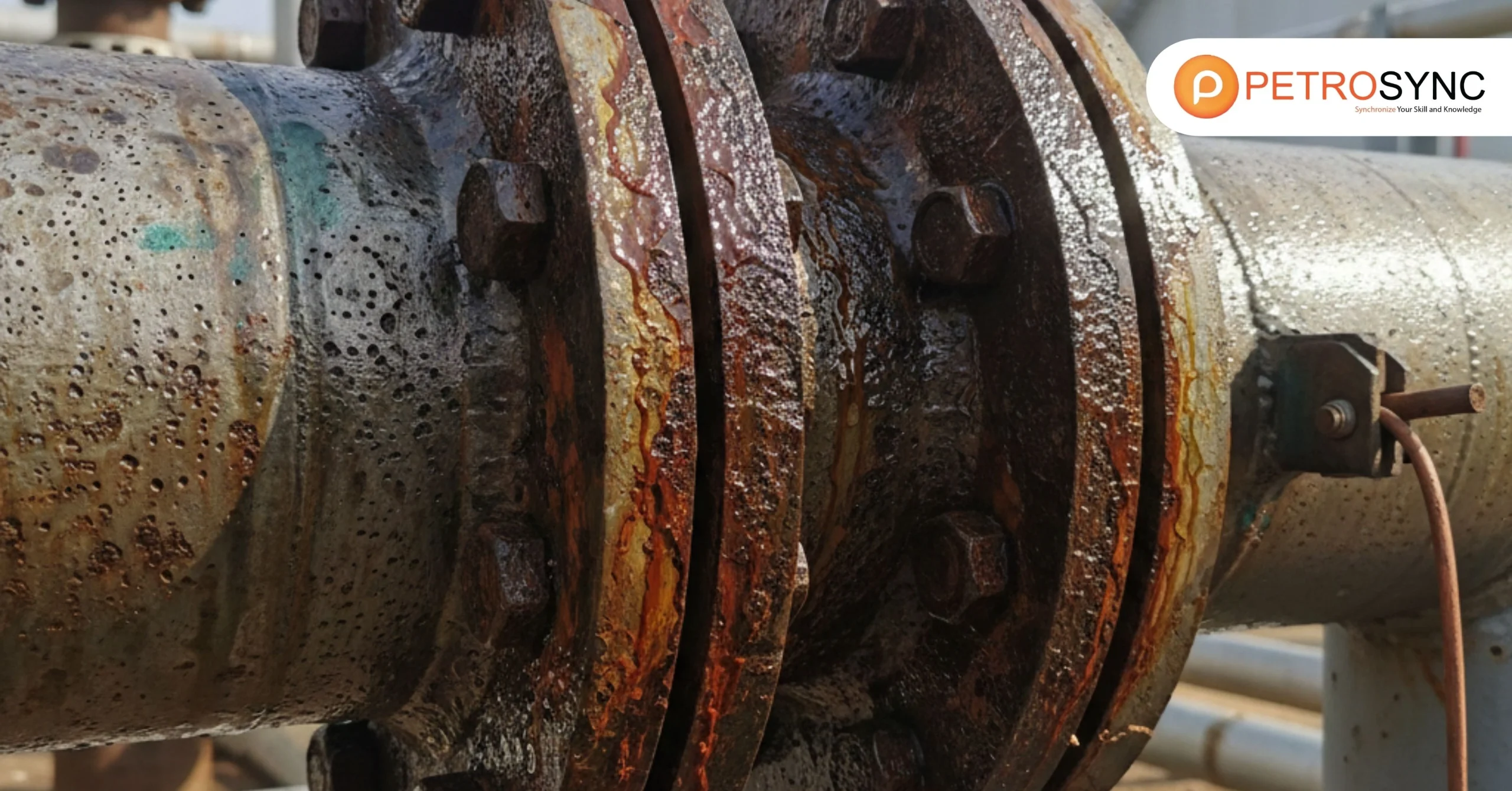
Galvanic corrosion occurs when two dissimilar metals come into electrical contact in the presence of an electrolyte. In this condition, the more active (anodic) metal corrodes faster, while the nobler (cathodic) metal is protected. This electrochemical reaction forms a small but powerful galvanic cell that can rapidly deteriorate the anodic material.
In oil and gas operations, this phenomenon is particularly common because many systems require different metals for mechanical strength, temperature resistance, or weight considerations. According to insights reported in a materials science journal, galvanic corrosion can accelerate metal loss rates by up to several times compared to natural corrosion when the metal pairing and electrolyte conditions are unfavorable.
This explains why certain failures seem disproportionately aggressive compared to typical corrosion predictions. Engineers who understand galvanic behavior can anticipate damage pathways, adjust design choices, and tailor protection strategies that significantly extend equipment life.
Why Is Galvanic Corrosion Critical for Industrial Assets?
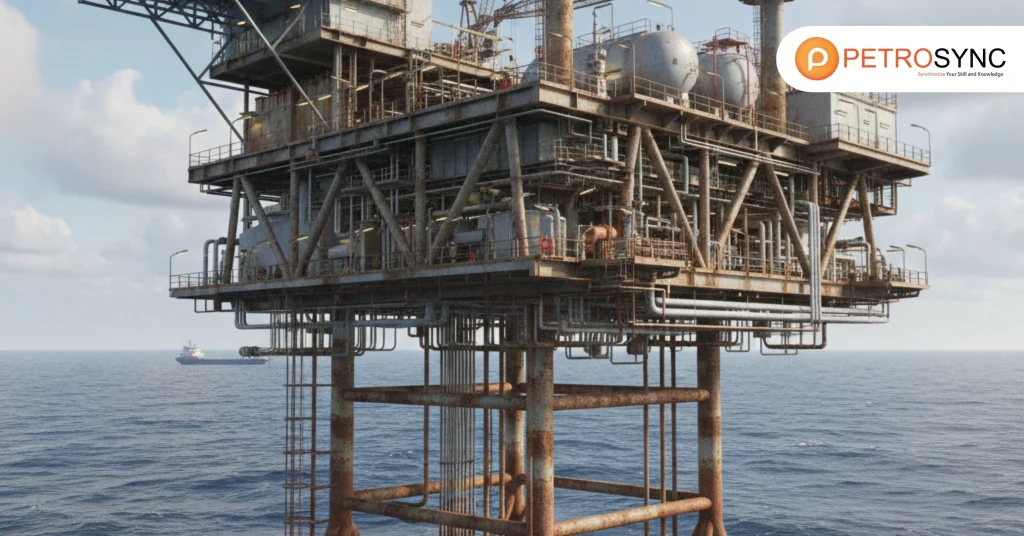
For industrial environments—especially those involving offshore structures, pipelines, subsea equipment, tanks, and pressure systems—galvanic corrosion is not merely a technical concern. It represents a major operational and financial risk. Industry studies on global corrosion costs estimate that corrosion-related failures account for roughly 3–4% of global GDP equivalent in losses annually.
A portion of these losses—particularly fast-progressing failures—are linked directly to galvanic interactions between mixed metal assemblies. While corrosion may seem like a slow process, galvanic corrosion behaves differently: it concentrates deterioration at specific joints, welds, or interfaces, making failures sudden and often catastrophic.
Senior managers and asset owners recognize that these failures can trigger:
- Production shutdowns
- Elevated OPEX
- Loss of containment incidents
- Premature component replacement
- Environmental and safety risks
Given these stakes, mastering galvanic corrosion management becomes essential not only for equipment longevity but for protecting the organization’s operational reliability and reputation.
What Causes Galvanic Corrosion in Oil & Gas and Petrochemical Equipment?
Galvanic corrosion does not occur randomly. It emerges when several interconnected factors align, particularly in complex industrial environments.
1. Dissimilar Metals in Contact
Equipment such as flanges, heat exchangers, pump casings, connectors, and fasteners frequently use different metals. When these components touch, they create potential galvanic couples.
2. Presence of Electrolytes
Saltwater, produced water, drilling fluids, and process chemicals all act as electrolytes. Offshore and coastal facilities are especially vulnerable due to constant exposure to conductive seawater.
3. Coating or Insulation Damage
A single breach in a protective coating can expose underlying metal and rapidly accelerate galvanic activity. Even a pinhole defect may create a localized attack.
4. Improper Material SelectionIn some cases, materials are chosen for short-term
performance rather than long-term compatibility. This is common in high-temperature or high-pressure applications where metallurgical constraints are strict.
5. Stray Electrical Currents
Electrical systems or grounding faults can worsen galvanic activity by altering potential differences between metals.
A well-known industrial evaluation highlighted that improper material pairing contributes significantly to corrosion failures across pipelines and mechanical systems, emphasizing the need for design-stage prevention.
What Are the Risks and Consequences When Galvanic Corrosion Is Not Controlled?
Ignoring galvanic corrosion can lead to consequences far more severe than material loss alone.
1. Structural Failures
Localized thinning can compromise:
- risers
- platform legs
- storage tanks
- pressure boundaries
Even a small penetration can evolve into catastrophic loss of containment.
2. Unplanned Downtime
Unexpected failure forces operators to halt production—often costing millions per day in offshore environments.
3. Premature Equipment Replacement
Components that should last 20 years may fail within 5–7 years if galvanic corrosion is aggressive.
4. Safety & Environmental Hazards
Leaks, fires, or chemical releases threaten personnel safety and environmental stewardship.
5. Financial Impact
A widely referenced corrosion-cost assessment notes that implementing systematic corrosion control strategies can reduce annual corrosion costs by 15–35% across industries. This improvement directly contributes to asset performance and business growth.
In short, galvanic corrosion is not simply a technical challenge—it is a business risk multiplier.

How Can Engineers Effectively Prevent and Control Galvanic Corrosion?
Preventing galvanic corrosion requires both engineering discipline and practical field execution. Below are key strategies used by leading operators worldwide:
1. Smart Material Selection
Choose metals that are closer together on the galvanic series. This reduces the potential difference and slows the reaction. Advanced material compatibility charts and simulation tools support this process.
2. Cathodic Protection (CP)
CP systems—sacrificial anodes or impressed current—redirect corrosion away from critical structures. Many offshore facilities rely heavily on these systems to protect submerged or buried components.
3. Coatings and Insulation
A high-quality coating system isolates metals from electrolytes. Consistent inspection and timely repair are essential because a damaged coating can accelerate corrosion faster than no coating at all.
4. Electrical Isolation
Isolation kits on flanges and joints break the electrical path that enables galvanic reactions. This approach is especially useful in pipeline networks with mixed metallurgy.
5. Corrosion Monitoring
Using tools such as ultrasonic testing (UT), corrosion coupons, electrical resistance probes, and online sensors helps engineers track corrosion rates in real time and predict failures before they occur.
6. Design Optimization
Engineers may alter surface areas, add insulating washers, redesign fastener systems, or modify flow patterns to reduce galvanic exposure. Organizations that integrate these strategies early—during design, construction, and operation—significantly improve asset life and reduce total lifecycle costs.
How Can PetroSync Training Help You Master Galvanic Corrosion Prevention?
Understanding galvanic corrosion at a deep, practical level gives senior professionals and decision-makers a clear competitive advantage. With operational budgets tightening and reliability expectations rising, leaders who master corrosion prevention can protect their assets, streamline maintenance costs, and enhance long-term business performance.
PetroSync provides specialized training designed for engineers, managers, and executives who want to elevate their corrosion management capabilities. The program covers:
- Advanced galvanic corrosion mechanisms
- Material selection for reliability
- Cathodic protection design fundamentals
- Coating and inspection best practices
- Real case studies from offshore, refinery, and petrochemical facilities
- Practical frameworks for risk-based asset integrity management
The training is structured to bridge theory and on-the-ground application, giving participants actionable skills that improve decision-making and safeguard high-value assets. Many organizations have reported stronger asset reliability and improved cost efficiency after equipping their teams with advanced corrosion knowledge—an investment that consistently delivers measurable returns.
If you’re looking to strengthen your corrosion prevention strategy and ensure your team can confidently safeguard critical systems, PetroSync’s corrosion and asset integrity courses offer a comprehensive and practice-driven approach tailored for leaders in demanding industries.

Results-oriented and thorough SEO specialist with extensive experience in conducting keyword research, developing and implementing digital website promotion strategies and plans, managing campaigns to develop company websites in the digital world, excellent knowledge of marketing techniques and principles, and attentive strong attention to detail.