


Petroleum industry courses are becoming a strategic advantage for organizations navigating today’s rapidly evolving energy landscape. As operational challenges grow more complex—ranging from advanced technologies to tightening global safety expectations—industry professionals can no longer rely solely on field experience.
Modern petroleum operations demand structured learning, practical frameworks, and evidence-based decision-making to maintain competitiveness, reliability, and compliance.
In this shifting environment, senior leaders, managers, and technical experts play a crucial role in ensuring that operations remain safe, efficient, and future-ready.
That is why petroleum industry training is no longer just an option—it has become a business imperative that directly influences performance, cost efficiency, and organizational resilience. Before exploring the core training areas, let’s understand why professional development matters more today than ever.
Why Are Petroleum Industry Courses Essential in Today’s Energy Landscape?
1. Rapidly Evolving Operational Challenges
Oil and gas operations are expanding into harsher environments, deeper reservoirs, and more complex facility configurations. A McKinsey analysis notes that operational complexity in upstream activities has increased more than 25% within a decade, pushing companies to adopt advanced skill sets to remain competitive. Continuous training helps teams adapt faster and execute confidently.
2. Stricter Safety Regulations & Compliance Pressure
Global regulators are tightening safety and environmental standards. According to an industry review by the International Association of Oil & Gas Producers, organizations with structured safety training reduce incident rates by up to 40%. Courses help professionals navigate compliance frameworks while avoiding costly violations.
3. Reliability Issues in Aging Facilities
More than half of global oil and gas facilities have exceeded 25–30 years of service life. This aging infrastructure increases failure probability and drives maintenance costs upward. Reliability-focused courses equip engineers and managers with tools to extend asset life without compromising safety or productivity.
4. Digitalization & Technology Skill Gap
Digital transformation is reshaping petroleum operations—AI-driven monitoring, advanced inspection technologies, and predictive analytics are becoming standard. Yet, workforce capability often lags behind technological adoption. Training bridges this digital skill gap by equipping teams with the competencies needed to leverage modern tools effectively.
5. The Urgent Need for Knowledge Transfer & Workforce Upskilling
As senior experts retire, organizations risk losing decades of tacit knowledge. A study published in the Journal of Petroleum Technology highlighted that companies with active knowledge-sharing programs improve operational decision-making by up to 35%. Courses ensure knowledge retention and help new talent progress faster.
Which Petroleum Industry Courses Are Most Critical to Build Real Expertise?
1. Asset Integrity & Reliability Engineering Courses
These programs strengthen your ability to maintain safe, dependable, and cost-effective operations. Participants learn RBI methodologies, FMEA, RCM, and integrity management frameworks essential for managing high-risk assets.
2. Mechanical, Pressure Systems & Rotating Equipment Courses
Training in pumps, compressors, turbines, piping systems, and pressure equipment helps professionals prevent mechanical failures and optimize equipment lifecycle performance.
3. Process Safety, Risk & HSE Management Courses
These courses provide a deep understanding of risk assessment, safety barriers, incident investigation, and regulatory expectations. They reinforce a strong safety culture across all levels.
4. Inspection, QA/QC & Advanced NDT Courses
From API inspection standards to advanced non-destructive testing techniques, these courses help ensure accurate assessments of equipment conditions while reducing unplanned shutdowns.
5. Corrosion, Materials & Failure Analysis Courses
Participants learn how to diagnose degradation mechanisms, select suitable materials, and prevent recurring failures—crucial for long-term asset integrity.
6. Production, Drilling & Operational Excellence Courses
These courses strengthen capabilities in well integrity, drilling optimization, reservoir management, and production efficiency—key areas for improving profitability and minimizing downtime.
7. Turnaround, Maintenance & Project Management Courses
Complex shutdowns and maintenance activities require precise coordination. Specialized training enhances planning accuracy and execution efficiency, helping companies cut turnaround overruns significantly.

What Real Benefits Can These Petroleum Industry Courses Deliver to Organizations?
1. Reduced Equipment Failures & Downtime Costs
Research from the Society for Maintenance & Reliability Professionals shows that companies with structured training programs reduce unplanned downtime by up to 30%. This directly boosts production continuity and operational stability.
2. Stronger Safety Culture & Regulatory Compliance
Well-trained teams respond better to hazards and follow industry best practices with discipline. This helps organizations achieve lower incident rates, avoid penalties, and maintain a strong public reputation.
3. Higher Reliability, Availability & Asset Life Extension
Reliability engineering skills enable professionals to implement preventive strategies that extend asset life by years—an advantage that contributes substantially to cost savings.
4. Smarter, Faster & Data-Driven Decision-Making
Training enhances analytical thinking, enabling teams to interpret data, assess risks, and make precise decisions. A study in the Journal of Loss Prevention in the Process Industries shows that digital competency training improves decision accuracy by 20–25%.
5. Stronger Leadership & Technical Competency Across Teams
Skill development fosters confident leaders who can supervise, troubleshoot, and innovate effectively. This strengthens organizational capability from operations to senior management.
Who Gains the Most from Enrolling in Petroleum Industry Courses?
1. Engineers (Mechanical, Reliability, Corrosion, Inspection, Asset Integrity)
They gain frameworks and tools to solve real engineering challenges with stronger technical accuracy.
2. Operations, Production & Maintenance Professionals
Training helps them optimize performance, reduce downtime, and execute procedures more safely and efficiently.
3. HSE & Risk Management Teams
They strengthen their ability to implement safety systems, manage risks, and ensure compliance.
4. Project Managers, Senior Executives & Training Managers
They develop sharper strategic insights to improve planning, resource allocation, and organizational performance across the board.
So, Where Should You Continue Your Professional Development Journey?
If you aim to remain competitive in an industry undergoing rapid transformation, continuous professional development is not optional—it’s essential. The right petroleum industry courses empower you to operate confidently, lead with clarity, and make decisions that elevate your organization’s long-term performance.
Build Real Expertise with PetroSync Petroleum Industry Training
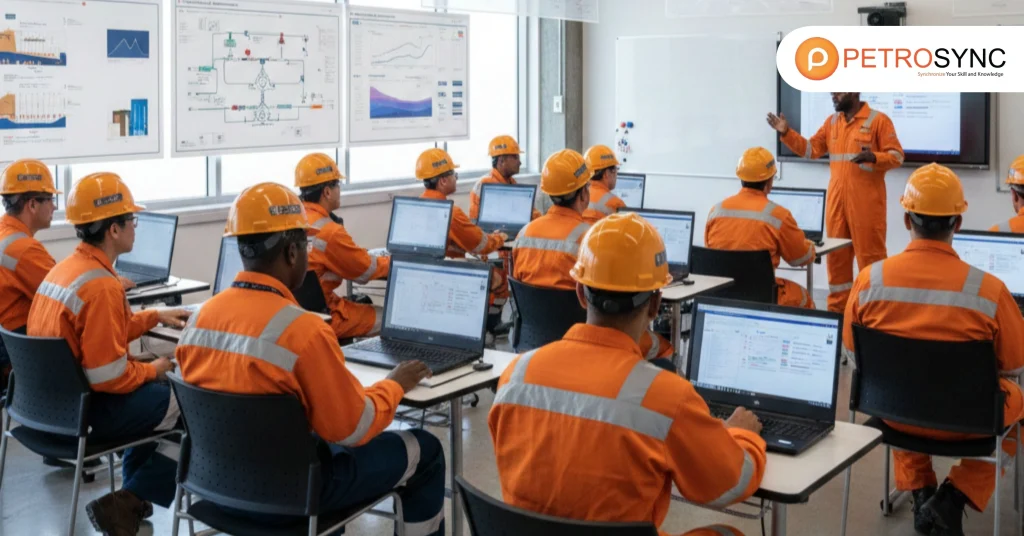
PetroSync provides internationally recognized petroleum industry training programs designed specifically for professionals who want to strengthen their technical mastery and strategic capability. With expert-led courses covering asset integrity, reliability engineering, safety, inspection, corrosion, drilling, and operational excellence, PetroSync ensures every participant gains practical, real-world competence.
If you want your team to operate more safely, more efficiently, and with stronger technical confidence, PetroSync is ready to support your development journey with programs tailored for senior professionals, managers, and decision-makers.

Results-oriented and thorough SEO specialist with extensive experience in conducting keyword research, developing and implementing digital website promotion strategies and plans, managing campaigns to develop company websites in the digital world, excellent knowledge of marketing techniques and principles, and attentive strong attention to detail.