


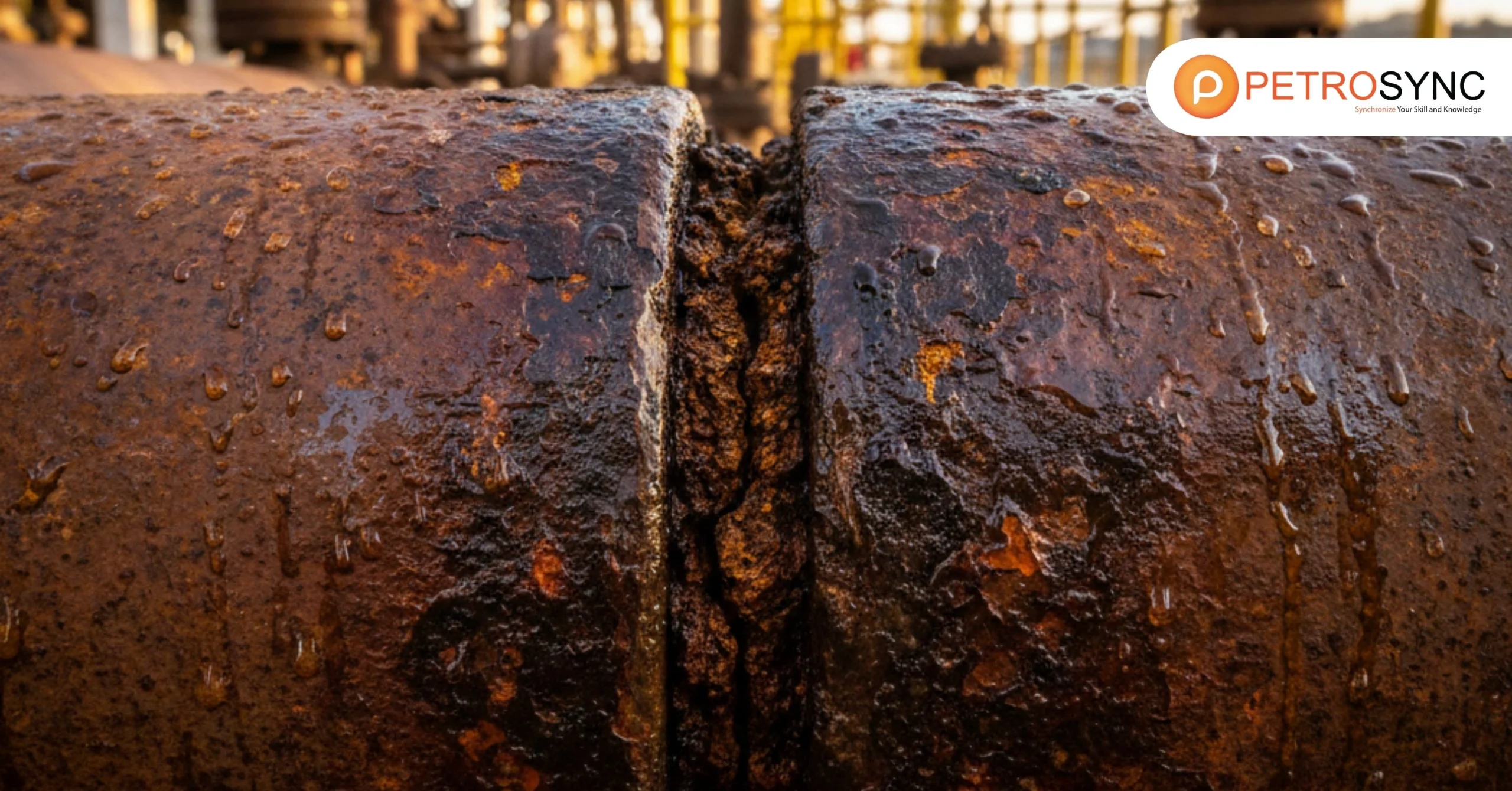
Crevice corrosion poses a hidden but significant threat in oil and gas operations. Even small, unseen weaknesses can escalate into costly failures, as this type of localized corrosion often develops beneath gaskets, bolts, insulation, and overlapping components. It progresses aggressively in confined zones while remaining largely invisible until it compromises equipment integrity.
Understanding crevice corrosion is essential for engineering leaders because it is not merely a material issue—it is a strategic risk that directly affects asset uptime, operational safety, and financial performance.
Why Crevice Corrosion Demands Serious Attention in High-Risk Oil & Gas Operations
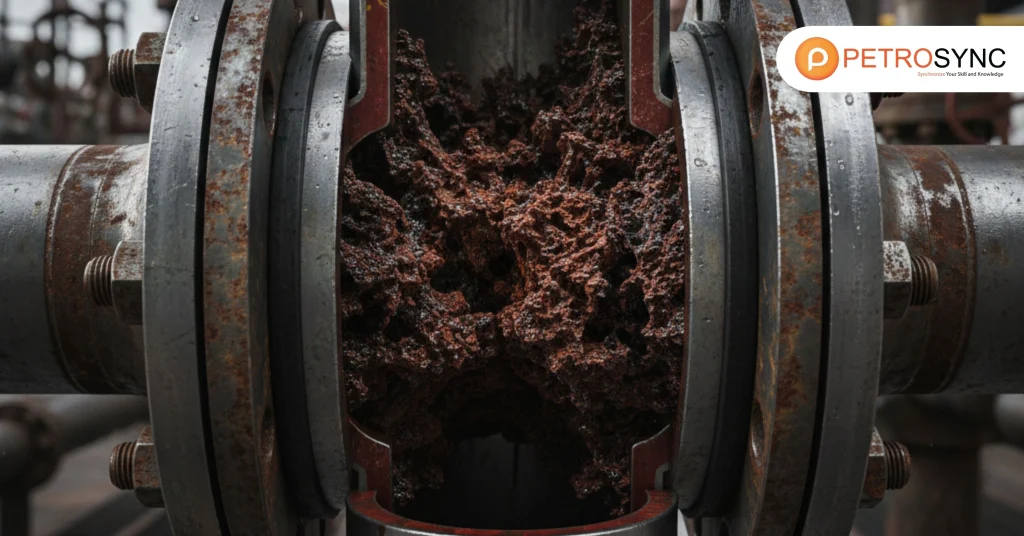
Oil and gas facilities operate under harsh conditions: high pressures, aggressive chemicals, chlorides, and fluctuating temperatures. These conditions make crevice corrosion particularly dangerous:
- Highly localized, causing rapid wall loss in specific areas
- Difficult to detect until advanced stages
- Accelerated by stagnant fluid
- Capable of triggering catastrophic failures
Industry studies indicate that corrosion-related losses in energy sectors reach trillions annually. Localized corrosion, including crevice corrosion, contributes significantly because it often bypasses routine monitoring. Implementing optimized corrosion management can reduce asset-loss-related costs by up to 40%. For senior leaders managing high-value assets, crevice corrosion is not a routine maintenance item—it is a critical operational risk.
What is Crevice Corrosion and How Does It Form in Industrial Equipment?
Crevice corrosion occurs in narrow, shielded spaces where oxygen cannot freely circulate, creating aggressive micro-environments. The sequence typically involves:
1. Oxygen depletion inside the crevice, weakening passive films on metal surface
2. Electrolyte stagnation leading to acidification and higher ion concentration
3. Metal ion accumulation, making the interior more reactive than surrounding fluid
4. Accelerated localized attack, penetrating metal faster than uniform corrosion\
Commonly affected components include gaskets, bolts, tube-to-tubesheet joints, weld overlaps, and overlapping plates. Its localized nature makes early detection extremely challenging.
Main Root Causes of Crevice Corrosion in Oil & Gas Assets
1. Passive film breakdown caused by limited oxygen exposure
Materials like stainless steel rely on passive oxide films. In narrow gaps, these films deteriorate. Research in corrosion science journals shows that passive film breakdown can increase localized corrosion rates exponentially in aggressive environments.
2. Stagnant electrolyte & chemical concentration buildup
Fluids trapped in crevices cannot circulate. Metal ions accumulate, and acidity rises, creating a highly corrosive micro-environment.
3. Tight geometrical gaps & component interface complexity
Complex assemblies—like gasketed flanges, bolted connections, or tube-to-tubesheet joints—create ideal crevices. Narrow gaps accelerate chemical imbalance and corrosion.
4. Material selection mismatch & harsh environments
Using incompatible alloys or placing them in high-chloride, high-humidity environments increases susceptibility. Offshore platforms and coastal refineries are particularly vulnerable.
Common Locations Where Crevice Corrosion Frequently Occurs in Critical Facilities
1. Flanges, gaskets, bolts & fastening assemblies
Hidden beneath washers and gaskets, crevice corrosion can progress unnoticed, sometimes causing sudden failures.
2. Heat exchangers, pressure vessels & storage tanks
Tight interfaces, welds, and deposits create crevice-like zones. Tube-to-tubesheet joints are particularly susceptible to corrosion-related leaks.
3. Tube-to-tubesheet joints, weld overlaps & lap joints
Incomplete fusion or overlapping plates form micro-crevices. These areas are difficult to inspect and require advanced NDT methods.
4. Subsea structures & splash zone exposure components
Marine environments combine oxygen differentials, chlorides, and wet-dry cycles. Braces, clamps, and subsea brackets often experience aggressive crevice corrosion in the splash zone.

Practical Solutions to Prevent and Control Crevice Corrosion
1. Optimized design & material selection
- Minimize unnecessary overlaps and tight gaps
- Use welded joints instead of bolted assemblies where feasible
- Select corrosion-resistant alloys for high-chloride or seawater environments
- Studies indicate proper material selection can reduce localized corrosion incidents by 30–60%.
2. Protective coatings, sealing & cathodic protection
- Apply epoxy coatings and sealants to isolate crevices
- Use cathodic protection for subsea structures, which can reduce corrosion rates by up to 90%
3. NDT techniques for hidden damage detection
Advanced inspections help detect early-stage crevice corrosion:
- Phased Array Ultrasonic Testing (PAUT)
- Eddy Current Testing (ECT)
- Remote Field Electromagnetic Testing (RFET)
- Guided Wave Ultrasonics (GWUT)
Reliability studies show that integrating advanced NDT can reduce unplanned shutdowns by more than 30%.
4. Chemical treatment & environment control
- Oxygen scavengers, inhibitors, and biocides stabilize fluid chemistry
- Controlling temperature, pH, and chloride concentration prevents aggressive crevice formation
Why Engineering Capability Is Essential for Managing Crevice Corrosion Risk
Even the best tools and materials require competent engineering decisions. Skilled corrosion engineers provide:
- Accurate failure prediction
- Optimized inspection strategies
- Effective material selection
- Reduced downtime and operational risk
- Long-term cost efficiency
- Managing crevice corrosion is a strategic capability, not a one-time maintenance task.
Advance Your Crevice Corrosion Expertise with PetroSync Training
Crevice corrosion may be hidden, but its consequences are real. For senior engineers, managers, and CEOs, PetroSync training offers:
- In-depth understanding of localized corrosion mechanisms
- Case studies from real-world industry failures
- Practical inspection, mitigation, and design strategies
- Guidance from corrosion and materials experts
Organizations that invest in corrosion training often report 20–40% reductions in downtime and measurable improvements in reliability programs. Strengthening your team’s capability is not just learning—it’s protecting high-value assets and ensuring operational excellence.
PetroSync provides the training framework to transform corrosion knowledge into actionable, measurable results.

Results-oriented and thorough SEO specialist with extensive experience in conducting keyword research, developing and implementing digital website promotion strategies and plans, managing campaigns to develop company websites in the digital world, excellent knowledge of marketing techniques and principles, and attentive strong attention to detail.