

-
API Training is a strategic investment that strengthens safety, reliability, and asset integrity beyond basic experience or certification goals.
-
Standardized API-based competencies help engineers make better risk decisions and apply consistent inspection and maintenance practices.
-
Facilities using API-aligned training report fewer equipment failures and significantly lower unplanned downtime.
-
Core programs like API 510, 570, and 653 address pressure vessels, piping, and tanks—the highest-risk assets in industry.
-
Experienced training providers bridge skill gaps with real-world case studies, improving compliance confidence and engineering judgment.
API Training has become a critical foundation for engineering teams as industries face increasing pressure to strengthen safety,z reliability, and operational performance. Modern facilities operate with more advanced materials, tighter tolerances, and rapidly evolving regulatory expectations.
In such environments, experience alone is no longer enough—organizations need standardized, globally recognized competencies rooted in API standard. Engineering leaders today view API training not merely as a certification milestone, but as a strategic investment.
It sharpens engineering judgment, enhances operational decision-making, and reinforces asset integrity practices across demanding industrial settings. Before exploring the various API programs available, it’s essential to recognize why API training plays such a central role in modern engineering.
What Is API Training and Why Does It Matter in Modern Engineering?
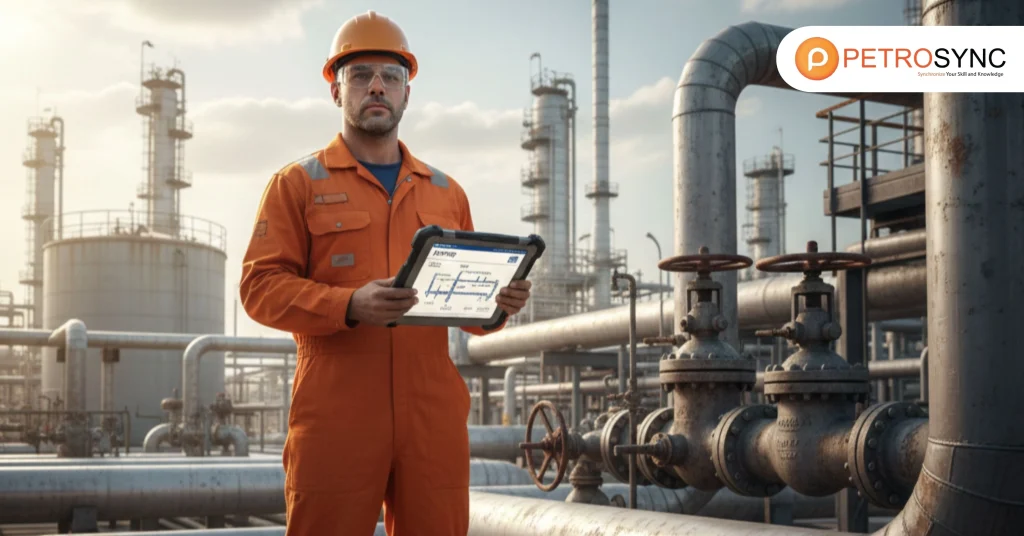
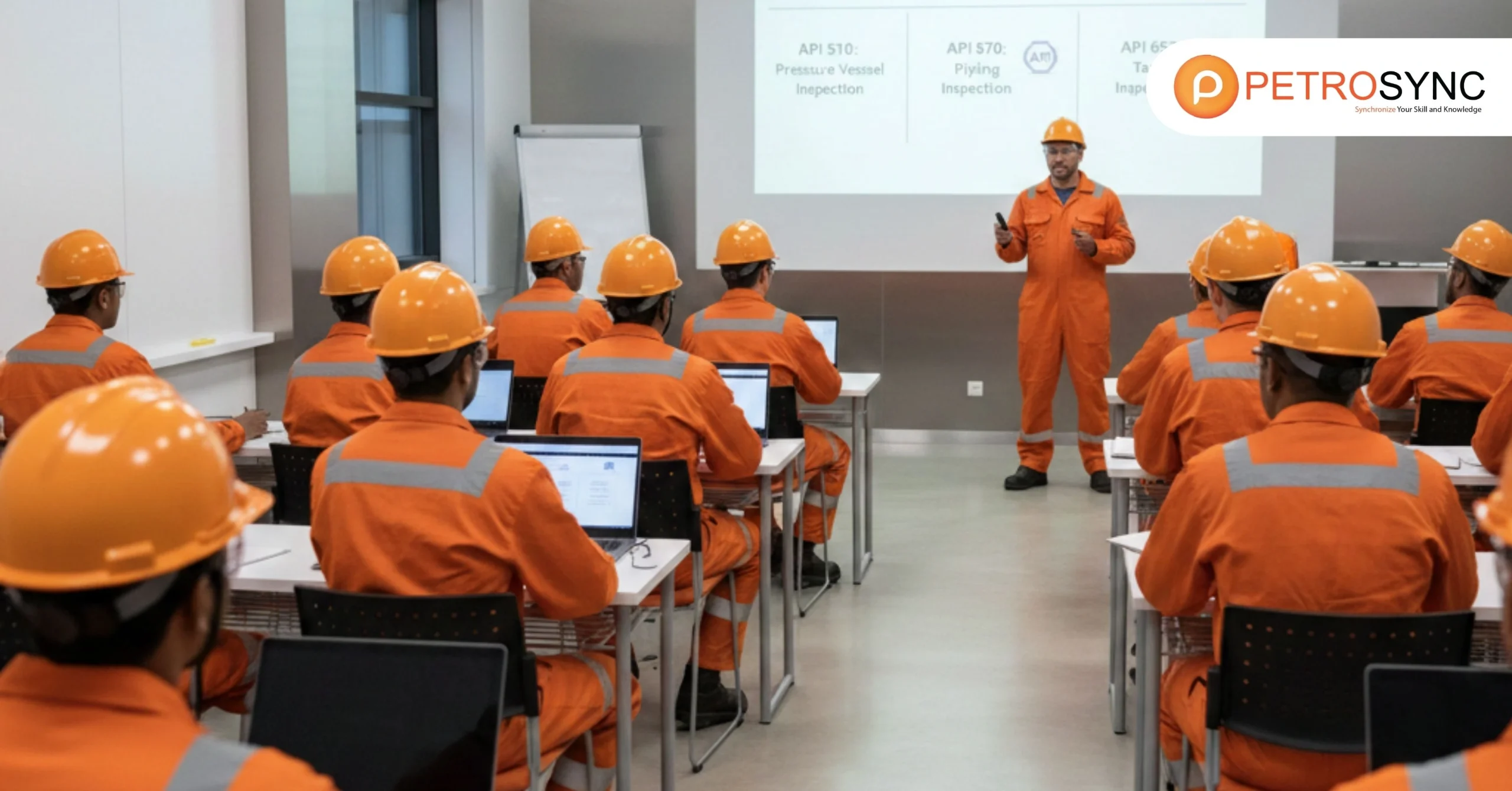
API training refers to structured learning programs based on standards developed by the American Petroleum Institute. These standards form the backbone of inspection, maintenance, and operational guidelines across oil and gas, petrochemical, energy, and heavy industrial facilities.
API training matters because it equips professionals with skills that directly support:
- High-integrity inspection practices
- Stronger understanding of damage mechanisms
- Better risk-based decisions
- Safer and more efficient operations
- Consistent application of engineering standards
A recognized process safety study reported that facilities implementing structured competency development programs—especially those aligned with API standards—achieved up to 45% fewer equipment-related failures and 30–40% lower unplanned downtime. This demonstrates how training directly drives operational improvements.
Why Is API Training Critical for Today’s Industrial and Operational Challenges?
1. Increasing Regulatory and Safety Demands
Global regulators continue to intensify requirements for inspection accuracy, documentation, and asset integrity. Engineering teams must be able to demonstrate competence and apply recognized practices.
An international consulting analysis found that organizations with strong compliance-based maintenance systems reduced regulatory violations by nearly two-thirds. This reinforces how standardized technical competency supports safer, more accountable operations.
2. Rising Complexity of Equipment and Facilities
Facilities now manage high-pressure vessel, advanced alloy piping, refractory systems, and large-scale storage infrastructure. These systems demand more sophisticated inspection and assessment methods.
API training ensures professionals can interpret degradation patterns, evaluate risks, and determine the appropriate corrective actions with confidence.
3. The Need for Consistent, Standardized Competency
Engineering teams often include professionals from different technical backgrounds. API training provides a unified technical language, improving consistency across inspection reports, maintenance strategies, and risk evaluations. For multi-site organizations, this standardization is essential for operational uniformity.

What API Training Programs Are Essential for Engineers and Technical Professionals?
1. API 510 – Pressure Vessel Inspection
API 510 training enhances understanding of:
- Pressure vessel design concepts
- Damage mechanisms such as corrosion and cracking
- Inspection intervals and assessment techniques\
- Repair, alteration, and rerating rules
This certification is invaluable for facilities that rely on high-pressure equipment.
2. API 570 – Piping Inspection and Integrity Control
API 570 prepares professionals to manage piping systems effectively:
- Calculating corrosion rates
- Evaluating wall loss and degradation
- Implementing inspection plans
- Understanding welding and material requirements
Given that a large percentage of hydrocarbon releases originate from piping systems, this training is essential for ensuring safe operations.
3. API 653 – Storage Tank Reliability and Compliance
API 653 focuses on aboveground storage tank integrity through:
- Settlement assessment
- Shell, roof, and floor inspections
- Corrosion evaluation
- Repair and alteration requirements
This training helps protect facilities against structural failures and environmental risks.
4. Additional API Training Specializations (API 579, API 936, etc.)
Advanced API programs support deeper technical capabilities:
- API 579 – Fitness-for-Service (FFS) assessment
- API 936 – Refractory inspection and quality control
- API 580 – Risk-Based Inspection (RBI)
- API 1169 – Pipeline construction inspection
These specializations strengthen an organization’s technical backbone and enhance its ability to manage complex operational risks.
How API Training Enhances Engineering Performance and Asset Integrity?
1. Strengthening Inspection Accuracy and Decision-Making
API-trained professionals possess a deeper understanding of failure mechanisms, allowing them to detect early warning signs more effectively. Research from an international engineering publication indicated that trained inspectors improved anomaly detection accuracy by more than 50%, reducing the likelihood of major failures.
2. Minimizing Operational Failures and Unplanned Downtime
Unplanned shutdowns cost the industry millions annually. API training empowers teams to develop more precise inspection strategies, adopt condition-based approaches, and reduce unexpected failures across assets.
3. Enhancing Maintenance Strategy and Compliance Confidence
API training ensures maintenance strategies are aligned with long-term asset integrity goals. It also improves readiness for audits and regulatory reviews, helping organizations maintain strong compliance standings.
What Factors Should Companies Evaluate When Selecting API Training Programs?
1. Alignment With Job Role and Technical Skill Gaps
Organizations should connect training programs with specific competency gaps. For instance, maintenance planners may need a different depth of knowledge compared to inspection engineers.
2. Quality of Instructors, Curriculum, and Real Case Studies
The value of training depends heavily on instructor experience. Programs featuring real-world case studies, industry failure analyses, and hands-on discussion provide deeper and more relevant learning outcomes.
3. Certification Readiness and Practical Learning Approach
Strong API programs blend theoretical understanding with practical application, scenario-based problem solving, and comprehensive preparation for certification exams.
How API Training Providers Help Bridge Engineering Skills Gaps Effectively?
1. The Value of Industry-Focused and Experience-Driven Training
Training providers with real operational experience bring invaluable insights into how API standards are applied in the field. This bridges the gap between academic theory and real industrial challenges.
2. Ensuring Continuous Professional Development Across Engineering Teams
Leading training providers offer structured development pathways, refresher courses, and post-training support that ensures engineering teams continue growing in competency as industry needs evolve.
Advance Your Engineering Capabilities Through PetroSync’s API Training
Engineering leaders who aim to strengthen reliability, improve compliance, and build technical excellence understand that API training is not simply about earning a certificate—it is about preparing teams for safer and more effective decision-making.
PetroSync delivers industry-focused API programs designed to meet real-world engineering demands. With expert instructors, practical case studies, detailed certification preparation materials, and a learner-centered approach, PetroSync ensures professionals gain the capabilities they need to manage critical assets confidently.
Whether your organization seeks training in API 510, API 570, API 653, API 579, or API 936, PetroSync offers programs that elevate engineering performance and support long-term operational reliability. If you’re ready to enhance your team’s technical competency, PetroSync provides a powerful pathway toward safer and more resilient industrial operations.
Frequently Asked Questions (FAQ)
API training consists of structured learning programs based on standards developed by the American Petroleum Institute. It is important because it equips engineers and inspectors with standardized, globally recognized competencies that improve inspection accuracy, asset integrity, risk-based decision-making, and operational safety across industrial facilities.
API training improves safety and operational performance by strengthening engineers’ understanding of damage mechanisms, inspection methodologies, and compliance requirements. Organizations that implement structured, API-aligned competency programs have been shown to reduce equipment-related failures and unplanned downtime significantly.
Some of the most essential API certifications include API 510 for pressure vessel inspection, API 570 for piping inspection, API 653 for aboveground storage tank integrity, and advanced programs such as API 579 for Fitness-for-Service and API 936 for refractory inspection and quality control.
API training supports asset integrity by enabling engineers to develop accurate inspection plans, detect early signs of degradation, and apply risk-based maintenance strategies. This helps minimize unexpected failures, optimize maintenance planning, and ensure compliance with regulatory and industry standards.
Organizations should consider alignment with job roles, instructor industry experience, practical case studies, certification exam preparation, and long-term professional development support. High-quality API training providers bridge the gap between theory and real-world application, ensuring sustainable competency growth.

Results-oriented and thorough SEO specialist with extensive experience in conducting keyword research, developing and implementing digital website promotion strategies and plans, managing campaigns to develop company websites in the digital world, excellent knowledge of marketing techniques and principles, and attentive strong attention to detail.