


- Root Cause Analysis is a structured approach that identifies real failure causes, helping teams prevent recurring issues instead of applying temporary fixes.
- Move beyond quick fixes by using data-driven investigation methods to uncover hidden factors behind equipment failures and operational disruptions.
- Improve safety and reliability by eliminating root causes, reducing risks to personnel, assets, and the environment in high-risk industries.
- Strengthen decision-making with practical tools like 5-Why, Fishbone, and evidence-based analysis for effective corrective and preventive actions.
- Cut downtime and maintenance costs by shifting from reactive repairs to proactive problem-solving and long-term reliability strategies.
In complex industrial environments such as oil and gas, equipment failures, operational disruptions, and safety incidents can occur despite well-planned maintenance programs. When these problems arise, organizations often focus on fixing the immediate issue. However, without identifying the underlying cause, the same problem may continue to occur repeatedly.
This is why many organizations adopt structured investigation methods to determine why failures happen and how they can be prevented in the future. One of the most effective approaches used across industries is Root Cause Analysis (RCA).
Root Cause Analysis helps engineers and technical teams move beyond surface-level troubleshooting by identifying the fundamental causes behind equipment failures, operational errors, or system breakdowns. By addressing these root causes, organizations can significantly improve reliability, safety, and operational performance.
To build these analytical capabilities, many professionals participate in Root Cause Analysis Training, which equips them with systematic investigation techniques and problem-solving frameworks used in modern industrial operations.
What is Root Cause Analysis Training?
Root Cause Analysis Training is a professional program designed to help engineers, maintenance personnel, and operational teams learn how to identify, analyze, and eliminate the underlying causes of equipment failures and operational incidents.
Instead of focusing solely on symptoms, Root Cause Analysis applies structured methodologies to investigate why problems occur. The goal is to prevent recurrence by addressing the true source of the issue rather than temporary fixes.
During the training, participants learn various RCA tools and techniques commonly used in industrial environments, including:
- Failure investigation methodologies
- Root cause identification techniques
- Cause-and-effect analysis
- Data-driven problem-solving approaches
- Corrective and preventive action planning
These skills enable professionals to improve reliability management and support continuous operational improvement within their organizations.
Key Benefits of Mastering Root Cause Analysis Training for the Oil & Gas Industry
1. Improved Safety & Operational Reliability
Failures in oil and gas facilities can pose serious risks to personnel, equipment, and the environment. Identifying the root causes of these failures allows organizations to implement corrective actions that prevent similar incidents from happening again.
Root Cause Analysis Training helps professionals develop structured investigation skills that enhance both operational reliability and safety performance.
2. Compliance with Industry Standards, Codes & Regulations
Industrial incidents often require detailed investigation to meet regulatory requirements and internal compliance standards. By applying Root Cause Analysis methodologies, organizations can conduct systematic investigations and document findings effectively, ensuring alignment with industry regulations and safety management practices.
3. Reduced Asset Failure & Field Incident Risks
Recurring equipment failures often occur when underlying problems remain unresolved.
Root Cause Analysis Training equips professionals with analytical tools to identify failure patterns, investigate contributing factors, and eliminate the root causes, reducing the likelihood of repeated operational issues.
4. Optimized Equipment Performance, Lifespan & Integrity
By understanding the factors that cause equipment degradation or operational errors, organizations can implement improvements that extend the lifespan of critical assets.
Root Cause Analysis supports better maintenance planning and asset management strategies that enhance equipment performance and long-term reliability.
5. Cost Efficiency in Operations, Maintenance & Downtime
Repeated failures and emergency repairs can significantly increase operational costs. RCA helps organizations shift from reactive responses to proactive problem prevention.
Through Root Cause Analysis Training, professionals learn how to develop solutions that reduce downtime, minimize repair costs, and improve operational efficiency.

What is the Root Cause Analysis Training Objective?
The objective of root cause analysis training is to equip participants with the necessary skills and techniques to identify the underlying causes of problems or incidents in order to implement effective solutions.
- Define the accident/incident event
- Understand modern accident causation theories
- Define all accident investigation and analysis stages
- Carry out Initial actions in response to accidents and incidents
- Gather evidence and data relevant to the accident investigation
- Interview witnesses
- Analyze the role of human factors involved in accident investigation
- Compile accident reports and remedial action plans
- Gain familiarity with modern accident analysis techniques
- The use of accident investigations as a management audit tool
- To locate and define active human error, preconditions, and root causes
- Report writing and compilation
What is Root Cause Analysis Training Outline?
1. Day 1
- Introductions, Expectations & Anticipations
- Defining Incidents, Accidents, Near Misses, and Dangerous
- Occurrences
- Categorizing of Incidents according to nature & severity
- Complying with the Legal Requirements for reporting &
- investigating accidents
- Adopting an Accident Prevention strategy through Risk
- Management
- Understanding how accidents are caused
- The process & system view of accidents & accidents
- investigations
- The need for & benefits of Root Cause Analysis
- Understanding Immediate, Underlying & Root causes & Causal
- Factors
- The four stages of an Investigation Process
- Case Study & Group Activity
2. Day 2
- Configuration & Levels of the investigation team
- Immediate response in case of an accident
- Emergency procedures, Crisis handling & loss minimization
- Taking control of the scene (Immediate Response)
- Video-based Case Study & Group discussions
- The various sources & categories of evidence
- Collecting & Preserving Evidence
- Common Pitfalls in Observations
- Effective practical interviewing tips & techniques
- Role Play Group Exercises
3. Day 3
- Sifting and sorting evidence & information
- Incident Timeline – Data Mapping
- Understanding the problems with Building Blocks
- Identifying critical factors
- Analyzing evidence & information
- Identifying immediate causes, root causes, and system causes
- Using CLC Charts for analysis
- Using 5-Why & Fish-bone techniques to reinforce CLC Analysis
- Case Study & Group exercises
4. Day 4
- Identifying Human Factors & Understanding Human Errors
- Modifying & influencing behaviors
- Case Study & Group Exercise
- Corrective Measures, Recommendations
- An Overview of Root Cause Elimination
- Understanding & applying the Hierarchy & symmetry of
- controls
- Addressing the personal, job & organizational factors in
- the recommendations
- Overview of Solution Implementation
- Developing an Implementation Plan & organizing for its
- Implementation
- Report Writing
- Action Tracking & Closure monitoring
- Trend Analysis
Who Should Attend Root Cause Analysis Training Course?
This workshop is intended for all staff roles in engineering, technical, and supporting departments responsible for ensuring workplace safety and for conducting, leading, reviewing, and approving incident investigations.
Root Cause Analysis Training Program by PetroSync
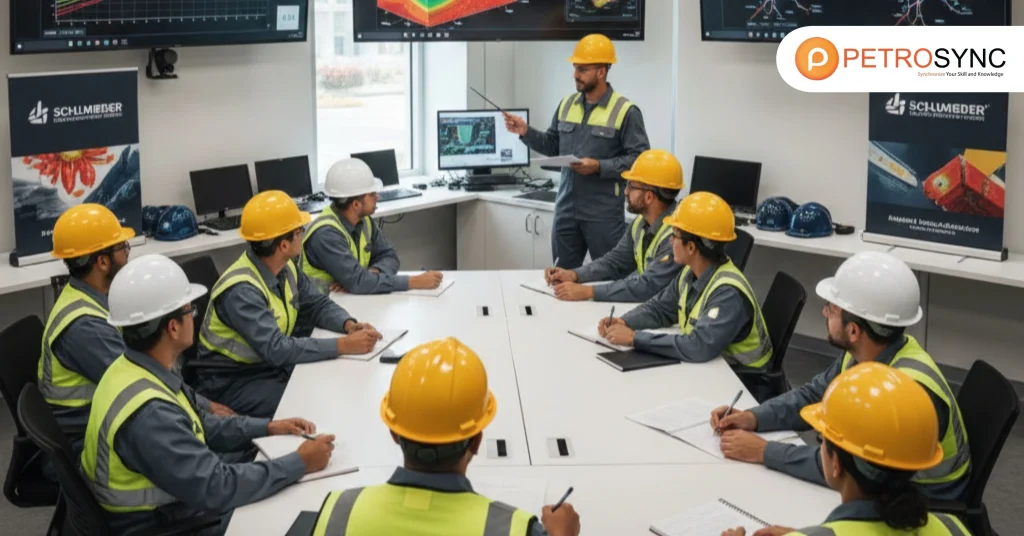
PetroSync offers a comprehensive Root Cause Analysis Training program designed to help professionals strengthen their failure investigation and reliability improvement skills. The program combines analytical frameworks, engineering best practices, and real industry case studies to provide participants with practical insights into identifying and solving complex operational problems.
Participants will learn how to:
- Conduct structured failure investigations
- Identify root causes of equipment and operational failures.
- Develop corrective and preventive action plans.
- Improve asset reliability and maintenance strategies.
By the end of the training, participants gain practical knowledge that helps organizations reduce operational risks, improve reliability, and prevent recurring failures.
Advantages of Joining Root Cause Analysis Training at PetroSync
1. Focus on Asset Reliability & Performance Improvement
The training emphasizes improving equipment reliability, operational performance, and maintenance effectiveness, supporting long-term asset management strategies.
2. Practical & Applied Case Study Approach
Participants learn through real-world case studies and industry examples, helping them understand how RCA methodologies are applied in operational environments.
3. Experienced Instructors from Global Industry Practitioners
The training is delivered by experienced professionals with extensive international industry experience, providing valuable insights into real operational challenges.
4. Curriculum Aligned with International Standards & Best Practices
The program integrates global reliability and investigation methodologies, ensuring participants receive up-to-date and relevant knowledge.
5. Trusted by Energy Companies & Global Industries
PetroSync has built a strong reputation as a trusted training provider for energy companies and industrial organizations worldwide.
6. International Reputation as an Oil & Gas Training Provider
With years of experience delivering professional training programs, PetroSync is recognized globally for high-quality technical education in the oil and gas industry.
How Much Does Root Cause Analysis Training Cost at PetroSync?
The Root Cause Analysis Training program at PetroSync is priced at $3,195 per participant, with training sessions available in Kuala Lumpur, Malaysia; Bangkok, Thailand; Bali, Indonesia; Yogyakarta, Indonesia; and Bandung, Indonesia.
The training fee includes comprehensive course materials, expert instruction, practical discussions, and real industry case studies, ensuring participants receive a complete learning experience.
For professionals aiming to strengthen their expertise in failure investigation and reliability improvement, this training represents a valuable investment in technical knowledge, operational efficiency, and career advancement.
Enroll in Root Cause Analysis Training with PetroSync
Understanding the true causes of equipment failures and operational incidents is essential for maintaining safe, reliable, and efficient industrial operations. Professionals who can conduct effective root cause investigations play a crucial role in helping organizations prevent recurring problems, reduce downtime, and improve asset reliability.
By enrolling in Root Cause Analysis Training at PetroSync, participants gain the expertise needed to investigate failures systematically, implement effective solutions, and support continuous improvement initiatives within their organizations.
For engineers and technical professionals seeking to strengthen their capabilities in reliability engineering and operational problem-solving, this training offers the practical knowledge and industry insights needed to advance their careers.
Frequently Asked Questions (FAQ)
Root Cause Analysis Training is a professional program that teaches engineers and technical teams how to identify, analyze, and eliminate the underlying causes of equipment failures and operational incidents to prevent recurrence.
Root Cause Analysis is essential in the oil and gas industry because it helps prevent recurring failures, improves safety, ensures compliance with regulations, and enhances overall operational reliability.
The key benefits include improved safety, reduced equipment failures, enhanced asset performance, regulatory compliance, and cost efficiency by minimizing downtime and maintenance expenses.
This training is suitable for engineers, maintenance personnel, safety professionals, and technical teams responsible for investigating incidents, improving reliability, and ensuring workplace safety.
Participants will learn how to conduct failure investigations, identify root causes, use analytical tools like 5-Why and Fishbone, collect evidence, and develop corrective and preventive action plans.

Results-oriented and thorough SEO specialist with extensive experience in conducting keyword research, developing and implementing digital website promotion strategies and plans, managing campaigns to develop company websites in the digital world, excellent knowledge of marketing techniques and principles, and attentive strong attention to detail.

Business Development Manager at PetroSync with 12+ years of experience in professional training and business development across the energy and industrial sectors.