

- Choose training by the pipeline assets and engineering tasks within your responsibility.
- Compare corrosion, component assessment, inspection-data, and integrity-management learning as distinct needs.
- Check asset boundaries, exercise depth, and specialist topics before selecting a course.
- Corrosion and FFS learning support defined technical needs within their applicable scope.
- PetroSync offers corrosion and FFS courses relevant to selected supporting competencies.
- Confirm coverage and exclusions before requesting an individual course fee or team quotation.
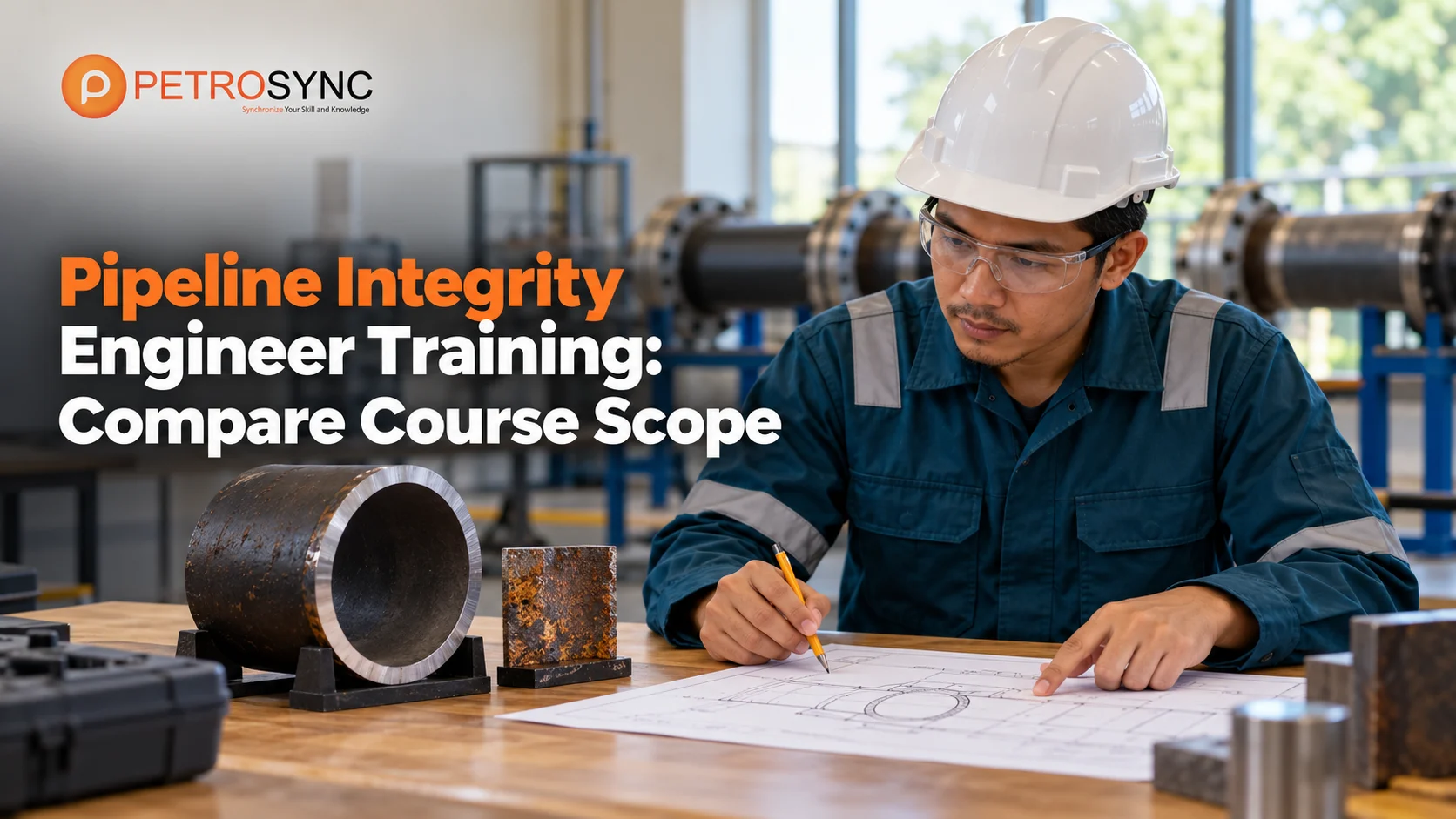
Choose pipeline integrity engineer training by the assets and engineering tasks you need to support. A course that develops corrosion knowledge may answer one part of your work, while inspection-data interpretation or integrity management may require a different learning scope.
This distinction matters when a course title sounds relevant but its examples focus on other equipment. Comparing the actual subject boundaries, practical exercises, and expected background helps you identify useful supporting training and recognize the specialist topics that still need separate coverage.
Which Course Scope Matches Your Pipeline Responsibilities?
Choose training around the pipeline systems and tasks within your responsibility, then match those needs to the course’s asset scope. Pipeline work and process-piping work can involve different contexts, so the word ‘piping’ alone does not establish that a course covers your system.
Your learning priorities might include understanding corrosion mechanisms, reviewing component-assessment questions, interpreting inspection information, or connecting integrity activities across a team. Treat these as distinct needs rather than assuming one program develops all of them.
For example, an engineer may want to understand degradation while also needing to interpret in-line inspection data. Corrosion knowledge can support the first goal, but the second requires attention to the inspection technology and the type of data involved.
Describe the tasks you want to perform or discuss more clearly, including the asset context. That description gives you a firmer basis for comparing course focus areas and identifying the limits of each option.
Read Also: Insider’s Guide to Pipeline & Piping Inspection Secrets
Comparing Pipeline Integrity Training Focus Areas
Compare pipeline-related training by its learning focus, the work it supports, and the scope that still needs confirmation. The categories below describe possible learning needs, rather than a list of programs that every provider offers.
|
Learning Focus |
Typical Work Need |
Scope to Confirm |
|
Corrosion control |
Understand degradation and monitoring choices |
Mechanisms, materials, and asset examples |
|
Component assessment |
Review applicable FFS assessment questions |
Equipment, procedures, and data requirements |
|
Inspection-data interpretation |
Understand inspection findings and limitations |
Inspection technology, data type, and exercise depth |
|
Integrity management |
Connect integrity activities and responsibilities |
Management scope and specialist coverage |
One course can address a meaningful gap without covering the whole integrity-management responsibility. For example, understanding degradation mechanisms serves a different purpose from learning to interpret a particular inspection-data format.
The distinction also applies to assessment and management subjects. A component-assessment exercise does not automatically develop the processes needed to coordinate an entire integrity program, even when both topics concern the same asset.
Use the comparison to identify your strongest immediate need and the topics that remain outside it. That creates a useful shortlist for examining course depth, practical value, and specialist exclusions before you make a training decision.
Read Also: Overview of Pipeline Inspection: Procedure, Types & Benefits
How Can You Assess Course Depth and Practical Value?
Assess a course by its asset boundaries, exercise depth, and explicit coverage of specialist topics. The following three checks help you connect a promising course description with the technical responsibilities you actually need to support:
1. Check Asset Types and Technical Boundaries
Confirming the asset types in a course helps you judge whether its examples address the questions you encounter. Equipment category, service context, and assessment boundaries all influence how you relate a classroom case to your own responsibilities.
For example, ask whether the examples concern pressure equipment, process piping, or the pipeline systems relevant to your role. This is a course-selection question rather than an engineering ruling about which standard applies; separating those decisions helps you describe the learning need precisely and avoid relying on a broad title alone.
2. Review Exercises and Required Background
Practical value depends on what participants work through and the background those exercises assume. An exercise may explain a mechanism, demonstrate a calculation, or develop interpretation of a particular type of inspection information.
For example, learning about corrosion monitoring can strengthen your understanding of degradation-related questions, while analyzing in-line inspection data requires its own relevant scope. Reviewing the exercise format and expected background helps you identify which knowledge the course develops, rather than assuming that all inspection technologies or software tools accompany a corrosion topic.
3. Identify Specialist Topics That Need Separate Coverage
A clear list of specialist gaps shows which needs require separate coverage beyond the selected course. In-line inspection data, software tools, and integrity-management systems are examples of subjects to investigate when they form part of your responsibilities.
Keep that list alongside the corrosion or assessment learning you have already identified. For instance, if a course addresses degradation mechanisms but does not explicitly address your data-analysis task, take that remaining need into a scope discussion; the gap list helps make the conversation specific without presuming that the provider offers every specialist subject.
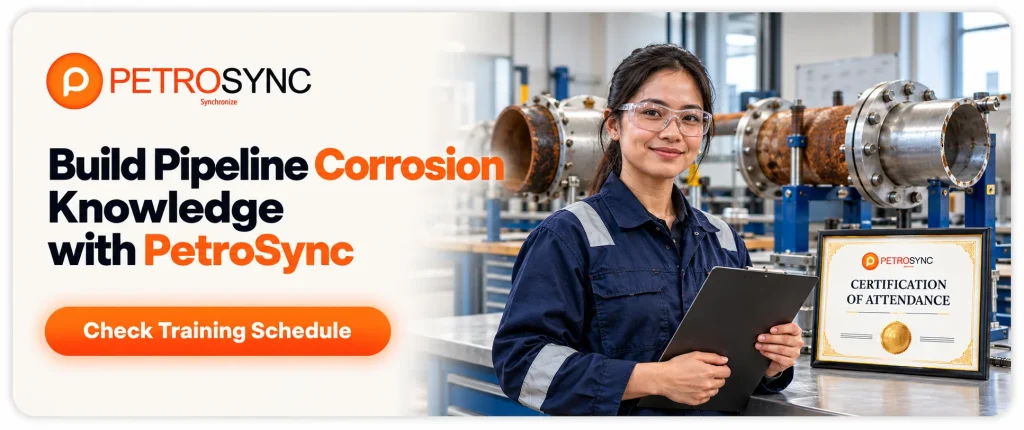
Discuss corrosion learning that matches the degradation questions in your pipeline-related role.
Where Do Corrosion and FFS Training Fit?
Corrosion training supports degradation knowledge, while FFS learning addresses assessment questions within the applicable equipment and procedure scope. They can develop useful supporting competencies, but neither label alone establishes coverage of a complete pipeline integrity-management program.
The published contents of API 579-1/ASME FFS-1 (2021), hosted by ASME, separately identify applicability and limitations, design and operating history, and assessment measurements. This makes checking the equipment and data context important when considering FFS learning.
Reading about API 579 can help you understand that assessment context. The relevant learning choice still starts with the specific question you need to support, rather than assuming that one assessment approach applies to every pipeline.
Read Also: The Ultimate Guide to Fitness for Service based on API 579
After mapping corrosion and assessment needs, identify any inspection-data or management responsibilities that remain uncovered. Bringing those gaps into a course discussion helps you distinguish the supporting skills you can develop now from specialist learning that needs its own confirmed scope.
Relevant PetroSync Training for Pipeline Integrity Work

PetroSync’s Corrosion Control and Prevention and API 579 courses address selected degradation and assessment learning needs. The following routes connect those verified subjects with supporting competencies relevant to pipeline-related engineering work:
1. Corrosion Control and Prevention for Degradation Knowledge
Corrosion Control and Prevention develops understanding of corrosion mechanisms, prevention, monitoring, and material considerations. Those subjects are relevant when your work requires clearer discussion of degradation problems and the information needed to understand them.
Relate the course to the corrosion questions in your role, then discuss whether its asset examples fit your learning needs. For instance, your objective might be explaining the relationship between a suspected mechanism and the monitoring information under discussion; that keeps the choice focused on corrosion knowledge rather than assuming a complete pipeline-integrity curriculum.
2. API 579 for Applicable FFS Assessment Needs
PetroSync’s API 579 course supports FFS learning where its equipment-assessment scope matches the questions you need to understand. Its pressure-equipment and structural-integrity focus includes calculations and case studies, giving you a route into assessment reasoning.
An engineer could use that learning to better understand the inputs and assumptions behind an applicable assessment example. This is a distinct goal from mastering in-line inspection software or managing an entire integrity program, so connect the course to a defined assessment-learning need when comparing its relevance and the provider’s broader reputation.
Rated 4.9/5 on Google from 1,000+ reviews.
Source: Google Business Profile — PetroSync Jakarta, project-owner screenshot, 6 September 2026.
This review record adds a visible reputation signal to your choice of training provider.
Planning Course Scope and Costs with PetroSync
Confirm course coverage and exclusions before comparing an individual attendance fee or requesting a custom team-training quotation. Start with the corrosion or assessment subjects that fit your immediate learning goal and identify the arrangement available for the selected course.
The budget discussion should cover delivery, learning materials, practical activities, and the costs included in the fee. Keep specialist needs visible, but include them in a proposed program only when PetroSync has confirmed the scope.
For an in-house inquiry, describe the asset context, participant backgrounds, planned group size, and preferred format. PetroSync should also clarify its minimum participant requirement; a public course fee is not the basis for assuming a customized team price.
Connecting the quotation to these defined learning needs gives you a useful way to compare arrangements while keeping the remaining specialist gaps clear.
Discuss which corrosion and FFS learning needs fit the verified courses and your team’s responsibilities.
Discuss Your Pipeline Integrity Learning Needs
Discuss the PetroSync supporting course that matches your current pipeline-related learning need, whether it concerns corrosion knowledge or an applicable FFS assessment question. Explain the assets and responsibilities behind that goal so the conversation addresses the work you support.
If your team shares those needs, request an in-house training quotation for the agreed scope. Include the participants’ backgrounds and any remaining specialist topics as discussion points, allowing the proposed learning arrangement to stay focused on confirmed course coverage.
Frequently Asked Questions (FAQ)
Relevant inspection experience can help you follow the examples, but the required background depends on the course you select. Describe your experience and learning goals to PetroSync so the discussion can distinguish useful preparation from actual course-entry requirements, rather than assuming that every pipeline-related course has one universal prerequisite.
The corrosion and FFS courses discussed here do not establish a Pipeline Integrity Engineer certification pathway. They develop knowledge within their respective technical scopes, so ask PetroSync what course documentation applies without treating attendance as the automatic award of a separate professional pipeline-integrity credential.
In-line inspection software training is not confirmed within the corrosion and FFS course scope reviewed for this article. If software use is central to your goal, ask about the specific tool and exercise coverage before booking, rather than assuming that a related engineering course includes it.
You can submit your pipeline-asset learning needs to PetroSync for a scope discussion. Explain the topics and examples you want to understand, using only company information you have permission to share, while the provider determines whether those needs fit the proposed training arrangement.
No. Classroom learning complements supervised field experience by helping you understand concepts, questions, and reasoning more clearly. Use that knowledge within your organization's competence-development and authorization processes, with supervision appropriate to the work, rather than treating course completion as a substitute for experience with actual assets.

Results-oriented and thorough SEO specialist with extensive experience in conducting keyword research, developing and implementing digital website promotion strategies and plans, managing campaigns to develop company websites in the digital world, excellent knowledge of marketing techniques and principles, and attentive strong attention to detail.