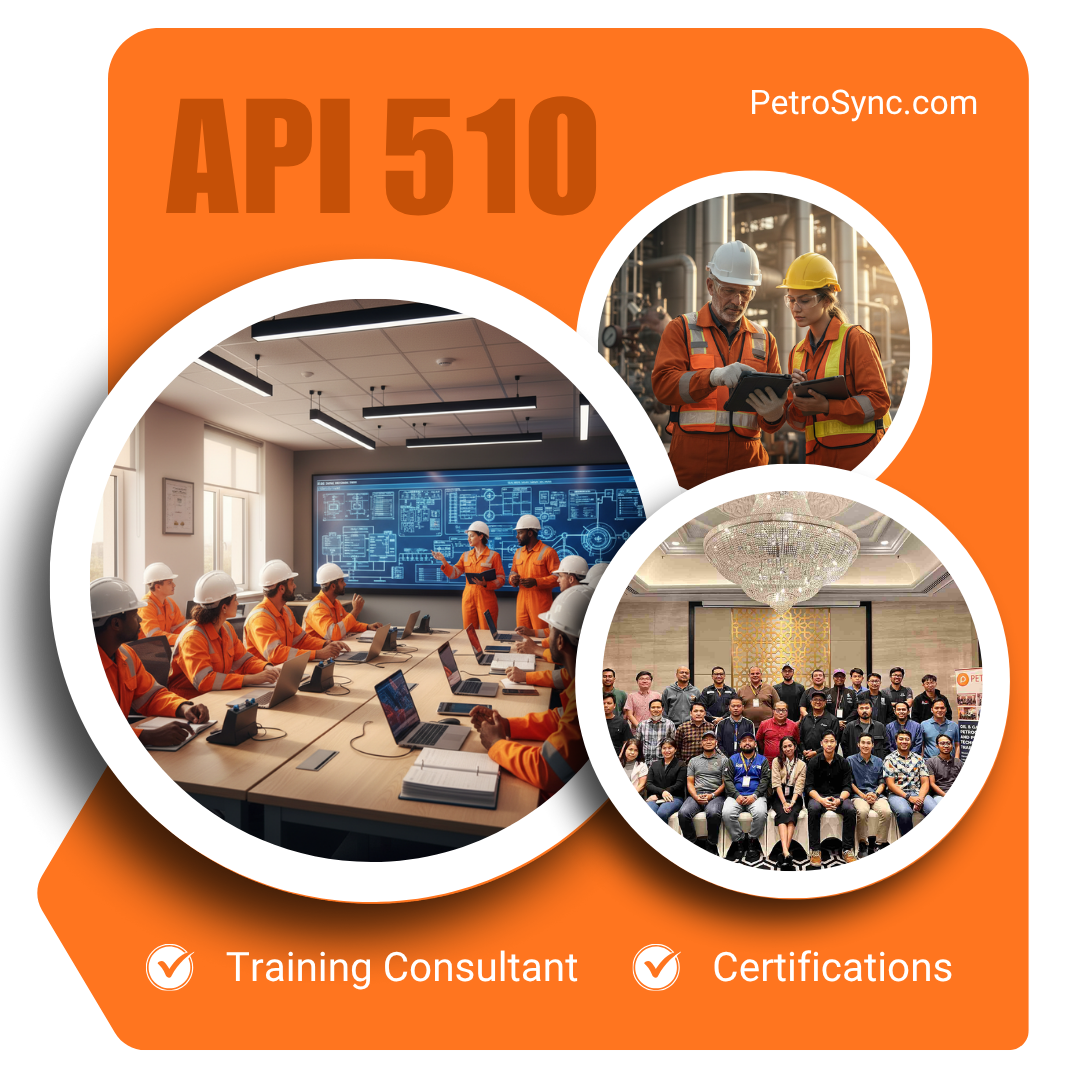


- API 510 Training is a professional program that equips engineers and inspectors to manage pressure vessels safely using API and ASME standards.
- Strong inspection and risk assessment skills help teams detect corrosion, cracks, and degradation early—reducing accidents and costly shutdowns.
- Mastering API 510 supports full compliance with global codes, helping companies avoid penalties while maintaining safe and reliable operations.
- Structured inspection planning and risk-based strategies lower asset failure rates and prevent unexpected field incidents.
- PetroSync’s hands-on training combines real industry case studies and expert guidance to prepare professionals for certification and real-world challenges.
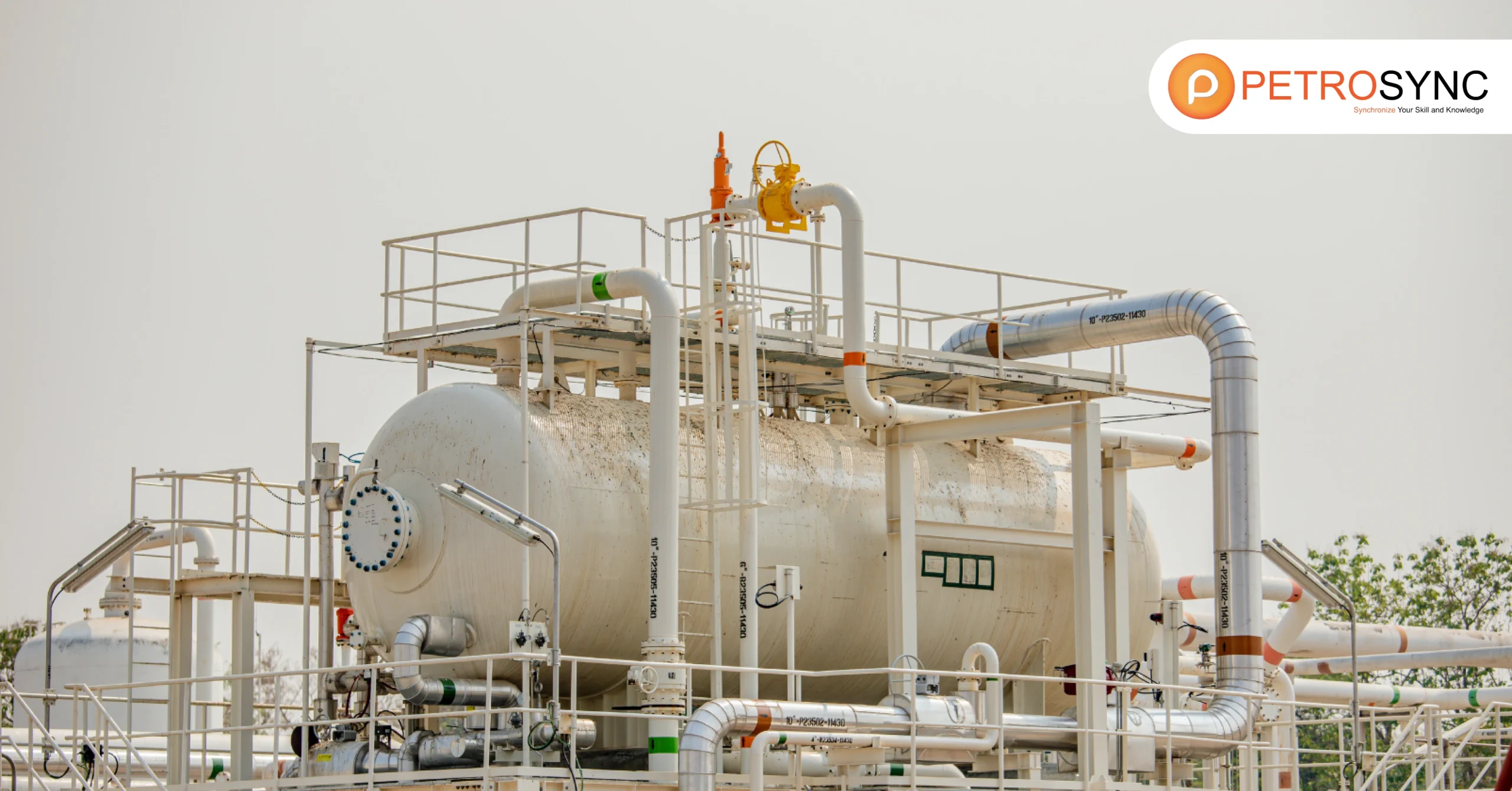
In the oil and gas industry, pressure vessel are among the most critical and high-risk assets. They store and handle fluids under high pressure, and even minor failures can result in catastrophic consequences, including personnel injuries, environmental damage, and costly production shutdowns. Maintaining their integrity is not only a regulatory requirement but also a key factor in ensuring operational excellence, efficiency, and safety.
Professionals tasked with managing these assets—whether engineers, inspectors, or maintenance personnel—must possess specialized knowledge to identify risks, perform effective inspections, execute repairs, and comply with industry standards. This is where API 510 Training becomes invaluable.
Designed specifically for the oil and gas sector, this program provides practical, in-depth knowledge to enhance pressure vessel safety and reliability, while preparing participants for the globally recognized API 510 certification.
With API 510 Training, professionals can confidently manage pressure vessel operations, minimize risks, and improve operational efficiency—all while aligning with international codes and best practices.
What is API 510 Training?
API 510 Training is a structured professional program focused on the inspection, maintenance, repair, alteration, and re-rating of pressure vessels in accordance with standards set by the American Petroleum Institute (API). It equips professionals with both theoretical knowledge and practical skills required to maintain the integrity of pressure-containing equipment in the oil and gas industry.
During the training, participants learn how to interpret and apply API 510 codes, ASME Section VIII requirements, and other relevant standards. They are taught inspection techniques, risk assessment methods, repair planning, and documentation practices, all aimed at preventing failures and ensuring operational reliability.
By the end of the program, professionals are not only ready for the API 510 certification exam but also capable of making informed decisions in real-world operations, enhancing safety, and supporting cost-efficient maintenance practices.
Key Benefits of Mastering API 510 Training for the Oil & Gas Industry
1. Improved Safety & Operational Reliability
Pressure vessel failures can have severe consequences, from equipment damage to personnel hazards. API 510 Training teaches systematic inspection methods, risk assessment strategies, and proactive maintenance practices. Participants learn to identify early warning signs of failure, such as corrosion, fatigue cracks, and material degradation, which reduces the likelihood of accidents.
Enhanced safety directly contributes to operational reliability, minimizing unplanned shutdowns and ensuring that facilities continue to function optimally even under high-pressure conditions.
2. Compliance with Industry Standards, Codes & Regulations
Regulatory compliance is non-negotiable in the oil and gas sector. Professionals trained in API 510 can accurately interpret codes, regulations, and industry standards, ensuring that inspections, repairs, and modifications are fully compliant.
This not only avoids legal and financial penalties but also aligns operations with international best practices, supporting corporate governance and stakeholder confidence.
3. Reduced Asset Failure & Field Incident Risks
API 510 Training equips participants to develop inspection schedules, assess risk factors, and implement preventive measures. By systematically monitoring vessel conditions, companies can detect potential failures before they escalate, avoiding costly field incidents, environmental hazards, and operational interruptions.
In practice, this translates into reduced emergency repair costs and fewer unplanned maintenance events, significantly improving overall asset management efficiency.
4. Optimized Equipment Performance, Lifespan & Integrity
Properly maintained pressure vessels operate more efficiently and remain in service longer, reducing the need for early replacements. API 510 Training covers repair techniques, alteration guidelines, and re-rating methods that maintain vessel integrity under varying operational conditions.
Participants also learn how to balance operational demands with maintenance schedules, ensuring equipment functions at peak performance while extending its lifecycle.
5. Cost Efficiency in Operations, Maintenance & Downtime
Unplanned downtime and emergency repairs are expensive. By applying API 510 principles and risk-based inspection strategies, companies can optimize maintenance planning, prioritize high-risk vessels, and allocate resources efficiently. This results in lower operational costs, reduced maintenance expenditure, and minimized downtime, contributing directly to profitability while ensuring safety and compliance.
What is the API 510 Training Objective?
- Successfully pass the API 510 pressure vessel inspector certification exam
- Effectively use major codes: ASME B&PV Sections V, VIII, & IX
- Perform all basic vessel calculations needed for the API exam (e.g. min, test pressure,MAWP, static head, MDMT, corrosion rates, remaining life, etc.)
- Use API requirements during inspection, repairs, and alterations of pressure vessels
Review welding procedures (WPS/PQR) and welder performance qualifications (WPQ)
What is API 510 Training Outline?
Day 1
A. MODULE – 1: Welcome and Introduction
- Overview of API 510 Course
B. MODULE – 2: JOINT EFFICIENCIES
- Weld Joint Categories from UW-3;
- Type of radiography (full, spot, or none, RT-1, RT-2, etc.);
- Joint efficiency by reading Table UW-12;
- Joint efficiency for seamless heads and vessels, Sections per UW-12 (d); and
- Joint efficiency for welded pipe and tubing per UW-12 (e).
C. MODULE – 3: THICKNESS CALCULATIONS
- The required thickness of a cylindrical shell (UG-27(c)(1));
- The vessel part MAWP for a cylindrical shell
- The required thickness of a head: Hemispherical, Ellipsoidal, Torispherical
- The vessel part MAWP for a head
D. MODULE – 4: STATIC HEAD
- Calculate static head pressure on any vessel part.
- Calculate total pressure (MAWP + static head) on any vessel part;
- Calculate the maximum vessel MAWP given the vessel parts’ MAWP and elevations
E. MODULE – 5: EXTERNAL PRESSURE
- Calculate the maximum allowable external pressure.
- Calculate whether a cylindrical shell meets Code design for external pressure.
IMPACT TESTING
- Determine the minimum metal temperature of a material which is exempt from impact testing (UG-20 (f), UCS-66,UCS-68(c).)
Day 2
A. MODULE – 1: PRESSURE TESTING
- Calculate a test pressure compensating for temperature. (UG-99 & UG-100)
- The precautions associated with hydrostatic and pneumatic testing,
- Steps in a Hydrotest Procedure (UG 99 and UG 100)
- All steps in a pneumatic test procedure (UG 100 and UG 102)
B. MODULE – 2: WELD SIZE FOR ATTACHMENT WELDS AT OPENINGS
- Conversion of a fillet weld throat dimension to leg dimension, conversion factor(0.707)
- Determine the required size of welds at openings (UW-16).
C. MODULE – 3: NOZZLE REINFORCEMENT
- Key concepts of reinforcement, such as replacement of strength and limits of reinforcement.
- Credit for extra metal in the shell and nozzle
- Calculate the required areas for reinforcement
D. MODULE – 4: SCOPE OF API 510
- SCOPE OF API 510
- General Application
- Specific Applications
- Recognized Technical Concepts
- References
E. MODULE – 5: SCOPE OF API 510
- Definitions
- Owner/user inspection organization
- General
- Owner/user Organization Responsibilities
Day 3
A. MODULE – 1: SCOPE OF API 510
- Inspection, Examination, and Pressure Testing Practices
- Inspection Plans
- Risk-based Inspection
- Preparation For Inspection
- Inspection For Types Of Damage, Modes Of Deterioration, and Failure
B. MODULE – 2: SCOPE OF API 510
- General Types Of Inspection And Surveillance
- Condition Monitoring Locations
- Condition Monitoring Methods
C. MODULE – 3: SCOPE OF API 510
- Pressure Testing
- Material Verification And Traceability
- Inspection Of In-service Welds And Joints
- Inspection Of Flanged Joints
D. MODULE – 4: SCOPE OF API 510
- Interval/frequency and extent of inspection
- General
- Inspection During Installation And Service Changes
- Risk-based Inspection
- External Inspection
- Internal And On-stream Inspection
- Pressure-relieving Devices
E. MODULE – 5: SCOPE OF API 510
- Inspection Data Evaluation, Analysis, and Recording
- Corrosion Rate Determination
- Remaining Life Calculations
- Maximum Allowable Working Pressure Determination
F. MODULE – 6: SCOPE OF API 510
- Fitness For Service Analysis Of Corroded Regions
- API RP 579 Fitness For Service Evaluations
- Required Thickness Determination
- Evaluation Of Existing Equipment With Minimal Documentation
- Reports And Records
Day 4
- MODULE – 1: SCOPE OF API 510
- Repairs, Alterations, and Rerating of Pressure Vessels
- Repairs And Alterations
- Authorization
- Approval
- Materials Requirements
- Welding Requirements
2. MODULE – 2
- Heat Treating Requirements
- Preheating
- Post-weld Heat Treating
- Local Postweld Heat Treatment
- Repairs to Stainless Steel Weld Overlay and Cladding
- Rerating
3. MODULE – 3
- Introduction to ASME Sec. IX
- Welding Procedure tests
- Performance qualification tests
- Acceptance criteria
- Welding positions
- P-No, F-No, and A-No.
- Review of:
- Welding Procedure Specification (WPS); and
- Procedure Qualification Record (PQR)
- And determine:
- Whether the number and type of mechanical tests listed on the PQR are appropriate
- Whether the results of the tests are acceptable
- Whether all required essential and non-essential variables have been properly addressed.
Day 5
1. MODULE – 1: API RP 576, Inspection of Pressure-Relieving Devices
- Relief Devices
- Description of Types — (API RP-576, Section 2)
- Causes of Improper Performance (API RP-576, Section 4)
- Reasons for Inspection and Frequency Determination (API RP 576, Sections 3 & 5)
- Inspection and Test Service Procedures (API RP-576, Sections 6 and 7)
2. MODULE – 2
- Article 1, General Requirements:
- Article 2, Radiographic Examination
3. MODULE – 3
- Article 6, Liquid Penetrant Examination,
- Article 7, Magnetic Particle Examination (Yoke and Prod techniques only):
- Article 23, Ultrasonic Standards, Section SE–797
4. MODULE – 4: API RP 576, Inspection of Pressure-Relieving Devices
- Relief Devices
- Description of Types — (API RP-576, Section 2)
- Causes of Improper Performance (API RP-576, Section 4)
- Reasons for Inspection and Frequency Determination (API RP 576, Sections 3 & 5)
- Inspection and Test Service Procedures (API RP-576, Sections 6 and 7)
5. MODULE – 5 ( 1 hour + 1 hour discussion )
- Practice Examination-Open Book
- Practice Examination-Closed Book
- Feedback and Closing
Who Should Attend API 510 Training Course?
This course will specifically benefit Engineers, Supervisors, and Managers from the following disciplines:
- Mechanical Engineering
- Inspection
- Maintenance & Operations
- Technical & Engineering
- QAQC
and technical personnel with 2-3 years of experience in the management and planning of inspection and maintenance activities of pressure vessel systems at upstream oil & gas facilities, refineries, process plants, and petrochemical facilities.
API 510 Training program by PetroSync
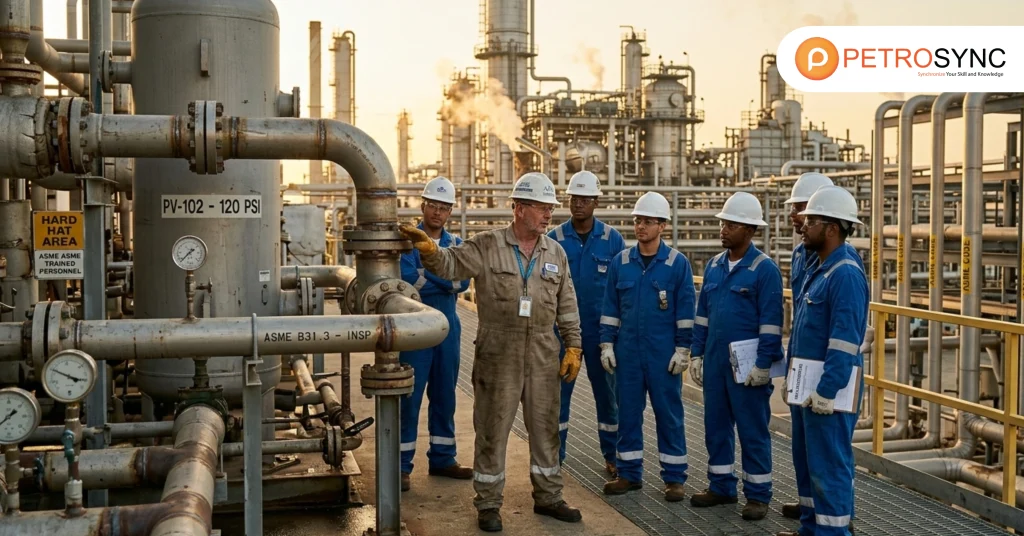
PetroSync offers a comprehensive, hands-on API 510 Training program designed to bridge the gap between theory and real-world applications. Participants learn from experienced global industry practitioners, engage in practical exercises, and study real-life case studies to gain actionable insights.
Our program ensures that every participant is well-prepared for both operational challenges and API 510 certification exams, making it a trusted choice for professionals aiming to advance their careers.
Advantages of Joining API 510 Training at PetroSync
1. Training Aligned with API 510 Certification Standards
PetroSync’s curriculum strictly follows API 510 requirements, ensuring participants are fully prepared for certification and real-world applications.
2. Real Industry Case Studies from Oil & Gas Operations
Learn from actual scenarios in refineries, offshore platforms, and processing facilities, providing practical insights into inspection and maintenance challenges.
3. Delivered by Experienced Global Industry Practitioners
Trainers are seasoned engineers and inspectors with extensive international experience, offering expert guidance and industry best practices.
4. Comprehensive Curriculum Based on International Best Practices
Covers codes, risk-based inspection, repair techniques, and operational decision-making, ensuring holistic skill development.
5. Interactive Learning Environment with Practical Applications
Hands-on exercises, group discussions, and practical assignments make learning engaging and immediately applicable.
6. Trusted by Energy Companies Worldwide
PetroSync has a proven track record with global oil and gas clients, enhancing credibility and building trust among participants.
How Much Does API 510 Training Cost at PetroSync?
PetroSync’s API 510 Training is priced at $3,350 per participant. Training sessions are available at two strategic locations: Kuala Lumpur, Malaysia, and Bandung, Indonesia.
This fee covers the full training program, including course materials, practical exercises, real industry case studies, and guidance from experienced global instructors. Participants will leave the program with hands-on skills and knowledge applicable to real-world operations, fully prepared for API 510 certification, and capable of contributing to safer, more reliable, and cost-efficient pressure vessel management.
Investing in this training not only advances your professional career but also strengthens your organization’s commitment to operational safety and equipment integrity.
Advance Your Inspection Career with API 510 Training at PetroSync
Enrolling in PetroSync’s API 510 Training program is an investment in your professional growth and operational excellence. Participants gain:
- In-depth knowledge to ensure pressure vessel integrity
- Practical skills applicable to real-world oil and gas operations
- Career advancement opportunities through API 510 certification
- Enhanced safety and compliance capabilities for their organizations
Take the next step in your inspection career with PetroSync’s globally recognized API 510 Training, and join professionals worldwide who trust us to advance their expertise and achieve operational excellence.
Frequently Asked Questions (FAQ)
API 510 Training is a professional program that teaches engineers and inspectors how to inspect, maintain, repair, alter, and rerate pressure vessels according to American Petroleum Institute standards. It prepares participants with practical and theoretical knowledge to ensure pressure vessel integrity and pass the API 510 certification exam.
API 510 Training helps professionals maintain pressure vessel integrity, detect potential failures early, and apply industry standards correctly. This improves operational safety, reduces the risk of accidents and shutdowns, and ensures compliance with international regulations.
API 510 Training is designed for engineers, supervisors, managers, inspectors, and technical personnel involved in inspection, maintenance, operations, or QAQC. It is especially suitable for professionals with 2–3 years of experience working with pressure vessel systems in refineries, petrochemical plants, or oil and gas facilities.
The training covers pressure vessel inspection methods, thickness calculations, pressure testing, weld inspection, nozzle reinforcement, risk-based inspection, corrosion evaluation, repair and alteration procedures, and ASME code applications. Participants also learn how to analyze inspection data and calculate remaining vessel life.
PetroSync API 510 Training costs $3,350 per participant. The program is available in Kuala Lumpur, Malaysia and Bandung, Indonesia, and includes course materials, practical exercises, real industry case studies, and guidance from experienced global instructors.

Results-oriented and thorough SEO specialist with extensive experience in conducting keyword research, developing and implementing digital website promotion strategies and plans, managing campaigns to develop company websites in the digital world, excellent knowledge of marketing techniques and principles, and attentive strong attention to detail.