

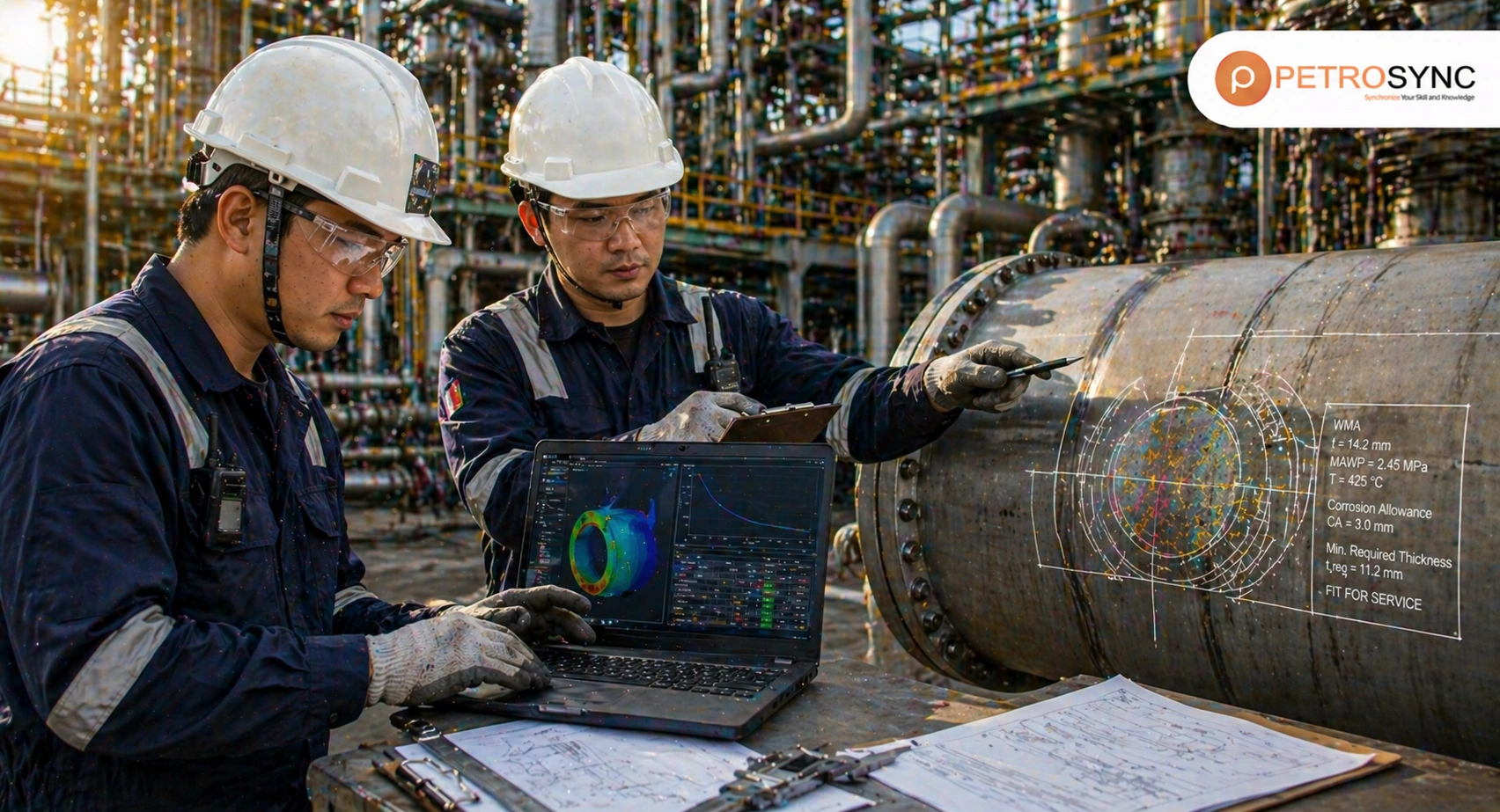
- API 579 Course is a practical FFS training that turns inspection data into safe, data-driven decisions for damaged equipment.
- Improve safety and reliability by assessing corrosion, cracks, and damage early before they escalate into major failures.
- Reduce downtime and costs by avoiding unnecessary replacements and preventing unexpected equipment breakdowns.
- Strengthen compliance with global standards using structured methods for repair, rerating, or continued operation.
- Extend asset life and optimize maintenance by balancing risk, performance, and long-term capital efficiency.
In the modern oil and gas sector, strong technical expertise has become a business necessity. Companies face ongoing demands to improve asset reliability, lower operational risk, manage maintenance budgets, and maintain safe production targets. One challenge continues to stand out: how can organizations make sound decisions when equipment starts to degrade?
That is exactly where the API 579 Course offers major value. For engineers, plant managers, executives, and decision-makers responsible for critical equipment, this training helps convert inspection data into practical engineering and business actions. Rather than depending on assumptions, participants learn an internationally accepted method for assessing damaged equipment while protecting safety and production performance.
What is API 579 Course?
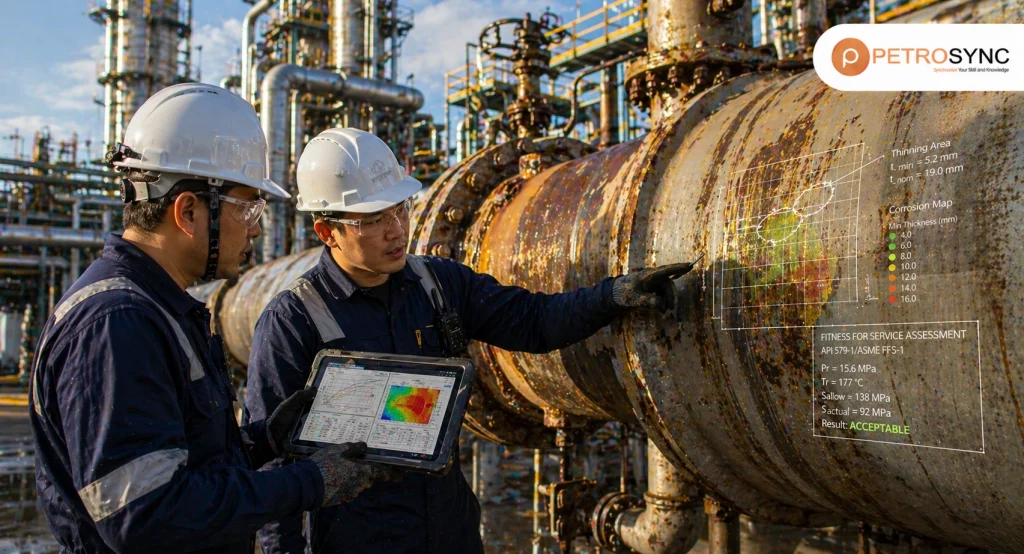
API 579 Course is a specialized training program focused on Fitness-For-Service (FFS) evaluations based on API 579 / ASME FFS standards. These standards are widely applied in refineries, petrochemical facilities, offshore platforms, power plant, and many process industries to determine whether equipment containing defects can remain in safe operation.
Instead of replacing equipment immediately after flaws are found, API 579 provides structured engineering procedures to evaluate real condition, remaining strength, and safe operating limits.
This course often covers common damage mechanisms such as:
- General corrosion
- Localized metal loss
- Crack-like defects
- Fire exposure damage
- Distortion
- Mechanical impact damage
- Creep deterioration
- Weld-related discontinuities
For companies operating mature facilities or expensive assets, API 579 expertise can greatly improve decision-making quality.
Key Benefits of Mastering API 579 Course for Oil & Gas Industry
1. Higher Safety and Operational Reliability
Many major failures begin with small issues that were underestimated. Wall thinning, cracks, or mechanical damage may grow into serious incidents when they are not properly evaluated.
The API 579 Course teaches professionals how to assess these conditions using recognized methods. Better technical judgment supports safer operations, reduces emergency events, and strengthens plant reliability.
Organizations with disciplined integrity programs often enjoy more stable production over time.
2. Stronger Compliance with Standards and Regulations
Industrial facilities must meet internal governance requirements and external regulations. Inspection decisions need clear technical justification.
API 579 gives companies a recognized framework for repair, rerating, continued operation, or replacement decisions. This improves documentation quality, supports audits, and aligns internal practices with global industry standards.
3. Lower Risk of Asset Failure and Field Incidents
Unexpected equipment failure can stop operations without warning. It may lead to downtime, environmental impact, contractor mobilization, and costly emergency repairs.
Through API 579 principles, teams learn how to identify severity early and respond before conditions worsen. Preventive action is usually far more cost-effective than reactive recovery.
Reducing uncertainty is one of the strongest business advantages of this training.
4. Better Equipment Life Cycle Management
Some assets are replaced too early because of overly conservative assumptions. Others continue operating too long without enough technical review.
API 579 helps organizations balance risk and value. Equipment that remains fit for service may continue operating safely until the next turnaround, allowing companies to maximize useful life while preserving integrity.
This approach supports smarter lifecycle planning and stronger capital efficiency.
5. Greater Cost Efficiency in Maintenance and Downtime
Unplanned shutdowns remain one of the biggest expenses in oil and gas operations. Lost production, labor costs, spare parts, and restart activities can quickly increase spending.
Companies that strengthen assessment capability often reduce unnecessary repairs and allocate maintenance budgets more strategically. In many cases, avoiding one major failure can justify training costs many times over.

Advance Your Inspection Career with PetroSync’s API 579 Course
For professionals targeting senior technical or leadership positions, API 579 capability delivers clear career value. It improves professional credibility, sharpens engineering judgment, and strengthens communication across inspection, operations, maintenance, and management teams.
For organizations, building this expertise internally creates faster and more reliable decisions when equipment conditions change.
What Is API 579 Course Objective by PetroSync?
1. Pass API 579 Certification with Confidence
Participants receive focused guidance on key concepts, formulas, and assessment logic to support certification readiness.
2. Understand ASME Codes for Better Inspection Decisions
The training explains how API 579 connects with relevant ASME requirements used for design and in-service evaluations.
3. Perform API 579 Calculations Correctly
Attendees learn practical methods for calculations involving flaw acceptance, remaining strength, and allowable operating limits.
4. Apply API 579 in Real Operations
The course emphasizes real-world application so participants can use API 579 principles during inspections, shutdown planning, and repair decisions.
5. Build Awareness of Welding Standards
Since many integrity cases involve repairs, understanding welding procedures, qualifications, and quality requirements is highly valuable.
What Is API 579 Course Outline by PetroSync?
1. Day 1
- Introduction to Fitness-For-Service methodology
- API 579 framework and terminology
- Overview of common damage mechanisms
2. Day 2
- General metal loss assessment
- Localized corrosion review
- Remaining strength concepts
3. Day 3
- Crack assessment principles
- Brittle fracture screening
- Flaw evaluation methods
4. Day 4
- Fire damage assessment
- Distortion and mechanical damage
- High-temperature degradation mechanisms
5. Day 5
- Practical case studies
- Workshop calculations
- Certification preparation and review
Who Should Attend API 579 Course by PetroSync?
This program is highly recommended for professionals involved in reliability, inspection, and asset integrity, including:
- Inspection Engineers
- Mechanical Engineers
- Corrosion Engineers
- Reliability Engineers
- Maintenance Managers
- Plant Managers
- Asset Integrity Specialists
- Operations Leaders
- Technical Authorities
- Senior executives managing critical facilities
Cross-functional participation is especially valuable because integrity decisions often require collaboration across departments.
Advantages of Joining API 579 Course at PetroSync
1. Training Designed Around API 579 Certification
The program supports both technical understanding and certification preparation.
2. Real Industry Case Studies
Participants gain insights from realistic scenarios found in refineries, petrochemical plants, and industrial operations.
3. Instructors with Global Field Experience
Learning from experienced practitioners adds practical depth beyond textbook theory.
4. Comprehensive International Curriculum
The material reflects globally recognized best practices relevant to modern asset integrity management.
5. Interactive Learning Experience
Participants are encouraged to engage actively, ask questions, and solve practical challenges together.
6. Trusted by Energy Companies Worldwide
PetroSync is recognized by many organizations seeking high-quality technical training for engineering teams.
How Much Does API 579 Course Cost at PetroSync?
Training fees may vary depending on location, schedule, delivery format, and company participation needs.
However, many organizations view this program as a strategic investment rather than an expense. Better technical decisions can reduce shutdown exposure, optimize maintenance timing, and extend equipment life.
Compared with the financial impact of one major failure, the return on capability development is often significant.
Advance Your Inspection Career with API 579 Course at PetroSync
As assets continue to age while performance expectations rise, companies need professionals who can assess risk accurately and act decisively.
The API 579 Course at PetroSync helps participants improve inspection capability, strengthen reliability decisions, and support safer operations. Whether the objective is certification, leadership growth, or stronger internal technical standards, this program delivers practical value far beyond the classroom.
If your company wants smarter asset decisions, stronger teams, and long-term operational resilience, this is the right time to consider the API 579 Course with PetroSync.
Frequently Asked Questions (FAQ)
API 579 Course is a specialized training focused on Fitness-For-Service (FFS) assessments based on API 579 / ASME standards. It helps professionals evaluate damaged equipment safely and make data-driven decisions instead of relying on assumptions.
The course improves safety, reduces risk of failure, enhances compliance with global standards, optimizes maintenance costs, and helps extend equipment life through accurate technical assessments.
This course is ideal for inspection engineers, mechanical engineers, corrosion engineers, reliability engineers, maintenance managers, plant managers, and professionals responsible for asset integrity and operational safety.
The course covers Fitness-For-Service methodology, corrosion assessment, crack evaluation, fire and mechanical damage analysis, remaining strength calculations, and real case studies for practical application.
By enabling accurate condition assessment, the course helps avoid unnecessary equipment replacement, prevent unexpected failures, reduce downtime, and optimize maintenance planning, leading to significant cost savings.

Results-oriented and thorough SEO specialist with extensive experience in conducting keyword research, developing and implementing digital website promotion strategies and plans, managing campaigns to develop company websites in the digital world, excellent knowledge of marketing techniques and principles, and attentive strong attention to detail.

Business Development Manager at PetroSync with 12+ years of experience in professional training and business development across the energy and industrial sectors.