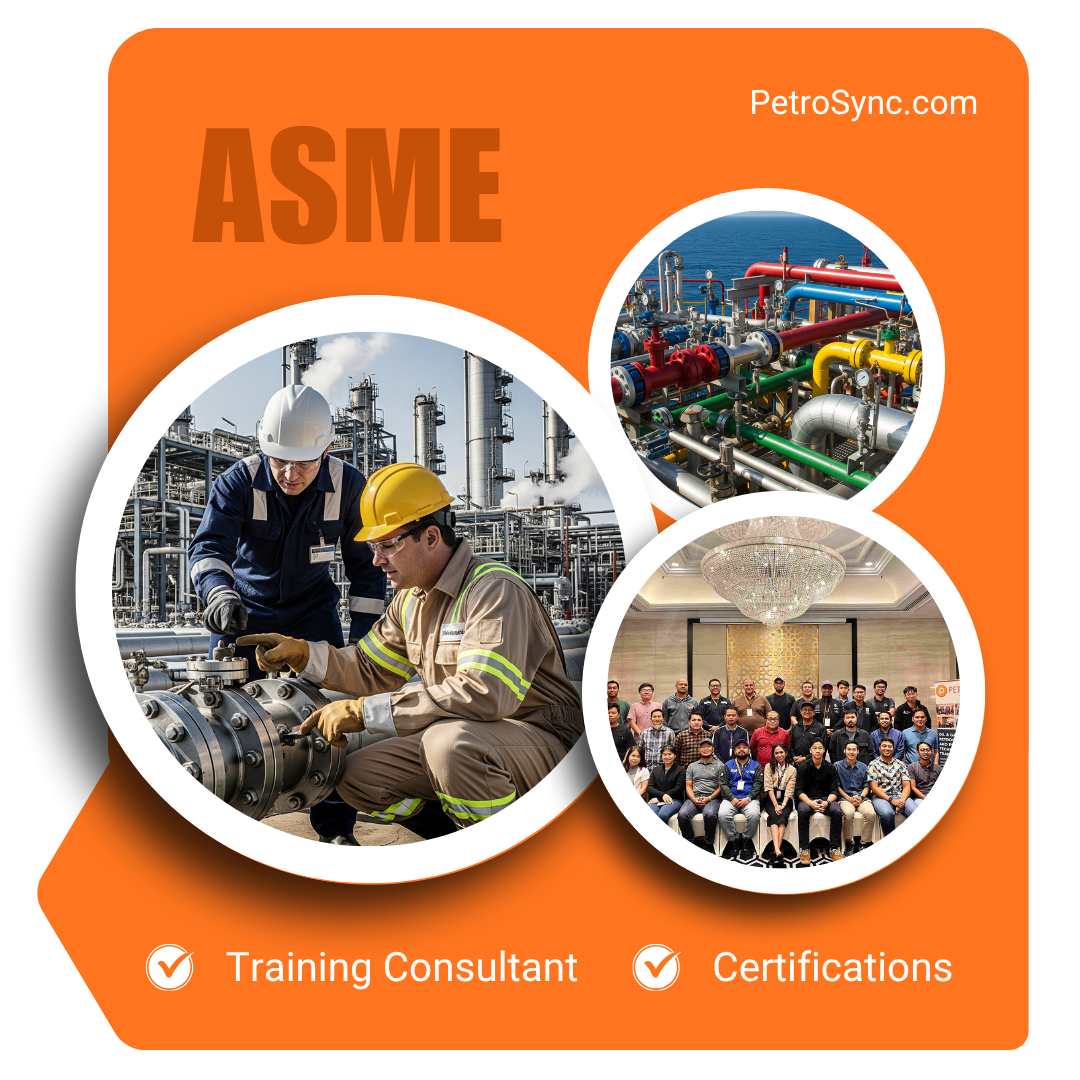



- ASME Training is a structured program that turns complex codes into practical engineering decisions across oil & gas operations.
- Misinterpreting ASME standards exposes facilities to compliance gaps, safety hazards, shutdowns, and costly penalties.
- Strong code mastery improves safety, reliability, and asset lifespan while reducing rework and operational waste.
- Embedding standards into design reviews, inspections, and workflows drives efficiency and audit readiness.
- PetroSync’s applied, case-based programs help teams close competency gaps and strengthen regulatory confidence.
ASME Training is no longer an optional professional development program for engineers in the oil and gas industry. In today’s highly regulated and technically demanding environment, understanding and correctly applying engineering standards is a strategic necessity.
Companies are expected to ensure full compliance, operational reliability, and uncompromised safety—while maintaining efficiency and profitability. Across refineries, petrochemical plant, LNG facilities, and offshore platforms, standards issued by the American Society of Mechanical Engineers serve as global references for pressure vessel design, piping systems, boilers, welding procedures, and mechanical integrity programs.
ASME codes are not merely technical documents; they are frameworks that protect people, assets, and corporate reputation. This article explores what ASME Training truly means, the risks of neglecting it, and how structured competency development can strengthen both engineering performance and regulatory compliance.
What is ASME Training?
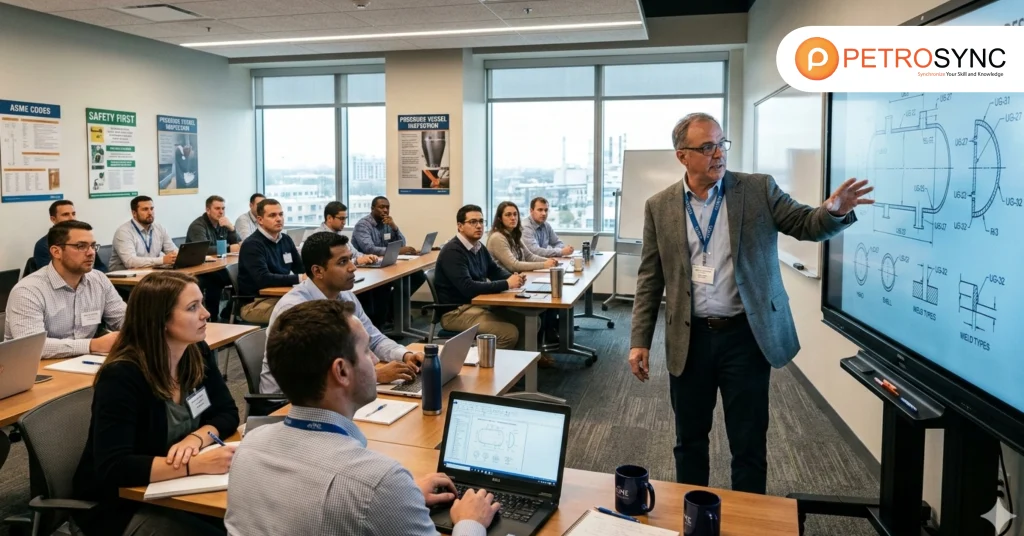
ASME Training is a structured competency development program designed to help engineers, inspectors, supervisors, and technical decision-makers understand, interpret, and apply ASME codes correctly in real-world operations.
In the oil and gas sector, ASME Training commonly focuses on:
- ASME Boiler & Pressure Vessel Code (BPVC)
- ASME Section VIII (Pressure Vessel)
- ASME B31.3 (Process Piping)
- Welding qualifications and procedures
Mechanical integrity and inspection standards effective ASME Training goes beyond theory. It connects code clauses to practical case studies, design calculations, fabrication scenarios, inspection findings, and failure investigations. Participants learn not only what the code states, but how to apply it in engineering decisions.
Potential Risks of Improper Management or Misunderstanding of ASME Codes & Standards
1. Non-Compliance with ASME Codes & Industrial Standards
Failure to understand or correctly implement ASME codes may result in regulatory non-compliance. During audits or third-party inspections, even minor misinterpretations can lead to findings, corrective action requirements, penalties, or operational restrictions.
In heavily regulated environments, compliance gaps can significantly affect project approvals and operational continuity.
2. Increased Operational Safety Hazards
Pressure-containing equipment such as vessels, boilers, and piping systems operate under high stress and temperature conditions. Improper design calculations, material selection, or welding procedures can increase the risk of rupture, leakage, or catastrophic failure.
Without proper ASME knowledge, organizations expose their workforce and facilities to avoidable safety risks.
3. Higher Risk of Equipment Failures
Inadequate understanding of ASME requirements may lead to under-designed components, improper fabrication practices, or insufficient inspection planning. Over time, this increases the likelihood of corrosion damage, fatigue cracking, or stress-related failures.
Unexpected equipment failure results in unplanned shutdowns and major operational disruptions.
4. Inefficient Engineering Practices
Engineers who lack strong ASME competency may rely on assumptions instead of code-based verification. This often leads to repeated design revisions, unclear technical decisions, and longer project timelines. In competitive industries, inefficiency directly affects cost and performance.
5. Financial Losses from Downtime & Penalties
Unplanned shutdowns, regulatory fines, litigation exposure, and reputational damage can cause substantial financial losses. In large-scale facilities, even one day of downtime may translate into millions of dollars in lost production.
Investing in structured ASME Training is significantly more cost-effective than managingthe consequences of non-compliance or failure.
Benefits of Mastering ASME Training for the Oil & Gas Industry
1. Ensures Compliance with ASME Codes & Engineering Standards
Mastery of ASME codes ensures that engineering designs, fabrication processes, and inspections align with internationally recognized standards. This strengthens audit readiness and regulatory confidence.
2. Improves Operational Safety & Reliability
When teams understand the intent behind code requirements, they make better engineering judgments. Properly designed and maintained equipment significantly reduces the probability of failure incidents.
3. Optimizes Equipment Performance & Lifespan
Code-compliant design and inspection practices extend equipment life. Accurate stress analysis, correct material selection, and appropriate inspection intervals help maximize asset performance and return on investment.
4. Reduces Maintenance & Operational Costs
Preventive and predictive maintenance strategies aligned with ASME standards minimize rework, emergency repairs, and repetitive corrective actions. Long-term cost efficiency begins with technical competence.
5. Enhances Professional Credibility & Competence
For individual professionals, strong ASME competency elevates credibility. Engineers with deep code understanding are more trusted in design reviews, project approvals, and technical decision-making. This directly impacts career growth and leadership opportunities.

Strengthen Your Engineering Compliance Today
Empower your engineering team with structured ASME Training designed for real industry challenges and compliance demands.
How to Address ASME Training Challenges More Effectively
1. Develop Professional Competence through Structured Programs like PetroSync
A structured training framework ensures systematic learning—from fundamental code interpretation to advanced application in design and inspection.
2. Apply Relevant Industry Best Practices & Standards for ASME
Beyond memorizing clauses, professionals must understand best practices in applying code requirements within real operational contexts.
3. Integrate ASME Knowledge into Operational & Engineering Processes
ASME understanding should not remain theoretical. It must be embedded into internal procedures, design review workflows, inspection planning, and audit systems.
4. Enhance Team Capability through Case Studies & Field Learning
Case-based discussions and real failure analysis strengthen problem-solving skills and practical judgment.
5. Conduct Evaluation, Review & Continuous Improvement
ASME codes are periodically updated. Continuous evaluation ensures that teams remain aligned with the latest revisions and industry developments.
Competency Development Solutions for ASME Training via PetroSync
PetroSync provides comprehensive ASME competency development programs tailored for oil & gas professionals. The programs bridge the gap between code theory and engineering implementation, helping organizations strengthen compliance and operational excellence.
PetroSync ASME Training Competency Development Programs for Oil & Gas Professionals
1. Based on ASME Code & Real Engineering Applications
Training modules are structured around official ASME codes and real engineering scenarios from global projects.
2. Practical & Applied Case Study Approach
Participants engage in calculation exercises, clause interpretation workshops, and technical discussions grounded in real-world challenges.
3. Experienced Instructors from Global Industry Practitioners
Programs are delivered by senior practitioners with hands-on experience in EPC projects, refineries, and offshore facilities worldwide.
4. Curriculum Aligned with International Standards & Best Practices
The curriculum is continuously updated to reflect the latest code revisions and global regulatory expectations.
5. Trusted by Energy Companies & Global Industries
PetroSync has supported competency development initiatives for energy companies and industrial organizations across various regions.
6. International Reputation as an Oil & Gas Training Provider
With extensive experience in oil and gas training, PetroSync has established a strong reputation as a trusted partner in engineering capability enhancement.
Advance Your ASME Competence with PetroSync
In high-risk industries, competence is not optional—it is strategic. Ensure your engineering team fully understands and consistently applies ASME codes to safeguard operations, assets, and people.
Schedule Your PetroSync ASME Training Competency Program Now
Do not wait until compliance gaps are identified during audits or until operational issues arise. Take a proactive step toward strengthening engineering capability and regulatory compliance.
Contact PetroSync today to schedule your ASME Training competency program and equip your team with the expertise required to meet international engineering standards confidently and effectively.
Frequently Asked Questions (FAQ)
ASME Training is a structured competency development program that helps engineers, inspectors, and supervisors understand, interpret, and apply ASME codes correctly in real-world oil and gas operations, including pressure vessels, piping systems, boilers, welding, and mechanical integrity programs.
ASME Training ensures engineering designs, fabrication processes, and inspections align with internationally recognized standards. Proper understanding of ASME codes strengthens audit readiness, prevents compliance gaps, and reduces the risk of penalties or operational restrictions.
Misinterpreting ASME codes can lead to regulatory non-compliance, increased safety hazards, equipment failures, inefficient engineering practices, unplanned shutdowns, financial losses, and reputational damage, especially in high-risk oil and gas facilities.
Strong ASME competency improves safety and reliability, optimizes equipment lifespan, reduces maintenance costs, and supports better engineering decisions. Code-compliant design and inspection practices help minimize rework, failures, and operational disruptions.
Organizations can implement ASME Training through structured programs that combine official code interpretation, real engineering case studies, practical calculation exercises, experienced instructors, and continuous updates aligned with the latest code revisions and industry best practices.

Results-oriented and thorough SEO specialist with extensive experience in conducting keyword research, developing and implementing digital website promotion strategies and plans, managing campaigns to develop company websites in the digital world, excellent knowledge of marketing techniques and principles, and attentive strong attention to detail.