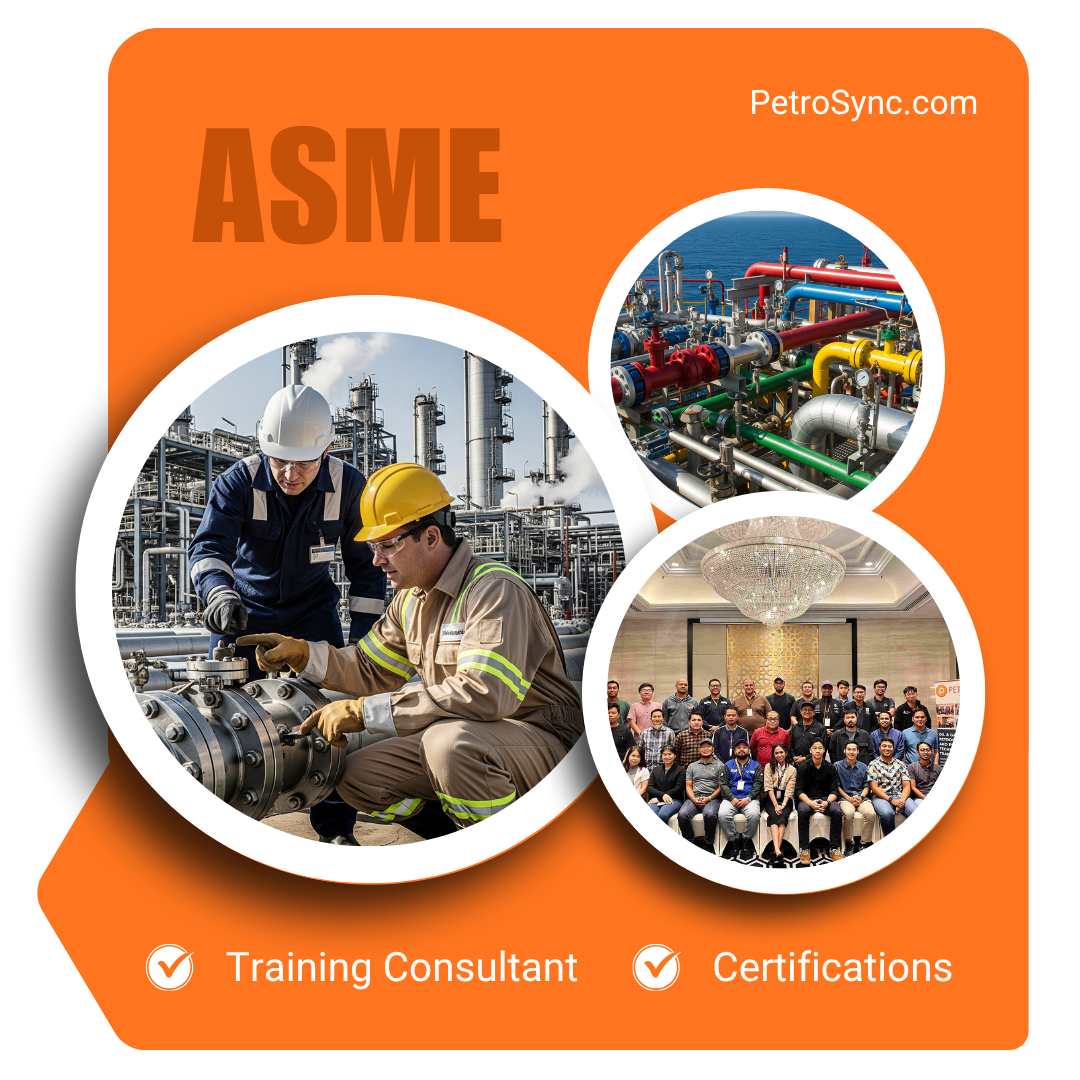


- ASME is a globally trusted standard that improves safety, reliability, and compliance across industrial operations.
- Strong ASME implementation reduces risk, prevents failures, and keeps pressure equipment operating safely under demanding conditions.
- Standardization with ASME aligns teams, minimizes rework, and accelerates project execution across multi-vendor environments.
- ASME compliance strengthens audit readiness, documentation quality, and overall project credibility in global industries.
- Practical ASME expertise boosts engineer value, improves decision-making, and supports safer, more efficient project outcomes.
ASME has long been recognized as one of the most trusted engineering standards in the world for improving safety, reliability, and compliance in industrial operations. Companies in oil and gas, power generation, manufacturing, and petrochemical industries use ASME standards to reduce technical uncertainty and keep operations running smoothly.
In many facilities, even a small issue in pressure equipment design, welding quality, fabrication practices, or inspection controls can lead to shutdowns, financial losses, regulatory concerns, or serious safety incidents. For that reason, organizations that aim for strong operational performance continue to prioritize ASME implementation.
For engineers, plant managers, technical leaders, and executives, understanding ASME is more than technical knowledge. It is a valuable business advantage that helps protect assets, improve project execution, and support long-term growth.
What is ASME in Engineering Standards?
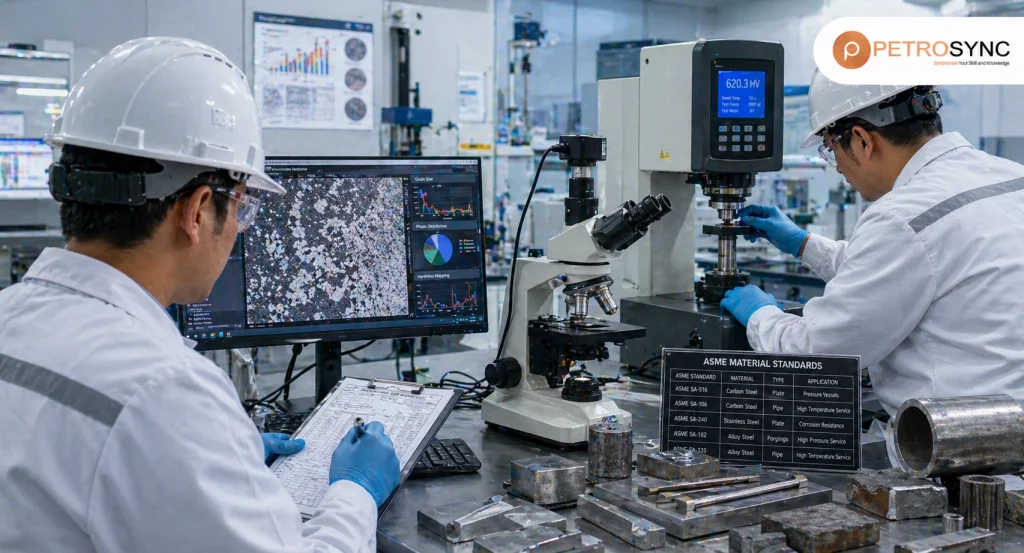
ASME stands for the American Society of Mechanical Engineers, a globally respected professional organization founded in 1880. It is widely known for publishing engineering codes and standards used in pressure vessel, boilers, piping systems, welding activities, fabrication work, and other critical mechanical assets.
ASME standards provide practical guidance in areas such as:
- Equipment design criteria
- Material selection
- Welding qualification procedures
- Inspection methods
- Testing practices
- Fabrication quality systems
- Mechanical integrity programs
- Operational safety controls
One of the best-known publications is the ASME Boiler and Pressure Vessel Code (BPVC), which is often used as a benchmark for equipment operating under pressure and elevated temperatures.
Today, ASME standards are commonly applied in refineries, LNG facilities, chemical plants, offshore assets, utilities, and industrial projects around the globe.
Why ASME Standards Are Critical for Safety, Compliance, and Performance
Companies that apply clear engineering standards often perform better in risk management, asset reliability, and project consistency.
1. Ensure Safety and Reliability of Pressure Equipment
Pressure vessels, boilers, and piping systems usually operate in demanding conditions. If one of these assets fails, the consequences may include injuries, environmental impact, lost production, and expensive repairs.
ASME helps reduce those risks through accepted engineering practices covering:
- Design safety margins
- Material suitability
- Fabrication controls
- Pressure testing methods
- Inspection requirements
These measures improve equipment dependability while lowering exposure to failure.
2. Standardize Design and Manufacturing Processes
Large projects often involve multiple contractors, vendors, fabricators, consultants, and owner representatives. Without common standards, inconsistencies can create delays and increase cost.
ASME helps align all parties through shared technical expectations. This often supports:
- Faster engineering decisions
- Fewer design conflicts
- Lower fabrication rework
- Better procurement accuracy
- Stronger quality consistency
3. Meet Global Industry Requirements in Oil & Gas and Power
Many operators and project owners request ASME compliance in technical specifications and tender requirements.
Organizations with proven ASME capability often gain advantages such as:
- More tender opportunities
- Stronger client trust
- Easier vendor approval
- Higher project credibility
- Better competitive position
4. Support Regulatory Compliance and Quality Assurance
In many regions, local engineering frameworks are aligned with internationally accepted standards such as ASME.
Proper implementation also improves:
- Documentation readiness
- Audit preparation
- Inspection traceability
- Quality assurance systems
- Risk governance controls
Essential ASME Codes Every Engineer Must Master
Although each facility has different needs, several ASME codes are considered fundamental across industrial operations.
1. ASME Section VIII Division 1 & 2 – Pressure Vessel
This section covers the design, fabrication, inspection, and certification of pressure vessels.
Common examples include:
- Separators
- Columns
- Drums
- Reactors
- Heat exchanger shells
- For oil and gas facilities, this remains one of the most important references.
2. ASME Section IX – Welding Qualification Standards
Welding quality has a direct effect on leak prevention, structural strength, and long-term equipment performance.
Section IX includes:
- Welding Procedure Specification (WPS)
- Procedure Qualification Record (PQR)
- Welder performance qualification
It is especially important for fabrication yards, shutdown maintenance, and construction projects.
3. ASME B31.3 – Process Piping Code Design Requirements
This code is widely used in:
- Refineries
- Petrochemical plant
- LNG facilities
- Gas processing plants
It covers design pressure, material selection, flexibility, testing, and construction requirements.
4. ASME B31.1 – Power Piping Systems
This standard is commonly used in power plants and utility systems handling steam or other high-energy piping services.

How ASME Standards Are Applied in High-Stakes Engineering Work
The value of standards becomes most visible when projects move from planning into execution.
1. Design and Fabrication of Pressure Equipment
Engineering teams use ASME for:
- Thickness calculations
- Reinforcement checks
- Material reviews
- Fabrication tolerances
- Pressure test planning
These decisions influence both project cost and long-term equipment reliability.
2. Welding Procedures and Qualification Requirements
Unqualified welding procedures often lead to delays, repair work, and rejected inspections. ASME provides a structured qualification process that reduces uncertainty before production begins.
3. Inspection, Testing, and Certification Processes
Inspection teams use recognized standards to review acceptance criteria, test results, and certification readiness. This creates stronger confidence before startup and final handover.
4. Compliance in Construction and Maintenance Projects
During revamps, shutdowns, rerating work, tie-ins, and equipment replacement, ASME helps ensure changes remain safe and well controlled.
The Real Challenges of Implementing ASME Standards
Many organizations own the standards. Far fewer apply them effectively in real working environments.
1. Difficulty Interpreting Complex Codes
ASME documents often contain technical clauses, references, exceptions, and linked requirements that need experience to interpret correctly. A small misunderstanding can lead to major downstream cost.
2. High Compliance and Certification Requirements
Successful implementation often requires:
- Material traceability
- Welding documentation
- Inspection reports
- Technical dossiers
- Quality management systems
Weak control in these areas frequently delays project completion.
3. Cost Impact in Design and Fabrication
Compliance may increase upfront spending in some cases. However, poor compliance usually costs much more through rework, delays, failures, and claims. Experienced organizations see standards as protection rather than expense.
4. Shortage of Skilled and Certified Engineers
Many companies struggle to find professionals who can interpret codes while making sound practical decisions in the field. This gap becomes more serious during large projects or turnaround periods.
Are You Fully Prepared to Apply ASME Standards in the Field?
Many organizations assume that having engineers automatically means having code capability. In reality, that assumption can become expensive.
1. Understanding Codes Is Not Enough for Real Projects
Reading clauses alone does not prepare teams to solve fabrication deviations, inspection findings, or schedule-driven technical challenges.
2. Misinterpretation Can Lead to Safety and Compliance Risks
Even small mistakes may result in:
- Failed inspections
- Delayed commissioning
- Unsafe operations
- Client rejection
- Reputation damage
3. Practical Experience Is Critical in High-Stakes Environments
Facilities need professionals who can balance code intent, budget pressure, project timelines, and operational risk.
Master ASME Standards with Practical, Industry-Focused Training
High-performing organizations invest in technical capability before problems arise.
1. Build Strong Understanding of ASME Codes and Applications
Structured training helps teams focus on the most relevant code sections instead of spending months navigating technical documents alone.
2. Learn Practical Implementation in Real Engineering Scenarios
Effective training should include:
- Real project case studies
- Design review methods
- Welding qualification examples
- Inspection findings
- Compliance strategies
3. Gain Skills Needed for Compliance, Safety, and Quality
Well-prepared engineers make faster and stronger decisions that improve project execution.
Become a High-Value Engineer with ASME Expertise
Professionals who combine technical knowledge with practical code application remain highly valuable across industrial sectors.
1. Increase Your Value in Industrial Projects
ASME capability helps engineers contribute more effectively during design, construction, maintenance, and turnaround work.
2. Strengthen Your Technical and Practical Expertise
You improve not only technical knowledge, but also field judgment under pressure.
3. Learn from Industry Experts with Real Field Experience
Learning directly from experienced practitioners often shortens the learning curve and improves confidence in real projects.
Secure Your Spot in PetroSync’s ASME Training Today
If your organization depends on pressure equipment, piping systems, plant uptime, and safe execution, stronger technical capability is no longer optional.
PetroSync’s ASME Training is built for managers, senior engineers, technical leaders, and decision-makers who need practical knowledge that creates measurable value in operations and projects.
Participants gain stronger understanding of:
- Compliance expectations
- Pressure equipment integrity
- Fabrication quality control
- Inspection readiness
- Real engineering challenges
If your goal is to reduce risk, improve team capability, strengthen project confidence, and raise engineering standards, this program provides a practical next step.
Secure your seat today and equip your team with expertise that creates value where it matters most.
Frequently Asked Questions (FAQ)
ASME is a global engineering standard that provides guidelines for design, fabrication, inspection, and safety. It helps improve reliability, reduce risk, and ensure compliance in industrial operations.
ASME standards define clear requirements for design margins, materials, welding, testing, and inspection, which help prevent equipment failure and improve operational safety.
Key ASME codes include Section VIII for pressure vessels, Section IX for welding qualifications, B31.3 for process piping, and B31.1 for power piping systems.
Common challenges include interpreting complex codes, managing documentation and certification requirements, higher upfront costs, and a shortage of skilled engineers.
Practical training helps engineers apply standards in real projects, improve decision-making, reduce errors, and handle complex engineering challenges more effectively.

Results-oriented and thorough SEO specialist with extensive experience in conducting keyword research, developing and implementing digital website promotion strategies and plans, managing campaigns to develop company websites in the digital world, excellent knowledge of marketing techniques and principles, and attentive strong attention to detail.