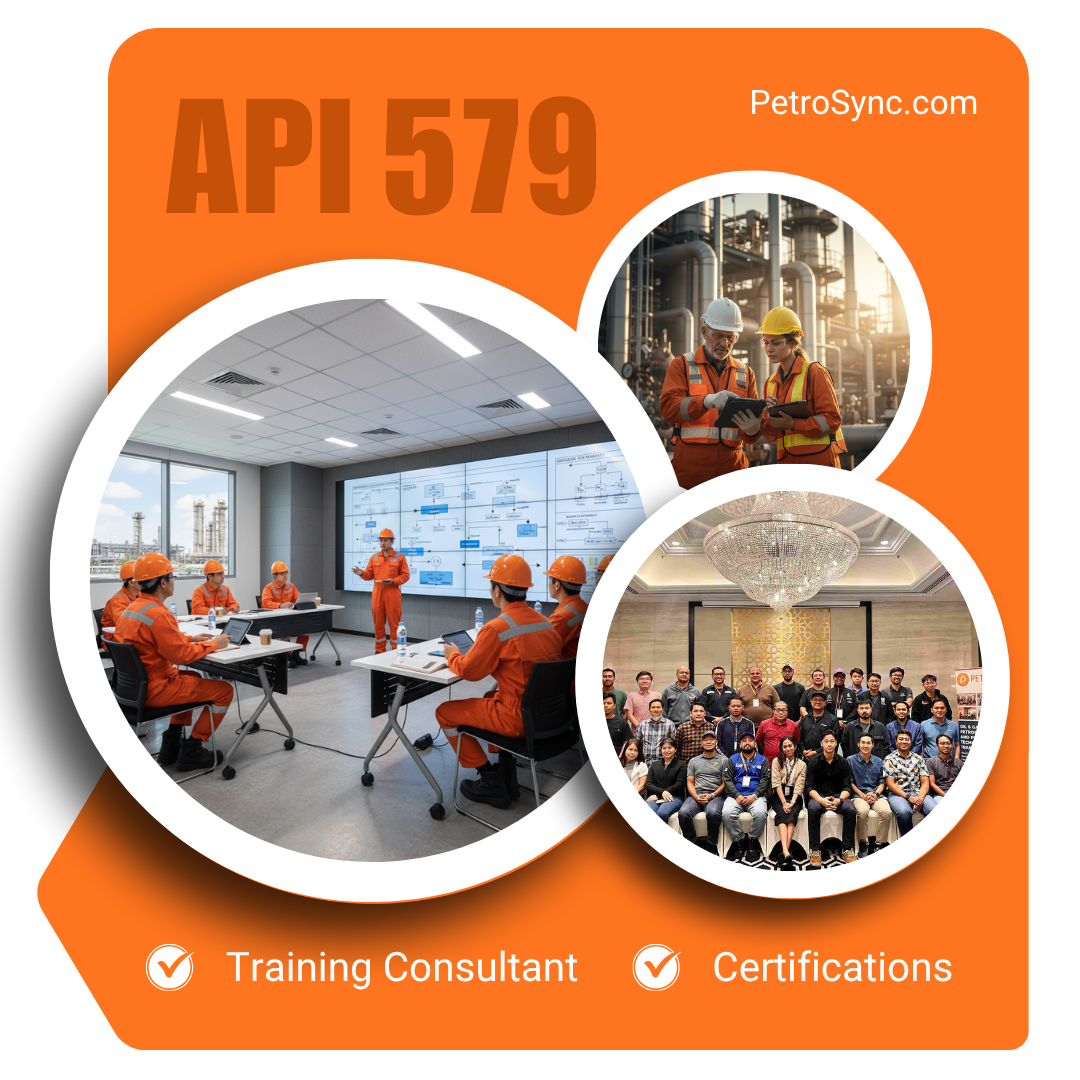



- API 579 Training is a professional program that teaches engineers and inspectors how to perform Fitness-for-Service (FFS) assessments on pressure equipment safely.
- The course helps professionals detect corrosion, cracks, and other damage early, allowing safer decisions on repair, replacement, or continued operation.
- Mastering FFS assessment improves plant safety and reliability by predicting failures before they disrupt operations or cause incidents.
- Structured lessons, case studies, and real calculations train participants to evaluate equipment life, MAWP limits, and degradation mechanisms.
- PetroSync’s program equips engineers with practical integrity assessment skills while supporting compliance with global industry standards.
In the oil and gas industry, maintaining the integrity of equipment and pressure-containing components is critical for operational safety, reliability, and efficiency. Over time, equipment can experience corrosion, fatigue, and other degradation mechanisms, which, if left unassessed, can lead to costly failures, environmental hazards, and safety incidents.
Professionals responsible for managing industrial assets must have the expertise to evaluate equipment condition accurately, plan maintenance or repairs, and ensure compliance with standards. This is where API 579 Training becomes essential. Designed for engineers, inspectors, and maintenance specialists, API 579 provides the knowledge and practical skills needed to perform Fitness-for-Service (FFS) assessments and make informed decisions regarding the continued operation of equipment.
By completing API 579 Training, participants gain confidence in assessing equipment integrity, preventing failures, and supporting regulatory compliance, while also preparing for industry-recognized certification in Fitness-for-Service assessment.
What is API 579 Training?
API 579 Training is a professional program focused on Fitness-for-Service (FFS) assessment of pressure vessel, piping, and other process equipment in accordance with the API 579 standard. The training covers methods to evaluate the condition of in-service equipment, determine the remaining life, and implement safe operational practices.
Participants learn to identify damage mechanisms such as corrosion, cracking, erosion, and mechanical overload, and to apply engineering principles and calculation methodologies to assess whether equipment can continue to operate safely or requires repair or replacement.
The program combines theoretical knowledge, practical exercises, and case studies, preparing participants to make data-driven, reliable decisions regarding equipment integrity, regulatory compliance, and operational safety.
Key Benefits of Mastering API 579 Training for the Oil & Gas Industry
1. Improved Safety & Operational Reliability
API 579 Training teaches how to assess equipment integrity and predict potential failures before they occur. This proactive approach enhances safety for personnel and facilities and ensures continuous, reliable operations.
2. Compliance with Industry Standards, Codes & Regulations
Understanding FFS assessment and API 579 requirements ensures professionals can comply with international standards, regulatory codes, and corporate policies, reducing the risk of violations and operational interruptions.
3. Reduced Asset Failure & Field Incident Risks
Proper FFS assessments allow early detection of damage or degradation, minimizing the risk of catastrophic failure and costly field incidents. This reduces unplanned maintenance and supports predictive risk management.
4. Optimized Equipment Performance, Lifespan & Integrity
Applying API 579 principles helps maximize the remaining useful life of equipment, enabling safe continued operation and minimizing unnecessary replacement. This ensures efficient utilization of assets.
5. Cost Efficiency in Operations, Maintenance & Downtime
Fitness-for-Service assessments allow strategic maintenance planning, prioritizing high-risk equipment and reducing operational costs. Companies can avoid premature replacement while maintaining safety and compliance, improving overall financial efficiency.

What is the API 579 Training Objective?
- To familiarize participants with the main concepts and technical terms of degradation mechanisms.
- To introduce participants to the concepts of FFS.
- To explain to participants the basic concepts of degradation and FFS.
- To provide participants with the basic technical and scientific knowledge for carrying out in-depth inspection and engineering calculations.
- To train participants to choose between ‘3 R’s, i.e., Re-rate, Repair, and Replace.
- To introduce participants to different ways of evaluations and decision-making as regards the repairs, alterations, and re-ratings
- Assessment of future remaining life.
What is API 579 Training Outline?
1. Day 1
- Introduction to API 579
- Fundamentals of Pressure vessels and piping
- Review of Design Formulas
- Calculation of required thickness
- Concept of MAWP
- Scope and limitations of API 579
- Definition of technical terms
- FFS assessment procedures
- Levels of assessment
- Remaining strength factor
- Failure Assessment Diagrams
- Reduced permissible MAWP
- Remaining life assessment
- Overview of flaw damage and assessment procedures
- Modes of deterioration and metal loss
- Assessment for Brittle Fracture (Level 1)
- Critical Exposure Temperature (CET)
- Minimum Allowable Temperature (MAT)
2. Day 2
- Definition of general metal loss
- Assessment of general metal loss
- Required data and measurements
- Procedures for level 1 assessment
- Assessment techniques and acceptance criteria
- Step-by-step assessment method
- Calculation of minimum required thickness
- Calculation of average thickness
- Coefficient of variation
- Case studies and exercises on the application of API 579 methodology
- Assessment of local metal loss
- Required data and measurements
- Procedure for level 1 assessment
3. Day 3
- Brief discussion on Pitting Corrosion
- Step-by-step assessment method as per Level-1
- Case study and Exercise
- Assessment techniques and acceptance criteria for pitting
- Assessment of Hydrogen damage – Hydrogen Induced Cracking
- Assessment of Hydrogen blisters
- Assessment techniques and acceptance criteria as per Level-1
- Case study and Exercise
- Assessment of Wed Misalignments
- Assessment of Shell Distortion
- Assessment techniques and criteria as per Level-1
4. Day 4
- Assessment of crack-like flaws
- Assessment technique as per Level 1
- Flaw Characterization- single cracks
- Flaw Characterization- multiple cracks
- Step-by-step assessment method
- Failure assessment curves for crack-like flaws
- Selection of FAD curves.
- Maximum permissible crack dimensions.
- Level-1 Assessment of Cracks
- Case study and Exercise on crack analysis as per Level-1
- Assessment of creep damage
- Creep range temperatures for various materials
- Creep curves for various materials
- Case studies on creep damage assessment
5. Day 5
- Assessment of fire damage
- Deciding fire zones
- Case studies on fire damage assessment
- Assessment of dents, gouges
- Assessment techniques and acceptance criteria as per Level-1
- Case studies on dents, gouges assessment
- Assessment of Laminations
- Case study on lamination assessment
- Assessment of Fatigue Damage as per Level-1
- Case study on fatigue damage
- Final Review Exam (if required)
- Closing Session
Who Should Attend API 579 Training Course?
Pressure Vessel/ Piping/ Tank design engineers, process engineers, plant operating engineers and managers, and Chemical/ mechanical engineers who are involved in the integrity assessment of Columns, Vessels, tanks, piping, etc. A
lso recommended for the Design engineers, Inspection persons, and maintenance engineers involved in the Repair, maintenance, and troubleshooting of plant equipment in the Refining, Petrochemical, and Chemical industries. Individual certification of API 510/ 570/ 653 will be an added advantage to the participants
Each attendee must bring a Scientific Calculator
API 579 Training Program by PetroSync
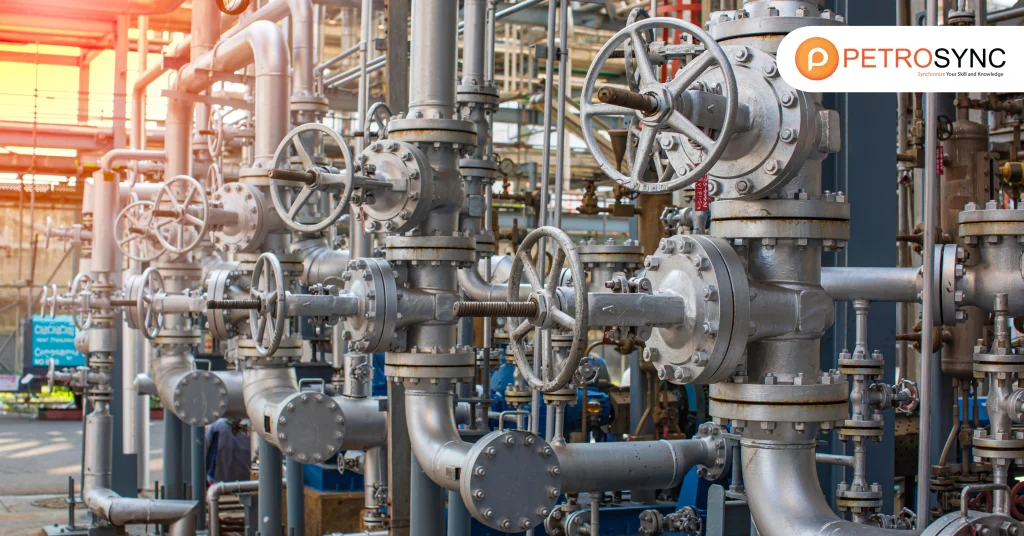 PetroSync offers a comprehensive API 579 Training program that combines expert instruction, practical exercises, and real-world case studies. The program ensures participants are prepared to:
- Perform FFS assessments accurately
- Identify and evaluate equipment degradation
- Recommend safe operation, repair, or replacement strategies
- Apply best practices aligned with international standards
Delivered by experienced global practitioners, the training provides participants with hands-on knowledge applicable to real operational challenges.
Advantages of Joining API 579 Training at PetroSync
1. Training Aligned with API 579 Standards & Fitness-for-Service Assessment Practices
PetroSync’s curriculum strictly follows API 579 guidelines, preparing participants for professional practice and certification.
2. Practical & Applied Case Study Approach
Participants work through real industry examples to develop problem-solving skills and apply theoretical concepts to practical situations.
3. Experienced Instructors from Global Industry Practitioners
Our trainers are seasoned engineers and inspectors with extensive international experience, offering insights drawn from real-world oil and gas operations.
4. Curriculum Aligned with International Standards & Best Practices
Training covers damage mechanisms, FFS evaluation, repair recommendations, and compliance, ensuring a holistic understanding of equipment integrity management.
5. Trusted by Energy Companies & Global Industries
PetroSync has a proven track record with leading oil, gas, and energy companies worldwide, ensuring quality and reliability in training delivery.
6. International Reputation as an Oil & Gas Training Provider
With years of experience in professional development and technical training, PetroSync is recognized as a trusted provider for global industry professionals seeking career advancement.
How Much Does API 579 Training Cost at PetroSync?
PetroSync’s API 579 Training is priced at $3,350 per participant, with sessions available in Kuala Lumpur, Malaysia, and Bandung, Indonesia.
This investment includes full access to the training program, practical exercises, real-world case studies, and expert guidance, ensuring participants leave with hands-on skills, knowledge for operational application, and readiness for FFS assessment certification.
Investing in this program strengthens your career prospects while enhancing operational safety, reliability, and compliance within your organization.
Advance Your Fitness-for-Service Career with API 579 Training at PetroSync
Enrolling in PetroSync’s API 579 Training program provides professionals with the skills and expertise needed to assess equipment integrity and make informed operational decisions.
Participants benefit from practical exercises, case studies, and guidance from global industry experts, equipping them to enhance safety, reduce risks, and optimize operational performance.
Advance your career and become a trusted expert in Fitness-for-Service assessment by joining PetroSync’s API 579 Training program, recognized globally for quality, reliability, and industry relevance.
Frequently Asked Questions (FAQ)
API 579 Training is a professional program that teaches engineers and inspectors how to perform Fitness-for-Service (FFS) assessments on pressure vessels, piping, and process equipment based on the API 579 standard.
API 579 Training helps professionals evaluate equipment integrity, detect corrosion or damage early, and prevent equipment failure, improving operational safety, reliability, and regulatory compliance.
The training covers Fitness-for-Service assessment methods, damage mechanisms such as corrosion and cracking, remaining life evaluation, MAWP calculations, failure assessment diagrams, and practical case studies.
API 579 Training is designed for pressure vessel engineers, piping engineers, inspectors, maintenance engineers, plant managers, and professionals involved in equipment integrity assessment in oil, gas, petrochemical, and chemical industries.
The API 579 Training program at PetroSync costs $3,350 per participant and includes expert instruction, practical exercises, and real-world case studies in locations such as Kuala Lumpur and Bandung.

Results-oriented and thorough SEO specialist with extensive experience in conducting keyword research, developing and implementing digital website promotion strategies and plans, managing campaigns to develop company websites in the digital world, excellent knowledge of marketing techniques and principles, and attentive strong attention to detail.