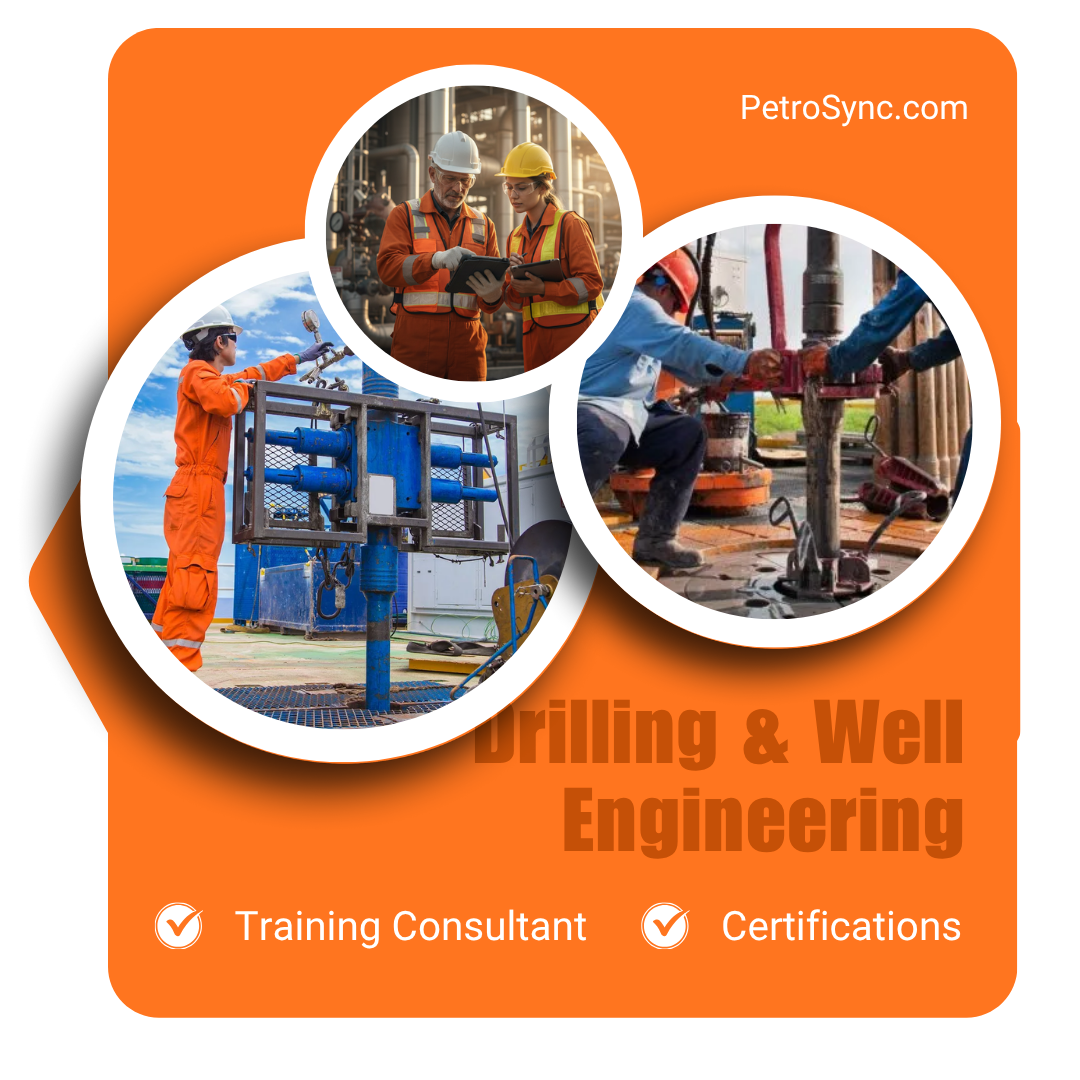



- Well Completion & Workover Training is a practical program that equips engineers to manage well performance, safety, and long-term production reliability.
- Proper completion and intervention strategies prevent productivity decline, equipment failure, and costly operational disruptions in challenging subsurface conditions.
- Engineers apply completion design, stimulation, and workover techniques to restore output, protect well integrity, and extend asset lifespan.
- The training improves safety awareness, regulatory compliance, and risk management in high-pressure, complex well operations.
- Participants learn to optimize equipment use, reduce downtime costs, and execute efficient field operations through real case studies and best practices.
In the oil and gas industry, drilling a well is only the beginning of a much longer production journey. After a well is drilled, it must be properly completed and maintained to ensure hydrocarbons can be produced safely, efficiently, and sustainably over time.
However, wells operate under challenging subsurface conditions. High pressure, fluctuating temperatures, formation damage, scaling, and mechanical wear can gradually reduce well productivity. Without proper completion design and effective intervention strategies, wells may experience declining performance, integrity issues, or even costly operational failures.
To address these challenges, engineers and field professionals must understand the principles behind well-completion systems, intervention techniques, and workover operations. These activities play a critical role in maintaining well integrity, restoring production performance, and extending the operational life of oil and gas wells.
This is why many industry professionals choose to strengthen their expertise through Well Completion & Workover Training. The program provides the technical knowledge and practical insights needed to plan, execute, and manage well-completion and intervention operations more effectively in modern oil and gas fields.
What is Well Completion & Workover Training?
In the oil and gas industry, drilling a well is only one part of the overall production process. Once drilling is completed, the well must be properly prepared to safely and efficiently produce hydrocarbons. This process is known as well completion, where equipment and systems are installed to control flow and ensure long-term production reliability.
Over time, however, wells may experience performance decline due to formation damage, mechanical issues, scaling, corrosion, or reservoir changes. When this occurs, operators perform workover operations to restore or improve well productivity.
Both completion and workover activities require careful engineering design, operational planning, and strict safety procedures. Any mistake during these stages can lead to production loss, equipment damage, environmental risks, or even well control incidents.
Well Completion & Workover Training provides a comprehensive understanding of completion techniques, well intervention strategies, equipment selection, and operational best practices used in modern oil and gas operations. Through this training, engineers and technical professionals gain practical knowledge to manage operations more safely, efficiently, and reliably.
Key Benefits of Mastering Well Completion & Workover Training for the Oil & Gas Industry
1. Improved Safety & Operational Reliability
Completion and workover operations involve high-pressure systems, specialized equipment, and complex procedures. Without proper knowledge and preparation, these operations may pose serious safety risks.
Well Completion & Workover Training helps professionals understand safe operational procedures, well control considerations, and equipment handling techniques, significantly improving safety performance and operational reliability.
2. Compliance with Industry Standards, Codes & Regulations
The oil and gas industry operates under strict technical standards and regulatory requirements. Completion and workover activities must comply with various engineering guidelines and safety regulations.
Through proper training, professionals gain a better understanding of industry standards, operational procedures, and regulatory expectations, ensuring that well operations are conducted responsibly and safely.
3. Reduced Asset Failure & Field Incident Risks
Improper completion design or poorly executed workover operations can lead to equipment failures, well integrity issues, and unexpected production disruptions.
By mastering completion and workover principles, engineers and technicians can identify potential operational risks early and implement preventive strategies to avoid costly field incidents.
4. Optimized Equipment Performance, Lifespan & Integrity
Well completion systems include components such as packers, tubing, valves, safety systems, and downhole tools. Proper selection and installation of these components are essential to ensure reliable production.
Well Completion & Workover Training helps professionals understand equipment functions, operational limitations, and maintenance considerations, allowing them to maximize equipment performance and lifespan.
5. Cost Efficiency in Operations, Maintenance & Downtime
Workover operations can be extremely expensive, especially when they involve rig mobilization, equipment replacement, or extended downtime. With the knowledge gained from this training, professionals can plan and execute more efficient completion and intervention strategies, helping organizations reduce operational costs and minimize production interruptions.

What is a Well Completion & Workover Training Objective?
The course is designed to focus on practical applications regarding:
1. Identify and understand the parameters that influence the selection and design of completion components.
2. Integrate the importance of the completion process into future production.
3. Deliver techniques to select the best tubing size and best materials for well completion.
4. Gain practical methods to design, plan, and install safe and efficient well completion and workover.
5. Manage well environments with extreme reservoir conditions (pressure, temperature, etc.)
6. Bridge the importance of well design in relation to the ability to carry out well intervention.
7. Explore new technological developments in well completions and workovers.
8. Plan an appropriate intervention and workover strategy to maintain or increase the field production.
9. Gain how to navigate sustainable and responsible oil and gas field development and production amid the energy transition.
What is Well Completion & Workover Training Outline?
1. Day 1
- Introduction
- Introduction of individual, professional background, etc.
- Aim / Objective of the course
- Individual expectation from the course
- Safety Alert
- Starter Quiz & Review
- Introduction to Completion Design
– Definition of well completion
– Oil and gas project life cycle
– Types of well completion
– Completion planning
– Workflow for successful well completion & workover
– Integrated approach to well completion - Concept of Darcy’s Law & SKIN
- Reservoir Completion:
– Well Performance
– Perforations - Well Stimulation
– Stimulation of the Sandstone reservoir
– Stimulation of Carbonate Reservoir - Introduction to completion design project
2. Day 2
- Reservoir Completion: Hydraulic Fracturing
- Class exercise: The objectives of the class exercise on hydraulic fracturing are as follows:
– Calculations on Fold of Increase (FOI) as a screening tool to select wells for hydraulic fracturing candidates.
– Calculations to compare acid frac versus propped frac in a carbonate reservoir - Sand control stimulation techniques:
– Causes of sand production
– Sand control design concepts - Class exercise: The objectives of the class exercise on sand control are as follows:
– Perforation gun selection
– Perforation cleaning
– Sand control design selection
– Gravel size selection
– Screen size selection - Tubing Performance
- Artificial Lift Methods
- Production Chemistry
- Problem Identification
- Class exercise: The objectives of the class exercise on well problem identification are as follows:
– Calculations on the effect of formation damage on well production
– Calculations on flow efficiency
– Use of production history to assess formation damage
– Stimulation of well candidate selection - Group work: Completion design project
3. Day 3
- Tubing Stress Analysis
- Purpose of Stress Analysis
- Stress Loads: stress/strain, axial loads, burst/
- collapse and tri-axial analysis
- Safety Factors and Design Factors
- Load Cases
- Completion Equipment and Connections
- Class exercise: The objectives of the class exercise on tubing stress analysis are as follows:
– Basic TSA calculations, including weight in air, buoyancy force, axial force due to bending, safety factors, collapse loads, tensile yield, internal yield pressure, etc.
– Tubing movements and tension calculations during well stimulation - Materials Selection:
– Metallurgy
– Corrosion triangle - Types of corrosion:
– Metallurgy
– Corrosion triangle - Types of corrosion:
– Sour corrosion (stress corrosion cracking, sulphide stress cracking, etc.)
– Sweet corrosion,
– Galvanic corrosion
– Erosion-corrosion, etc., - Corrosion prevention methods
- Elastomers and Plastics
- Protective Coatings
- Material selections for all types of wells: Sour, sweet, HPHT wells, etc
- NACE/ISO on material selection
- Completion Components
– OCTG selections
– Completion components and selections: Christmas tree, tubing hangers, downhole safety valve, packers, expansion devices, nipples, downhole gauges, etc. - Group work: Completion design project
4. Day 4
- Completion operation base preparation
– Equipment purchasing, manufacturing, and factory acceptance
– Service contracts
– Equipment preparation
– Technical program - Rig preparation and completion installation process
– Operation planning
– Equipment shipping/transportation
– Equipment reception
– Pre-job meeting
– Casing cleaning operation
– Running in hole the completion equipment
– Well clean-up
– Reporting
– After-action review - Emerging Techniques
– Fiber Optics: Distributed Temperature System (DTS), Pressure/ temperature (P/T), etc
– Intervention-less packers (Hydrostatic packers, swelling packers, etc.)
– In-situ self-generating weak acid
– Expandable tubulars
– Expandable Sand Screens (ESS)
– Sand Control in High-angle and long interval: Alternate path technology (SHUTS, CAPS, etc.)
– Formation Isolation Valves (FIV)
– Intelligent & Smart Well
– Completion: Interval Control Valves (ICV)
– Underbalanced Drilling & Completion
– Cased Hole Circulation Drilling & Completion
– Multistage Fracturing
– Group Work: Well Completion Design
5. Day 5
- Well Control:
- Well control Equipment:
– Blowout preventer system requirements
– Choke Manifold
– Circulating System - Kicks and their causes
- Well Killing Operations:
– Forward circulation
– Reverse circulation
– Bullheading
– Lubricate and Bleed - Class exercises on well control
- Workover Operations:
– Workover definition and description
– Workover Types:
– Safety Workover (SWO)
– Long-term suspension (LTS)
– Plug and Abandonment (P&A)
– Production enhancement (PE)
– Workover Feasibility Studies - Group presentation / General Review of the Well Completion Design Project
- Wrap up
Who Should Attend Well Completion & Workover Training Course?
The course is designed for, but not limited to:
- Completion Engineer /Supervisors /Superintendent
- Completions Team Led /Manager
- Well Services /Intervention Engineer /Supervisors
- Workover Engineer /Supervisors
- Petroleum Engineer
- Reservoir Engineer
- Drilling Engineer/Superintendent /Site Manager
- Oil and Gas industry Drilling/Completion/Intervention Service providers
Well Completion & Workover Training Program by PetroSync
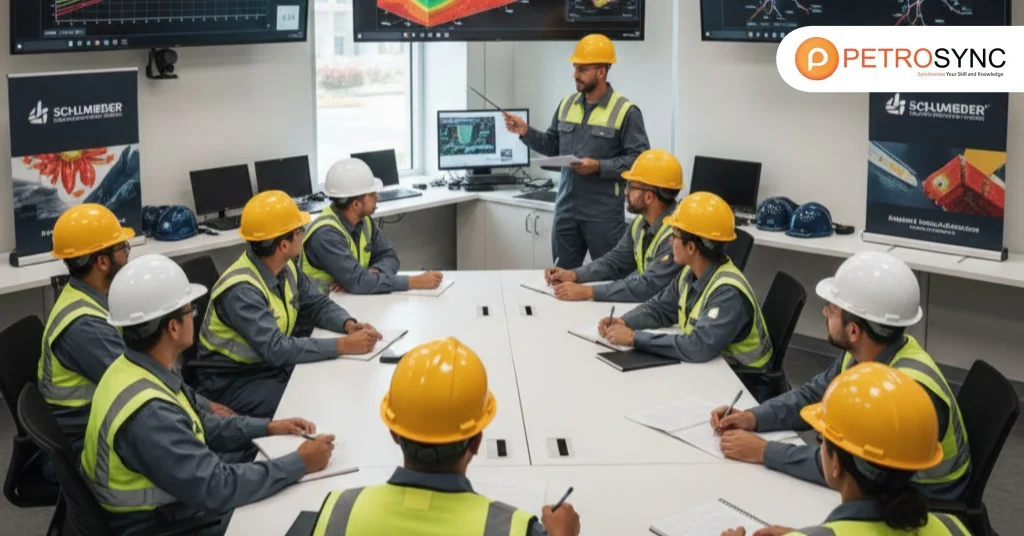
PetroSync offers a comprehensive Well Completion & Workover Training program designed to help professionals strengthen their understanding of well operations and intervention strategies in modern oil and gas fields.
The program combines engineering principles, operational case studies, and industry best practices to ensure participants gain knowledge that can be applied directly in real field environments.
Participants will learn how to:
- Understand completion system design and equipment selection
- Identify operational challenges affecting well productivity
- Plan and execute effective workover operations
- Improve well integrity and production performance
By the end of the training, participants will gain practical knowledge that supports safe, efficient, and reliable well operations.
Advantages of Joining Well Completion & Workover Training at PetroSync
1. Designed for Drilling & Well Operational Challenges
The training is specifically designed to address real operational challenges faced by drilling and well engineers, ensuring the knowledge gained is directly applicable to field operations.
2. Practical & Applied Case Study Approach
Participants learn through practical case studies and real industry scenarios, helping them understand how completion and workover challenges are solved in actual projects.
3. Experienced Instructors from Global Industry Practitioners
The program is delivered by experienced instructors with extensive international oil and gas industry backgrounds, providing valuable insights based on real operational experience.
4. Curriculum Aligned with International Standards & Best Practices
The training integrates global engineering standards and operational best practices, ensuring participants receive relevant and up-to-date technical knowledge.
5. Trusted by Energy Companies & Global Industries
PetroSync has built a strong reputation as a trusted training provider for energy companies and industrial organizations worldwide.
6. International Reputation as an Oil & Gas Training Provider
With extensive experience delivering professional training programs, PetroSync is recognized globally for high-quality technical education in the oil and gas industry.
How Much Does Well Completion & Workover Training Cost at PetroSync?
The Well Completion & Workover Training program at PetroSync is priced at $4,350 per participant, with training sessions available in Kuala Lumpur, Malaysia, Yogyakarta, Indonesia, Bangkok, Thailand, and Bali, Indonesia.
The program includes comprehensive course materials, expert instruction, practical discussions, and real industry case studies, ensuring participants receive a valuable and engaging learning experience.
Advance Your Drilling & Well Operation Expertise with Well Completion & Workover Training at PetroSync
Well completion and intervention operations play a crucial role in determining the productivity, safety, and long-term performance of oil and gas wells. Professionals who understand completion systems, well integrity, and intervention strategies are essential in ensuring that wells operate efficiently and reliably throughout their lifecycle.
By joining Well Completion & Workover Training at PetroSync, participants gain the expertise needed to optimize well performance, manage operational challenges, and improve production efficiency.
For engineers and technical professionals seeking to enhance their capabilities in drilling and well operations, this training provides the practical knowledge and industry insights necessary to advance their careers in the oil and gas sector.
Frequently Asked Questions (FAQ)
Well Completion & Workover Training is a specialized program that provides engineers and technical professionals with knowledge of well completion systems, intervention techniques, and workover operations. It focuses on ensuring safe, efficient, and reliable hydrocarbon production throughout a well’s lifecycle.
Well completion is essential because it prepares the well for production by installing equipment that controls flow and ensures long-term operational reliability. Without proper completion design, wells may face safety risks, reduced productivity, or premature failure.
Workover operations are interventions performed on existing wells to restore or improve production. They are needed when wells experience issues such as formation damage, scaling, corrosion, or mechanical failures that reduce performance or threaten well integrity.
This training is suitable for completion engineers, workover engineers, petroleum engineers, reservoir engineers, drilling engineers, and well intervention professionals. It is also beneficial for supervisors, managers, and service providers involved in well operations.
Participants gain practical knowledge of completion design, equipment selection, and workover strategies through real case studies and expert instruction. The program helps improve safety, optimize well performance, reduce operational risks, and enhance decision-making in modern oil and gas operations.

Results-oriented and thorough SEO specialist with extensive experience in conducting keyword research, developing and implementing digital website promotion strategies and plans, managing campaigns to develop company websites in the digital world, excellent knowledge of marketing techniques and principles, and attentive strong attention to detail.