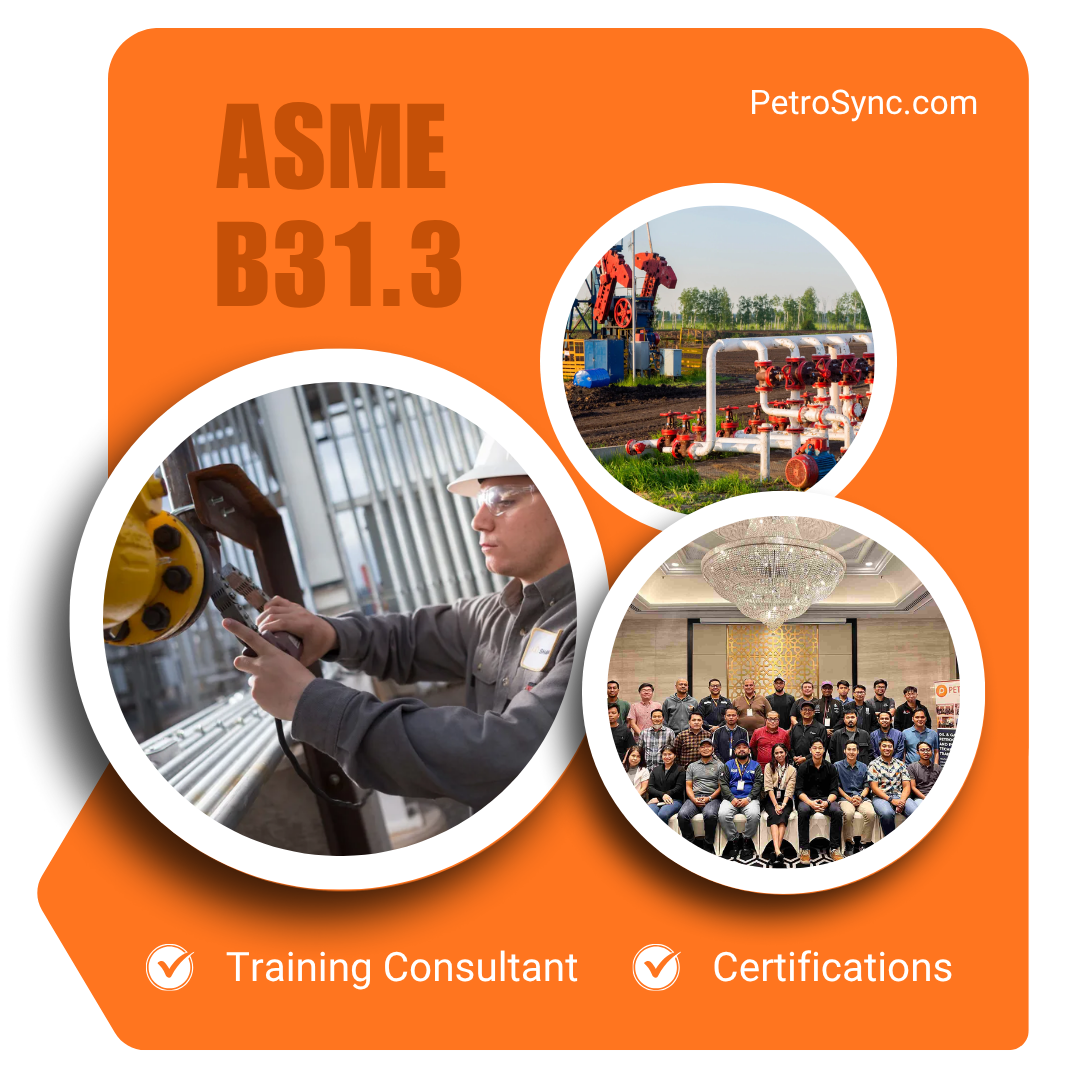


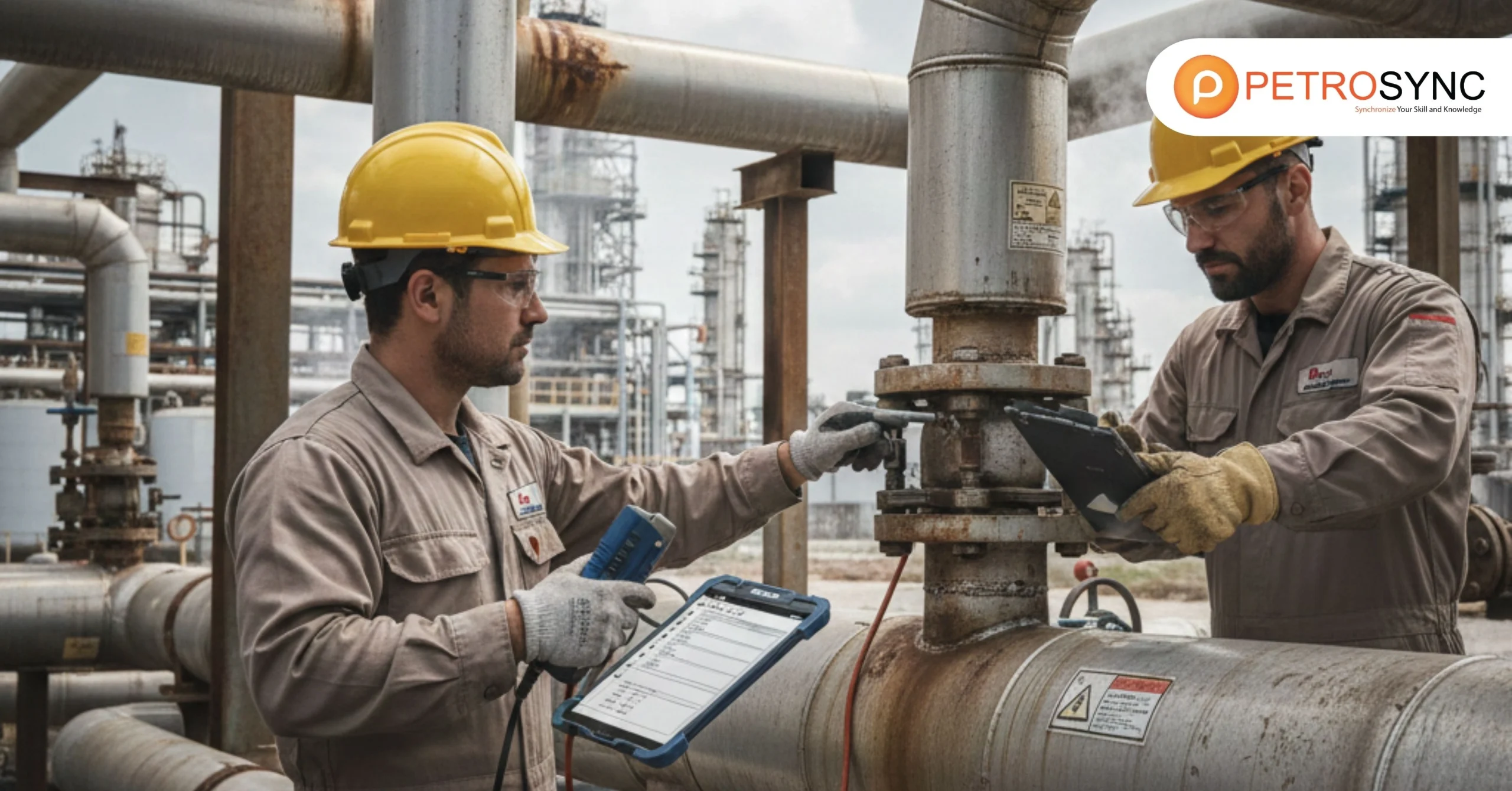
- ASME B31.3 Training is a professional program that teaches engineers to design, inspect, and maintain process piping systems safely using globally recognized standards.
- Mastering the ASME B31.3 code helps prevent leaks, ruptures, and system failures while improving operational safety and reliability in complex piping networks.
- Learn practical skills like stress analysis, material selection, pressure testing, and piping flexibility through real-world engineering case studies.
- Proper piping design and inspection reduce downtime, extend equipment lifespan, and help companies control maintenance and operational costs.
- PetroSync delivers hands-on training led by global industry practitioners, combining code knowledge with practical applications used in real facilities.
In the oil and gas industry, piping systems are among the most critical components for safe and efficient operations. These systems handle high-pressure fluids, corrosive chemicals, and extreme temperatures, making their design, maintenance, and inspection essential to ensure operational safety and compliance.
Professionals involved in piping design, inspection, and maintenance require specialized knowledge of industry codes, standards, and best practices to avoid failures, minimize downtime, and ensure the integrity of complex piping networks. This is where ASME B31.3 Training becomes indispensable.
ASME B31.3 is the Process Piping Code widely used in the oil, gas, petrochemical, and chemical industries. Training in this standard provides participants with the skills and expertise to design, inspect, and maintain piping systems according to international codes, enhancing operational reliability, safety, and efficiency.
What is ASME B31.3 Training?
ASME B31.3 Training is a professional development program focused on process piping design, fabrication, inspection, and maintenance in compliance with the ASME B31.3 Process Piping Code.
It covers fundamental and advanced concepts related to piping materials, design criteria, pressure ratings, welding standards, and inspection methods. During the training, participants learn how to apply the ASME B31.3 code in practical scenarios, including:
- Selection of appropriate materials and components
- Pressure drop calculations and stress analysis
- Design of piping supports, expansion loops, and flexibility analysis
- Inspection, testing, and documentation of process piping systems
By the end of the program, participants are equipped with hands-on knowledge to ensure piping systems operate safely and efficiently while complying with international standards.
Key Benefits of Mastering ASME B31.3 Training for the Oil & Gas Industry
1. Improved Safety & Operational Reliability
ASME B31.3 Training equips professionals to identify potential design flaws, operational risks, and maintenance issues in process piping systems. By applying these skills, companies can prevent leaks, ruptures, and other failures, ensuring safer and more reliable operations.
2. Compliance with Industry Standards, Codes & Regulations
Knowledge of the ASME B31.3 code ensures that all piping design, fabrication, and inspection activities comply with regulatory requirements and international standards. Compliance reduces legal and operational risks while supporting corporate governance and quality assurance.
3. Reduced Asset Failure & Field Incident Risks
Proper understanding of piping stress, material properties, and code requirements minimizes the risk of asset failure and field incidents. Trained professionals can detect issues early and implement preventive actions, reducing unplanned shutdowns and costly emergency repairs.
4. Optimized Equipment Performance, Lifespan & Integrity
Application of ASME B31.3 principles allows for accurate stress analysis, proper material selection, and optimized piping layout, ensuring that systems perform efficiently, maintain structural integrity, and have a longer operational life.
5. Cost Efficiency in Operations, Maintenance & Downtime
By designing and maintaining piping systems according to ASME B31.3, companies can reduce downtime, avoid unnecessary maintenance, and allocate resources more effectively. This results in significant cost savings without compromising safety or compliance.

What Is ASME B31.3 Training Objective?
- Familiarize participants with the organization and intent of the B 31.3 code
- Know how to read the code and interpret its stated and implied requirements
- What issues should be taken into consideration when designing process piping
- Pressure design of piping and piping components
- How to analyze piping flexibility and gauge the limitations of piping and piping components
- Provide participants step-by-step approach to piping design, including the design optimization techniques.
- Introduce participants to various material selection, fabrication, erection, and testing of piping systems.
- Be able to understand the mandatory requirements, specific prohibitions, and optional stipulations given in the code and other service restrictions on Piping systems.
- How to conduct and certify the pressure testing.
- Understand principles of piping integrity assessments as per API 570 and make run-repair-replace decisions.
- Know how to calculate the Remaining life and MAWP of the piping system
What is ASME B31.3 Training Outline?
1. Day 1
- Objectives and intent of ASME B 31.3 Code
- ASME B 31.3 Scope and applicability
- Understanding of the Codes, what means SHALL, SHOULD & MAY in Code
- Code contents, Stated & implied stipulations in the Code
- What are the design conditions, design pressure & design temperature
- What are the various fluid services generally encountered
- Definitions of Category D, M, U, Normal, and High Pressure Services
- Concept of Weld Strength Reduction Factor
- Weld Quality Factor
- Allowable stresses and the basis for their calculations
- Design of piping components for internal pressure
2. Day 2
- Design of piping components for External pressures.
- Design of branch connections –reinforcements
- Selection of Flanges
- Design of pipe fittings such as elbows, tees, and blanks
- Service Considerations in Design
- Flexibility considerations
- Case studies in flexibility calculations
- Methods to incorporate flexibility in Piping systems
- U – loops, Expansion Joints
3. Day 3
- Extensive case studies on Piping Design
- Piping Span Calculations
- Selection of Supports and Hangers
- Material Identification, Certification, and Traceability
- Code accepted Materials and material testing
- Listed, unlisted materials
- General requirements to be checked before the selection of Material
- Limitations imposed by code on materials
- Impact testing requirements
- Acceptance Criteria as per ASME B 31.3
4. Day 4
- Design interface with Fabrication, Assembly, and Erection
- Code requirement for preheating and PWHT
- Design interface with Inspection, Examination, and Testing
- How to Conduct and Certify Pressure Testing.
- Hydrostatic testing of the piping system
- Pneumatic testing of the piping system
- Service leak test
- NDT in lieu of leak test
- Case studies
5. Day 5
- Additional Code requirements for special fluid services
- Specific Design Requirements for Toxic Fluid (M Category) services
- Design Requirements for High-Pressure Fluid Services
- Design Requirements for High Purity (U category) Fluid Services
- Design Requirements for High-Pressure ( Category K) Fluid Services
- Overview of flanges as per ASME B 16.5
- Piping integrity assessments as per API 570
- Making run-repair-replace decisions.
- Calculation of the remaining life and MAWP of the piping system
- Real-world examples and case studies
Who Should Attend the ASME B31.3 Training Course?
Ideally suited for Piping engineers and designers, Plant engineers who need an understanding of the requirements for compliance with the Code for piping design and analysis, and testing. Managers, Engineers, Supervisors, and Plant operation personnel who work in Refineries, Petrochemical plant, and other process industries will find this course immensely useful.
Each attendee must bring a Laptop computer with the Microsoft operating system and a scientific calculator
ASME B31.3 Training Program by PetroSync
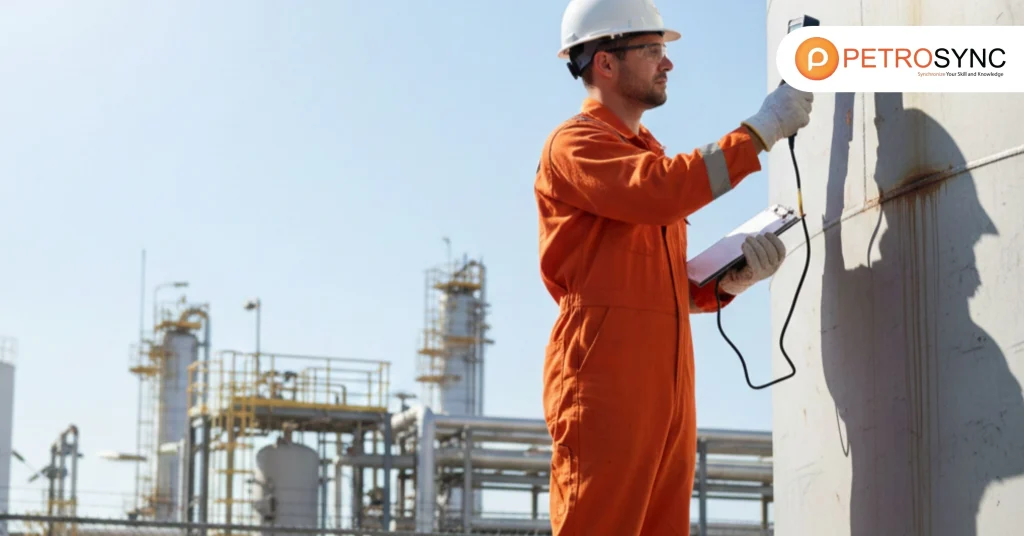 PetroSync offers a comprehensive ASME B31.3 Training program designed to bridge the gap between theory and practice. Participants learn to design, inspect, and maintain process piping systems in compliance with ASME B31.3, supported by:
- Practical exercises and case studies from real industry operations
- Guidance from experienced global practitioners with extensive engineering and inspection experience
- Hands-on learning focused on stress analysis, material selection, and inspection practices
This approach ensures that participants gain actionable skills applicable to operational challenges, preparing them for improved performance and career advancement.
Advantages of Joining ASME B31.3 Training at PetroSync
1. Based on ASME Code & Real Engineering Applications
Training strictly follows ASME B31.3 standards while incorporating practical applications to ensure participants are ready for real-world operations.
2. Practical & Applied Case Study Approach
Learn from actual scenarios in oil, gas, and petrochemical facilities, applying code requirements to real engineering challenges.
3. Experienced Instructors from Global Industry Practitioners
Instructors are seasoned engineers and inspectors with international experience, providing insights rooted in operational realities.
4. Curriculum Aligned with International Standards & Best Practices
Training covers materials, design, inspection, stress analysis, and maintenance planning, ensuring global best practices are integrated into learning.
5. Trusted by Energy Companies & Global Industries
PetroSync has a proven track record with leading oil, gas, and energy companies, reinforcing the credibility of its training programs.
6. International Reputation as an Oil & Gas Training Provider
Recognized worldwide, PetroSync is a trusted provider of technical training for professionals seeking to advance their expertise and careers.
How Much Does ASME B31.3 Training Cost at PetroSync?
PetroSync’s ASME B31.3 Training is priced at $3,350 per participant, with sessions available in Kuala Lumpur, Malaysia, and Bandung, Indonesia. The fee includes full access to the training program, course materials, practical exercises, real industry case studies, and guidance from global instructors.
Participants leave the program with hands-on knowledge and skills ready to apply in operational environments and enhance career opportunities. Investing in this training strengthens career growth, operational reliability, and compliance in your organization’s piping systems.
Advance Your Engineering Career with ASME B31.3 Training at PetroSync
Enrolling in PetroSync’s ASME B31.3 Training program allows professionals to gain critical expertise in process piping design, inspection, and maintenance. Through practical exercises, real-world case studies, and expert guidance, participants develop skills to ensure safety, reliability, and efficiency in piping operations.
Advance your career and become a trusted expert in process piping systems by joining PetroSync’s ASME B31.3 Training program, recognized globally for quality, reliability, and industry relevance.
Frequently Asked Questions (FAQ)
ASME B31.3 training is a professional program focused on process piping design, fabrication, inspection, and maintenance based on the ASME B31.3 Process Piping Code. It is essential for the oil and gas industry because piping systems operate under high pressure, extreme temperatures, and corrosive conditions. The training helps engineers and inspectors understand code requirements, reduce operational risks, and ensure piping systems meet international safety and compliance standards.
ASME B31.3 training is designed for piping engineers, piping designers, plant engineers, inspection engineers, supervisors, and operations personnel working in refineries, petrochemical plants, and other process industries. Managers and technical professionals responsible for piping design, analysis, inspection, and maintenance can also benefit from the course to improve compliance with industry standards.
ASME B31.3 training typically covers piping design conditions, pressure and temperature calculations, material selection, welding standards, piping stress and flexibility analysis, branch connection design, piping supports, inspection and testing procedures, and pressure testing methods. The course also includes case studies, piping integrity assessments based on API 570, and calculations for remaining life and maximum allowable working pressure (MAWP).
Mastering ASME B31.3 helps engineers design and maintain safer piping systems while ensuring compliance with international standards. For companies, it reduces the risk of leaks, failures, and unplanned shutdowns. It also improves asset reliability, extends equipment lifespan, enhances operational efficiency, and lowers maintenance costs by applying proper piping design and inspection practices.
The ASME B31.3 training program at PetroSync costs approximately $3,350 per participant. The fee includes full access to the five-day training program, course materials, practical exercises, and real industry case studies led by experienced global instructors. The training is typically held in locations such as Kuala Lumpur, Malaysia, and Bandung, Indonesia.

Results-oriented and thorough SEO specialist with extensive experience in conducting keyword research, developing and implementing digital website promotion strategies and plans, managing campaigns to develop company websites in the digital world, excellent knowledge of marketing techniques and principles, and attentive strong attention to detail.

Business Development Manager at PetroSync with 12+ years of experience in professional training and business development across the energy and industrial sectors.