

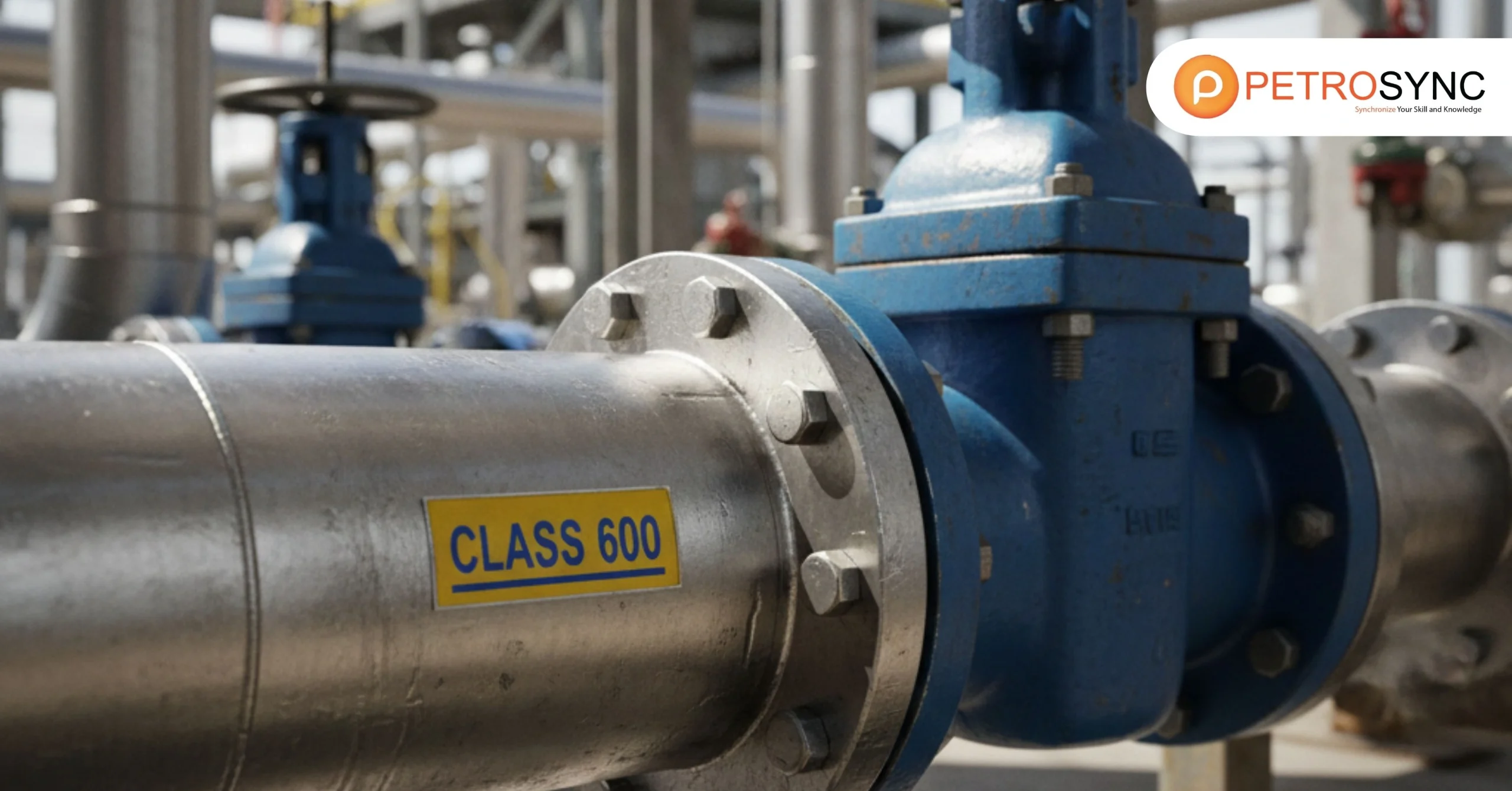
Piping Classes play a crucial role in ensuring the safety, reliability, and efficiency of piping systems in oil and gas operations. Even minor mistakes in material selection or pressure rating can cause costly downtime, operational delays, or serious safety hazards. These structured frameworks guide design, procurement, and maintenance, helping organizations maintain robust and code-compliant piping networks.
For senior engineers, managers, and executives, mastering piping classes goes beyond technical knowledge—it is a strategic approach to reducing risk, optimizing operations, and driving long-term value.
What Are Piping Classes?
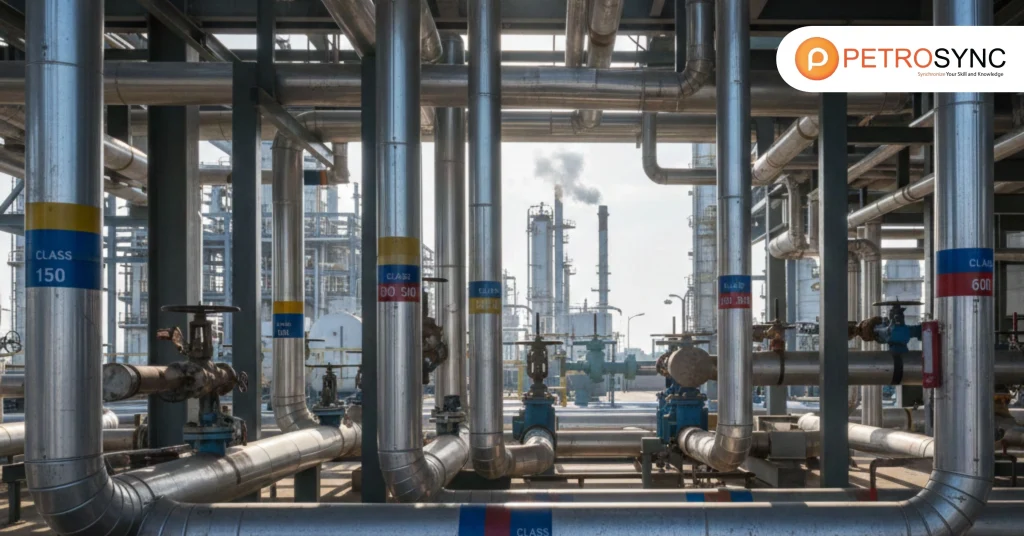
Piping classes is essentially a document that contains the definition of pipes and its related components to be used on a specific pressure or temperature condition. They follow the standardized specifications that outline the design, construction, materials, and testing requirements for piping systems used in various industries such as oil and gas, petrochemicals, and power generation.
The standardized specifications ensure consistency and quality across different piping projects. They define parameters like pipe size, wall thickness, material composition, and pressure ratings to ensure the safe and efficient operation of piping systems. Piping classes help engineers, designers, and fabricators understand the specific requirements for each component of a piping system, facilitating proper installation and maintenance.
What Do Piping Classes Consist of?
A piping class usually includes the following:
1. Process Design Conditions
Piping classes typically include information about the process design conditions, which outline the specific parameters under which the piping system will operate. This includes details such as the fluid type, temperature, pressure, flow rates, and any other relevant process requirements.
Understanding these design conditions is crucial for selecting the appropriate materials, sizing the pipes correctly, and ensuring the overall integrity and performance of the piping system.
2. Corrosion Allowance
Piping classes define corrosion allowance, an added pipe wall thickness to protect against corrosion throughout operation.Corrosion can weaken pipes and compromise their integrity, leading to leaks or failures.
Adding corrosion allowance keeps piping structurally safe in corrosive environments, extends service life, and minimizes unexpected maintenance.
3. List of Piping Components
Piping classes ensure all required components—pipes, fittings, valves, and flanges—are specified accurately to meet design and process needs.
4. Branch Table
The piping class branch table outlines the various branch connections engineers may need in the piping system, including tees, reducers, and other types of junctions. This table provides information such as the size, type, and location of each branch connection, helping to ensure proper configuration and layout of the piping system.
By specifying branch connections in advance, engineers can optimize the design for efficient fluid flow and minimize the risk of pressure drops or other performance issues.
5. Special Assemblies
Piping classes may also include specifications for special assemblies or configurations that are required for specific applications or operating conditions. These could include things like expansion joints, strainers, filters, or other specialized components that are necessary to meet the unique needs of the process or facility. By incorporating these special assemblies into the piping design, engineers can ensure that the system operates safely and efficiently under all foreseeable circumstances.
6. Support Notes
Lastly, piping classes typically include support notes that guide the installation, maintenance, and support of the piping system. This may include information on recommended support spacing, methods for anchoring and bracing the pipes, and procedures for inspecting and maintaining the system over time. Proper support and maintenance are essential for ensuring the long-term reliability and performance of the piping system, and the support notes help to ensure that these requirements are met.

Why Are Piping Classes and Specifications Important?
Here are why piping classes and specifications important
1. Customization and Special Requirements
Piping classes and specifications allow purchasers to incorporate specific requirements tailored to the design and service conditions of their project. This customization ensures that the piping system meets the unique needs and standards of the particular application, enhancing performance, reliability, and safety.
2. Ensuring Compliance and Quality
By specifying requirements in the piping classes and specifications, it becomes mandatory for the product to meet these standards. Manufacturers and installers follow industry regulations and best practices to ensure piping components meet safety, environmental, and performance standards.
3. Streamlining Engineering Processes
Having predefined piping classes and specifications streamlines the engineering process by providing clear guidelines and standards for the design, procurement, fabrication, and installation of piping systems. This reduces the risk of errors, delays, and rework during the project lifecycle, resulting in cost savings and improved efficiency.
4. Utilizing Established Standards
Oil and gas facilities use proven specifications, adopted from industry leaders or developed during FEED, to ensure consistency, quality, and interoperability. Piping classes ensure customization, compliance, quality, and efficiency, enabling safe, reliable, and cost-effective piping system operations across industries.
What Is Class A and Class B Pipe?
Class A and Class B pipes are labels that describe how much pressure and heat a pipe can handle. The key difference between them is their ability to withstand pressure and temperature, as well as the thickness of the pipe walls.
Class A pipes have lower pressure-temperature ratings compared to Class B pipes. Engineers typically use Class A pipes for applications with low pressure and low temperature, whereas they choose Class B pipes for situations requiring high pressure and high temperature.
The wall thickness of Class A pipes is lesser than that of Class B pipes. Manufacturers and installers ensure compliance with safety, environmental, and performance standards by adhering to industry regulations and best practices.” Class A pipes, handling lower pressure and temperature loads, require thinner walls for adequate strength, while Class B pipes, designed for higher pressure and temperature loads, necessitate thicker walls.
To sum up, the primary differences between Class A and Class B pipes are their pressure-temperature ratings and wall thickness. Class A pipes serve low-pressure, low-temperature applications, whereas Class B pipes cater to high-pressure, high-temperature environments.
What Are Class 1 and Class 2 Pipes?
According to the International Maritime Organization (IMO), Class 1 pipes are typically needed for substances that can cause corrosion. Class 2 pipes can handle corrosive materials, but they require extra precautions to prevent leaks and reduce possible harm.
These precautions might include using pipe ducts, shields, or screens to contain leaks and prevent damage to nearby areas. Class 3 pipes are not suitable for use with corrosive substances. Engineers must carefully select materials for piping systems that handle corrosive substances to ensure proper suitability.
What Are The International Standards for Piping?
As piping holds vital role across industries, there are quite a lot standards discussing about piping:
1. ASME B31.3
ASME B31.3 is a widely recognized international standard developed by the American Society of Mechanical Engineers (ASME). It provides guidelines for the design, construction, and maintenance of process piping systems. This standard defines materials, fabrication, inspection, testing, and safety requirements for piping systems in oil and gas, chemical, and power industries.
2. API 570
API 570 is another prominent international standard established by the American Petroleum Institute (API). API 570 governs inspection, repair, alteration, and rerating of in-service piping systems to maintain integrity, safety, and regulatory compliance.
3. ASTM A106
The American Society for Testing and Materials (ASTM) developed ASTM A106 as a widely used international standard. It specifies seamless carbon steel pipe for high-temperature service in industries such as oil refineries, petrochemical plants, and power plants. ASTM A106 covers dimensions, mechanical properties, and testing requirements for seamless carbon steel pipes used in high-temperature and high-pressure applications.
International standards ensure quality, safety, and reliability of piping systems, promoting consistency, compliance, and efficient industrial operations globally.
Understanding piping classes and specifications is essential for piping engineers and designers. These standards provide clear guidelines for designing, constructing, and maintaining piping systems, ensuring they meet industry regulations and function effectively. By following these standards, engineers can enhance the safety, reliability, and efficiency of piping systems, benefiting industrial operations.
Moreover, participating in training programs like ASME B31.3 training and API 570 training offered by PetroSync is highly beneficial for piping professionals like you. Our programs offer practical knowledge and skills relevant to piping system design, inspection, and maintenance, aligning with international standards. Joining these training courses helps you gain key insights, master industry best practices, and advance your piping engineering career.. Don’t miss the chance to expand your expertise by enrolling in ASME B31.3 and API 570 training with PetroSync.

Results-oriented and thorough SEO specialist with extensive experience in conducting keyword research, developing and implementing digital website promotion strategies and plans, managing campaigns to develop company websites in the digital world, excellent knowledge of marketing techniques and principles, and attentive strong attention to detail.