

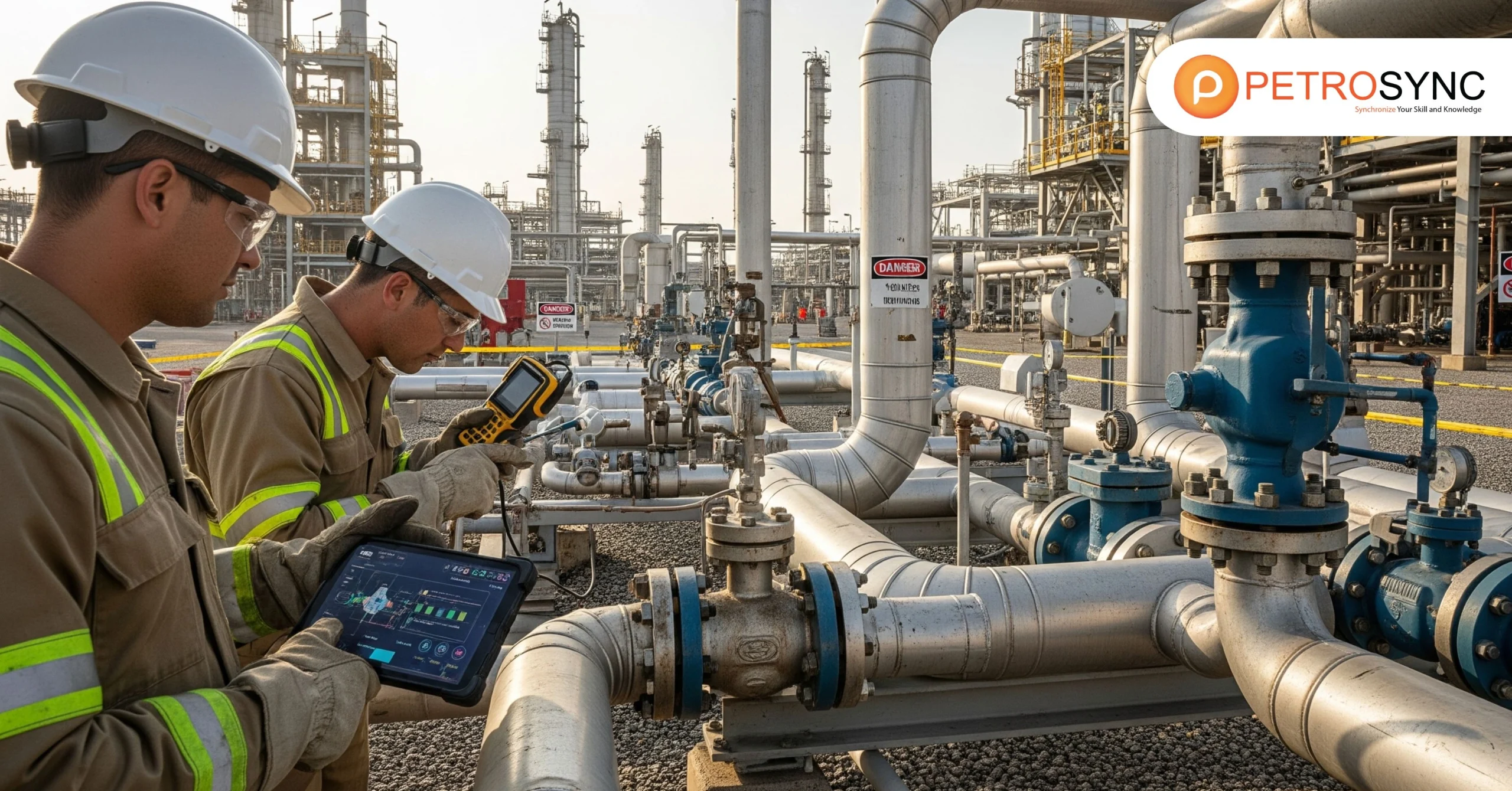
Piping Engineering Services play a vital role in ensuring the success of industrial projects. They provide the precision, safety, and long-term reliability needed for facilities where piping systems act as the arteries—transporting fluids, gases, and chemicals that keep operations running. Because of their complexity, piping systems demand more than just design work.
They require specialized engineering services that ensure safety, compliance, and optimized performance. This is where Piping Engineering Services prove their value, turning ambitious industrial plans into measurable results.
Bringing together the expertise of engineers, inspectors, fabricators, and maintenance specialists, Piping Engineering Services give organizations a structured path to achieve operational excellence. From oil and gas to petrochemical, power generation, and manufacturing, these services transform the way projects are executed and maintained.
What Are Piping Engineering Services?
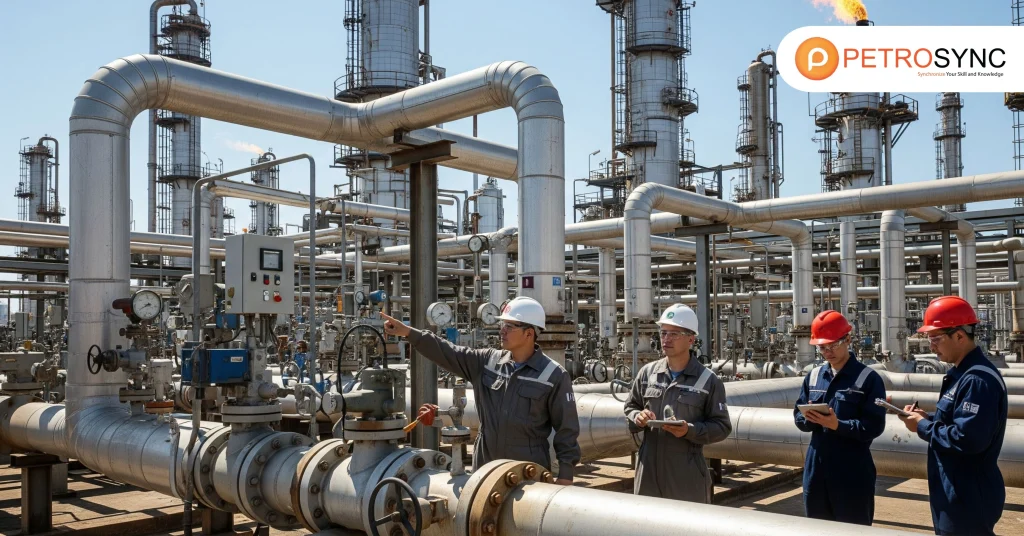
Piping Engineering Services encompass the full spectrum of activities involved in planning, designing, executing, and maintaining piping systems within industrial projects. Their scope goes beyond drawings and calculations. They integrate design, stress analysis, material selection, fabrication, installation, inspection, testing, and ongoing maintenance.
To illustrate:
- Design and Analysis ensures systems can safely handle fluid pressure, thermal expansion, and seismic loads.
- Fabrication and Installation translate designs into physical systems, with precision welding and dimensional accuracy.
- Inspection and Testing verify that systems meet regulatory codes before and during service.
- Maintenance ensures long-term reliability by addressing wear, corrosion, or fatigue issues.
These services ensure that every piping component—from valves to pressure vessels—operates under safe conditions and in compliance with regulatory standards. Their role is crucial not only for technical integrity but also for achieving project milestones without costly delays. In industries where downtime translates to millions in losses, Piping Engineering Services serve as the protective shield against operational risks.
Why Are They Critical in Industrial Projects?
Industrial projects demand large investments, strict timelines, and uncompromising safety measures. Any failure in piping systems can cause operational shutdowns, regulatory penalties, and reputational damage. By relying on expert Piping Engineering Services, organizations safeguard their assets against these risks.
For example, in a petrochemical facility, a poorly designed piping layout can lead to excessive vibration, ultimately resulting in fatigue failure. Such failures not only endanger workers but can also halt operations for weeks. With professional engineering services, these risks are mitigated early through modeling, simulation, and risk-based inspection planning.
These services provide a structured framework that aligns technical design with practical execution. They not only guarantee compliance with codes and standards but also enhance asset life cycles, reduce downtime, and increase productivity.
A global management consulting study highlighted that companies integrating robust engineering and maintenance strategies can improve operational efficiency by up to 30%. This underscores why Piping Engineering Services are not an optional add-on but a strategic necessity.
How Do Piping Engineering Services Improve Project Results?
The effectiveness of Piping Engineering Services lies in their ability to create tangible, measurable impacts across projects. Their contributions can be observed in three critical areas:
1. Ensuring Safety and Regulatory Compliance in Piping
Safety is always the top priority. With engineered piping designs and in-service inspections, risks of leaks, bursts, or catastrophic failures are minimized. By adhering to standards such as API 570 and ASME B31.3, organizations reduce exposure to safety hazards while maintaining compliance with local and international regulations.
2. Boosting Project Efficiency through Engineering Accuracy
Accurate designs lead to efficient project execution. Stress analysis, proper material selection, and optimized layouts ensure that piping systems integrate seamlessly into facilities.
This reduces costly rework, shortens construction time, and improves resource utilization. In practice, companies that adopt advanced 3D modeling and digital twin approaches can reduce rework by as much as 20%, leading to significant cost savings.
3. Strengthening Long-Term Asset Integrity
Well-engineered piping systems sustain long-term performance. Services such as corrosion monitoring, preventive maintenance, and risk-based inspections extend the lifecycle of assets, resulting in lower total cost of ownership.
A study on asset integrity management found that applying proactive inspection and maintenance strategies can reduce overall maintenance costs by 10–15% while improving plant uptime.
What Makes Piping Engineering Services Reliable and Effective?
Reliable services stand apart through their technical excellence and integrated approach. The following elements define their effectiveness:
1. Smart Piping Design and Stress Analysis
Modern engineering leverages advanced tools such as finite element analysis (FEA) and computational fluid dynamics (CFD). These tools simulate operational conditions, predicting system behavior under pressure, temperature changes, and seismic activity. This proactive approach ensures safety before construction even begins.
2. Compliance with API 570 and ASME B31.3 Standards
Industry standards provide the foundation for trust. Adherence to these codes ensures that piping systems meet global benchmarks for safety, design, and inspection. Compliance also simplifies audits and minimizes the risk of penalties or legal issues.
3. Precise Fabrication, Installation, and Testing
From shop fabrication to on-site installation, precision is key. Reliable services ensure weld quality, dimensional accuracy, and rigorous testing before commissioning. Hydrostatic testing, non-destructive testing (NDT), and pressure test confirm that the system can handle real-world operational stresses.
4. Integrated Maintenance Planning and Documentation
Effective services extend beyond project completion. Detailed documentation, preventive maintenance schedules, and risk-based inspections ensure that the system’s health is monitored throughout its lifecycle. This not only improves safety but also provides decision-makers with clear data for optimizing operational costs.
Why API 570 and ASME B31.3 Are Key to Quality Piping Engineering Services
1. API 570 – In-Service Inspection and Risk-Based Approach
API 570 sets the framework for inspecting piping systems in service, focusing on risk-based methods to prioritize inspections. This approach maximizes safety while optimizing inspection resources. By concentrating on high-risk components, companies can allocate budgets more effectively and avoid unnecessary downtime.
2. ASME B31.3 – Safe Design and Construction of Process Piping
ASME B31.3 governs the design and construction of process piping systems. It establishes rules to ensure systems can safely handle the intended pressures, temperatures, and chemical environments. Compliance with B31.3 not only ensures safety but also enhances confidence during audits and international collaborations.
3. Real-World Integration in Piping Engineering Services
Together, these standards bridge design with operations. By embedding API 570 and ASME B31.3 into engineering practices, companies gain both compliance and long-term reliability. For managers and senior executives, this translates into reduced risks, predictable costs, and higher stakeholder confidence.
Case studies in refineries and LNG facilities show that projects governed under these standards experience fewer shutdowns and lower lifetime maintenance costs.
Join PetroSync’s API 570 & ASME B31.3 Training to Strengthen Your Piping Engineering Services
To maximize results, professionals must go beyond theory and gain hands-on mastery of standards that define piping excellence. PetroSync’s specialized training on API 570 and ASME B31.3 provides exactly that. Through interactive sessions, real-world case studies, and expert-led discussions, you will learn how to:
- Apply API 570’s risk-based inspection strategies to enhance safety and efficiency.
- Implement ASME B31.3’s design rules for reliable and compliant piping systems.
- Translate engineering knowledge into practical decisions that improve project outcomes.
For senior professionals, managers, and executives, this training is more than a certification—it’s an investment in delivering projects that meet global standards while achieving sustainable growth. By strengthening your team’s technical capabilities, you not only secure better project outcomes but also build resilience against future operational challenges.

Results-oriented and thorough SEO specialist with extensive experience in conducting keyword research, developing and implementing digital website promotion strategies and plans, managing campaigns to develop company websites in the digital world, excellent knowledge of marketing techniques and principles, and attentive strong attention to detail.