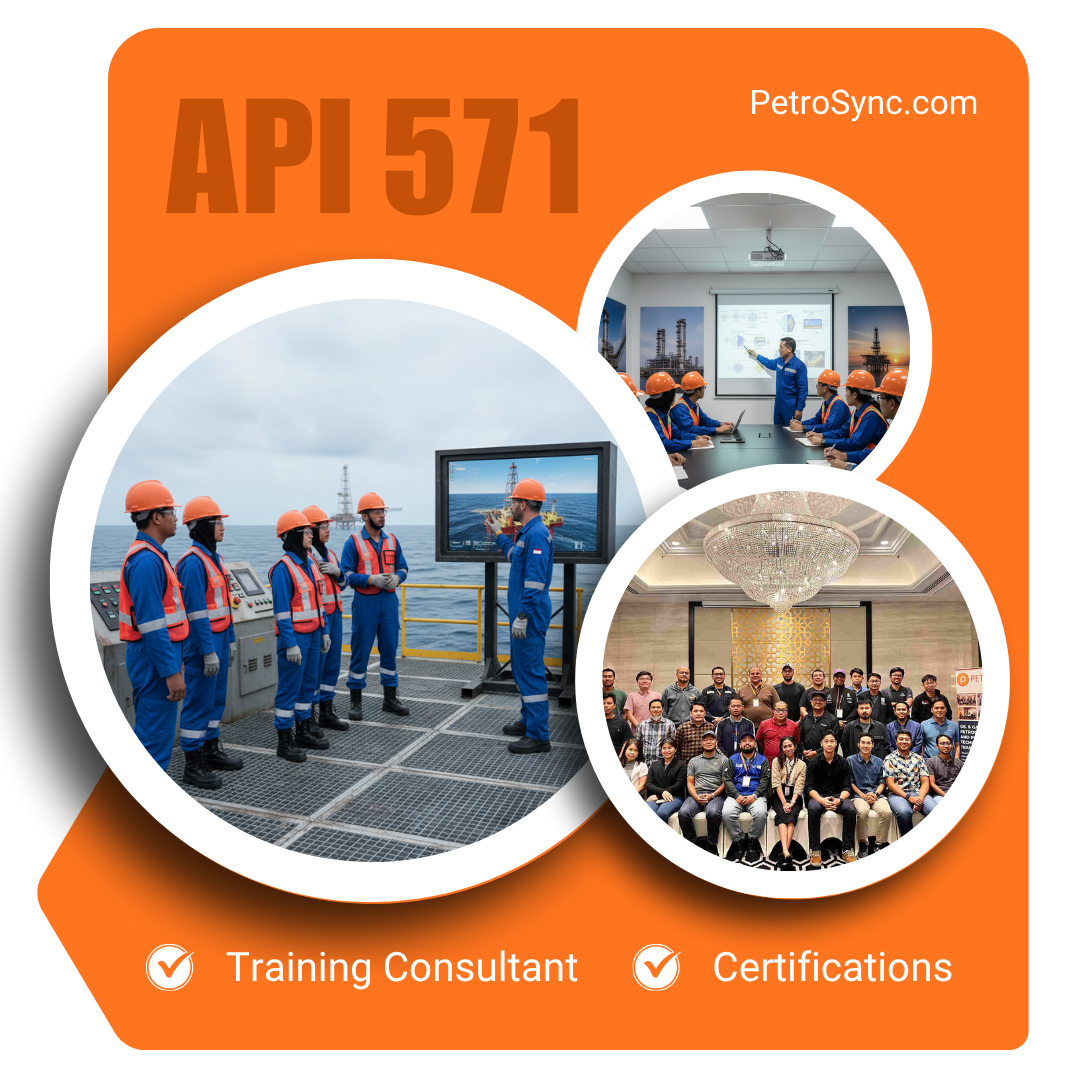


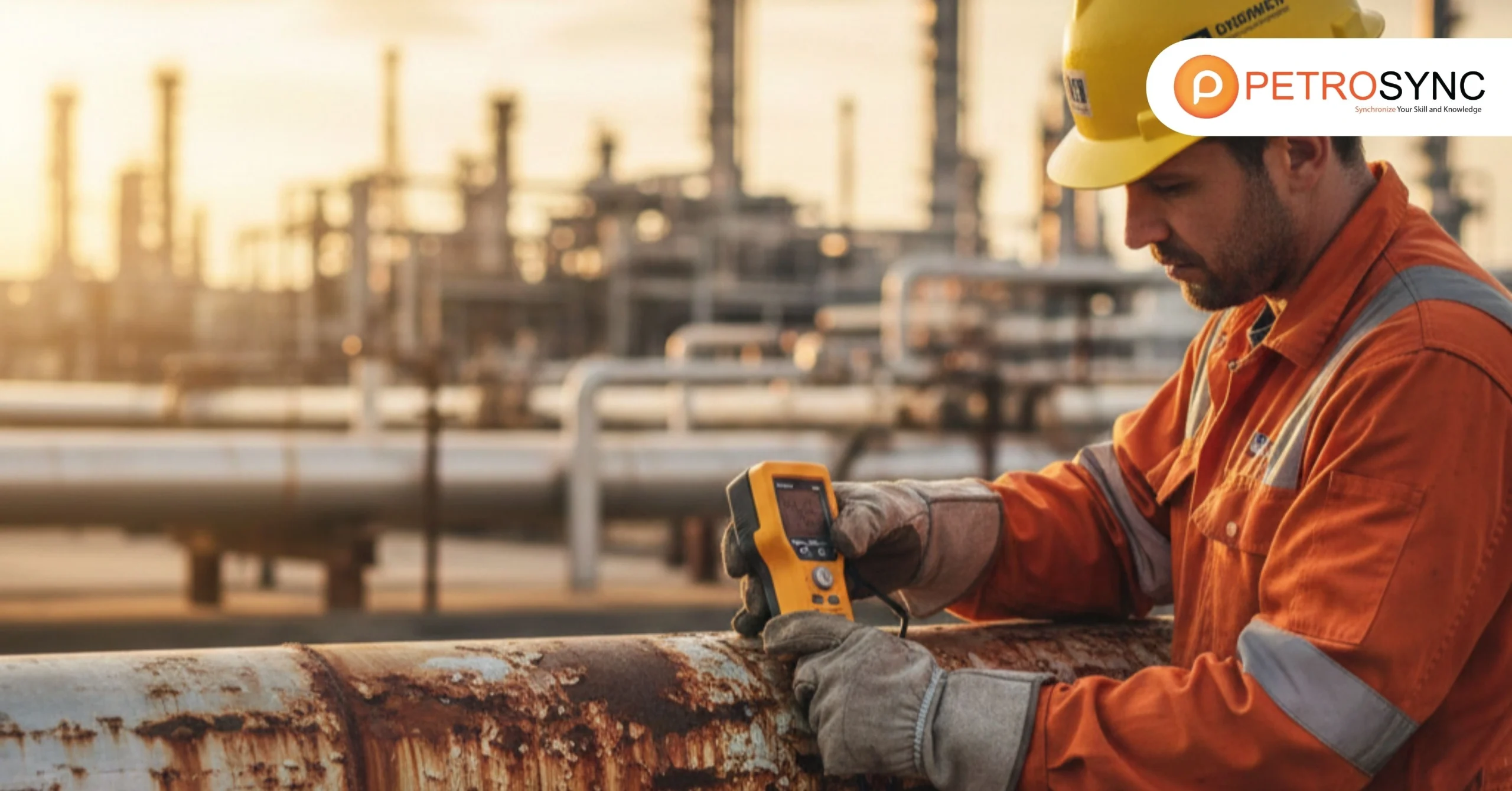
- API 571 Training is a specialized program that helps professionals understand and manage damage mechanisms in refinery equipment.
- Extreme operating conditions accelerate equipment degradation, making failure analysis essential for maintaining safe and reliable operations.
- Engineers who understand damage mechanisms can detect early warning signs and prevent costly shutdowns or safety incidents.
- The training improves inspection planning, supports compliance, and strengthens asset integrity across oil and gas facilities.
- Practical case studies and real-world insights help teams reduce risk, extend equipment lifespan, and optimize maintenance costs.
In oil and gas facilities such as refineries, petrochemical plant, and processing units, equipment operates under extreme industrial conditions. High temperatures, corrosive substances, mechanical stress, and chemical reactions can gradually cause material degradation and structural damage to critical assets like piping, pressure vessel, and heat exchanger.
Understanding how and why equipment fails is a crucial skill for engineers, inspectors, and reliability professionals. Without proper knowledge of damage mechanisms, organizations may struggle to predict equipment deterioration, increasing the risk of unexpected failures and costly shutdowns.
This is where API 571 Training becomes highly valuable. The training focuses on identifying, understanding, and managing damage mechanisms that commonly occur in refining and petrochemical environments. By mastering the principles outlined in API 571, professionals can significantly improve asset integrity, operational reliability, and safety performance within their organizations.
What is API 571 Training?
API 571 Training is a specialized technical program designed to help engineers and inspection professionals understand damage mechanisms affecting equipment used in oil refineries and petrochemical plants.
API 571, formally known as Damage Mechanisms Affecting Fixed Equipment in the Refining Industry, is a widely recognized standard that provides detailed guidance on various forms of material degradation and failure that may occur during industrial operations.
The training explores topics such as:
- Corrosion mechanisms in refining environments
- High-temperature damage and metallurgical degradation
- Hydrogen-related damage mechanisms
- Mechanical and environmental cracking
- Erosion, corrosion, and fatigue-related failures
Participants learn how to identify early signs of equipment damage, evaluate operational risks, and implement preventive maintenance strategies. This knowledge allows organizations to manage equipment integrity more effectively and reduce the likelihood of operational disruptions.
Key Benefits of Mastering API 571 Training for the Oil & Gas Industry
1. Improved Safety & Operational Reliability
Damage mechanisms can significantly weaken industrial equipment if not detected early. Failures involving pressure equipment or piping systems may lead to serious safety incidents, environmental hazards, or production interruptions. API 571 Training helps professionals recognize damage patterns and degradation processes, enabling them to take preventive action before problems escalate.
2. Compliance with Industry Standards, Codes & Regulations
The oil and gas industry operates under strict engineering and safety regulations. API 571 provides guidance that supports compliance with various inspection and integrity management standards. By understanding these guidelines, professionals can ensure their inspection and maintenance programs align with international codes and industry best practices.
3. Reduced Asset Failure & Field Incident Risks
Unexpected equipment failures often occur when damage mechanisms go unnoticed. API 571 Training teaches participants how to identify potential degradation processes based on operating conditions and materials, reducing the risk of catastrophic failures. This proactive approach allows organizations to mitigate operational risks and maintain stable production performance.
4. Optimized Equipment Performance, Lifespan & Integrity
When engineers understand the mechanisms that cause equipment deterioration, they can implement more effective inspection and maintenance strategies. This knowledge helps extend the lifespan of critical assets while ensuring they continue operating safely and efficiently.
5. Cost Efficiency in Operations, Maintenance & Downtime
Equipment failures can lead to expensive repairs, production delays, and emergency shutdowns. By applying the principles learned in API 571 Training, organizations can develop predictive maintenance strategies, reduce unplanned downtime, and optimize operational costs.

What is API 571 Training Objective?
- Key parameters in each damage mechanism, like material selection, design, fabrication, process control, etc.
- Critical factors involved in damage mechanisms, their prevention/mitigation, and monitoring methods.
- Assessment of various damage mechanisms during Fitness for Service assessments (FFS), Remaining Life Assessments (RLA), or Risk-Based Inspection Studies (RBI).
- Selection between various tests and examinations (or a combination) to identify, locate, and assess damage mechanisms.
- Mitigation methods and techniques.
- Similarities and differences in different damage mechanisms.
What is API 571 Training Outline?
1. Day 1
- Introduction of Trainer & Participants
- Benchmark Quiz & Discussions on the same
- Introduction and Review Of Basic Metallurgy
- Mechanical and Metallurgical Failure Mechanisms
– Graphitization
– Softening (Spheroidization)
– Temper Embrittlement
– Strain Aging
– 885°F (475ºC) Embrittlement
– Sigma Phase Embrittlement
– Brittle Fracture
– Creep and Stress Rupture
– Thermal Fatigue
– Short Term Overheating – Stress Rupture
– Steam Blanketing
– Dissimilar Metal Weld (DMW) Cracking
– Thermal Shock - Punch Points
- Quiz & Discussions
2. Day 2
- Erosion/Erosion – Corrosion
- Cavitation
- Mechanical Fatigue
- Vibration-Induced Fatigue
- Refractory Degradation
- Reheat Cracking
- Gaseous Oxygen-Enhanced Ignition and Combustion
- Introduction to Corrosion
- Uniform or Localized Loss of Thickness
– Galvanic Corrosion
– Atmospheric Corrosion
– Corrosion under Insulation (CUI)
– Cooling Water Corrosion
– Boiler Water Condensate Corrosion - Punch Points
- Quiz & Discussions
3. Day 3
- Nett Positive Suction Head and Cavitation
- Flue-Gas Dew-Point Corrosion
- Microbiologically Induced Corrosion (MIC)
- Soil Corrosion
- Caustic Corrosion
- Dealloying
- Graphitic Corrosion
- High Temperature Corrosion [>400°F (204°C)]
– Oxidation
– Sulfidation
– Carburization
– Decarburization
– Metal Dusting
– Fuel Ash Corrosion
– Nitriding - Punch Points
- Quiz & Discussions
4. Day 4
- Environment – Assisted Cracking
– Chloride Stress Cracking (CI-SCC)
– Corrosion Fatigue
– Caustic Stress Corrosion Cracking (Caustic Embrittlement)
– Amonia Stress Corrosion Cracking
– Liquid Metal Embrittlement (LME)
– Hydrogen Embrittlement (HE)
– Ethanol Stress Corrosion Cracking (SCC)
– Sulfate Stress Corrosion Cracking - Refining Industry Damage Mechanisms
– Uniform or Localized Loss in Thickness Phenomena
– Amine Corrosion
– Ammonium Bisulfide Corrosion (Alkaline Sour Water)
– Ammonium Chloride Corrosion
– Hydrochloric Acid (HCI) Corrosion
– High Temp H2/H2S Corrosion
– Naphtenic Acid Corrosion (NAC)
– Phenol (Carbolic Acid) Corrosion
– Phosphoric Acid Corrosion - Punch Points
- Quiz & Discussions
5. Day 5
- Sour Water Corrosion (Acidic)
- Sulfuric Acid Corrosion
- Aqueous Organic Acid Corrosion
- Environment-Assisted Cracking
– Polythionic Acid Stress Corrosion Cracking (PASCC)
– Amine Stress Corrosion Cracking
– Wet H2S Damage (Blistering/HIC/SOHIC/SSC)
– Hydrogen Stress Cracking – HF
– Carbonate Stress Corrosion Cracking (ACSCC) - Other Mechanisms
– High Temperature Hydrogen Attack (HTHA)
– Titanium Hydriding - Punch Points
- Quiz & Discussions
- Final Examinations & Feedback
Who Should Attend the API 571 Training Course?
This course is specifically beneficial for personnel involved in and responsible for determining a cause for damage(s) / deterioration(s) observed or anticipated, and for the probability and degree of further damage that might occur in the future during FFS assessments, RLA, Risk-based inspection studies, etc.
It also assists inspectors and examiners to perform their tasks effectively during in service Inspection of pressure vessels, piping, and tanks.
It is beneficial for engineers, supervisors, and managers who are responsible for decision-making during the assessment of mechanical integrity or equipment reliability.
Process and plant designers can add value during material selection and design by knowing the causes of damage mechanisms at those stages. Operations personnel can understand various parameters affecting the damage mechanisms. Personnel involved in the mitigation/monitoring of damage mechanisms shall know various examination and testing techniques.
Each attendee must bring a Laptop computer with the Microsoft Operating System.
API 571 Training Program by PetroSync
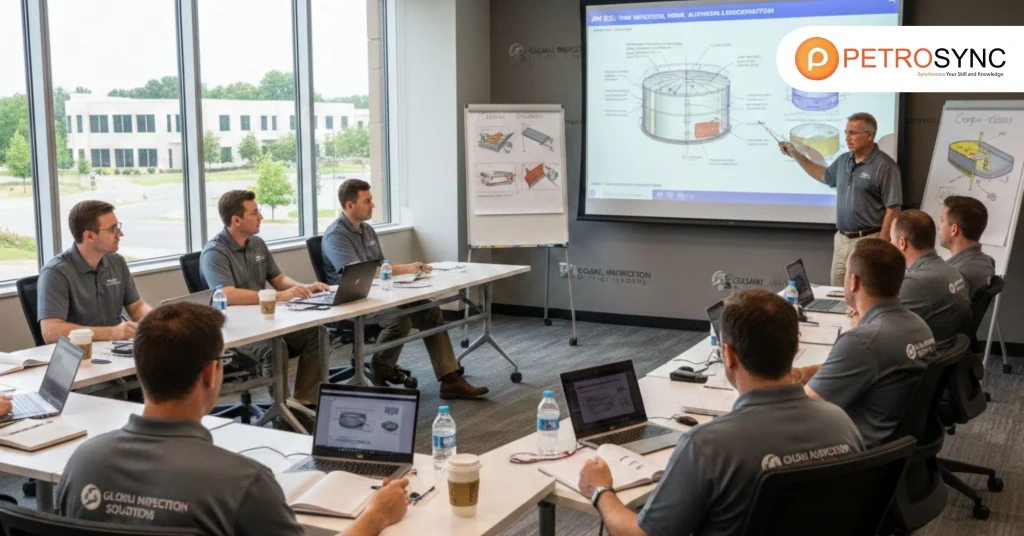
PetroSync offers a comprehensive API 571 Training program designed to help professionals develop a deeper understanding of refinery damage mechanisms and asset integrity management.
The program combines technical theory, real industry case studies, and practical engineering insights to ensure participants can apply the knowledge effectively in real operational environments.
Participants will learn how to:
- Identify damage mechanisms affecting refinery equipment
- Analyze operational conditions that contribute to material degradation.
- Improve inspection planning and maintenance strategies.
- Support asset integrity management programs.
By the end of the training, participants gain practical expertise that helps them enhance equipment reliability and prevent operational failures.
Advantages of Joining API 571 Training at PetroSync
1. Aligned with API 571 Standards & Refinery Damage Mechanism Practices
The training curriculum is designed in accordance with API 571 guidelines, ensuring participants gain relevant technical knowledge applicable to refinery operations.
2. Practical & Applied Case Study Approach
Participants learn through real-world failure analysis and industry case studies, helping them understand how damage mechanisms occur in actual operational environments.
3. Experienced Instructors from Global Industry Practitioners
The training is delivered by industry experts with extensive experience in asset integrity and refinery operations, providing valuable practical insights.
4. Curriculum Aligned with International Standards & Best Practices
The program integrates global engineering standards and inspection methodologies, ensuring participants receive up-to-date and relevant industry knowledge.
5. Trusted by Energy Companies & Global Industries
PetroSync has earned the trust of energy companies and industrial organizations worldwide by delivering high-quality professional training programs.
6. International Reputation as an Oil & Gas Training Provider
With years of experience in technical education, PetroSync is recognized globally as a trusted provider of oil and gas industry training.
How Much Does API 571 Training Cost at PetroSync?
The API 571 Training program at PetroSync is priced at $3,350 per participant, with training sessions available in Kuala Lumpur, Malaysia, and Bandung, Indonesia.
The training fee includes complete course materials, expert instruction, practical discussions, and real industry case studies, ensuring participants receive a comprehensive learning experience.
For professionals looking to strengthen their expertise in refinery damage mechanisms and equipment integrity, this training represents a valuable investment in technical knowledge, operational safety, and career development.
Advance Your Refinery Damage Mechanism Expertise with API 571 Training at PetroSync
Understanding equipment degradation is essential for maintaining safe and reliable operations in oil refineries and petrochemical facilities. Professionals who can identify damage mechanisms early play a crucial role in preventing failures, reducing operational risks, and improving asset reliability.
By joining PetroSync’s API 571 Training program, participants gain the technical expertise needed to analyze damage mechanisms, support effective inspection programs, and strengthen asset integrity management.
For engineers and technical professionals seeking to advance their capabilities in refinery inspection and reliability engineering, this training offers the knowledge and practical insights needed to support long-term operational success in the oil and gas industry.
Frequently Asked Questions (FAQ)
API 571 Training is a specialized program focused on understanding damage mechanisms affecting fixed equipment in the refining and petrochemical industry. It is important because it helps professionals identify material degradation, prevent equipment failure, and improve safety and reliability in industrial operations.
API 571 Training covers key topics such as corrosion mechanisms, high-temperature damage, hydrogen-related damage, mechanical failures, environmental cracking, and erosion. It also includes real-world case studies and inspection techniques used in refineries and petrochemical plants.
API 571 Training is designed for engineers, inspectors, reliability professionals, supervisors, and managers involved in asset integrity, inspection, and maintenance. It is also beneficial for plant designers and operations personnel who need to understand equipment degradation mechanisms.
The training helps improve safety, reduce equipment failure risks, ensure compliance with industry standards, extend asset lifespan, and optimize maintenance costs. It enables professionals to identify early signs of damage and implement preventive strategies effectively.
API 571 Training at PetroSync costs $3,350 per participant. The fee includes course materials, expert instruction, practical case studies, and interactive discussions, providing a comprehensive learning experience in refinery damage mechanisms.

Results-oriented and thorough SEO specialist with extensive experience in conducting keyword research, developing and implementing digital website promotion strategies and plans, managing campaigns to develop company websites in the digital world, excellent knowledge of marketing techniques and principles, and attentive strong attention to detail.

Business Development Manager at PetroSync with 12+ years of experience in professional training and business development across the energy and industrial sectors.